Blog

  • Low-Cost SEO Strategies That Beat Expensive Campaigns in 2026

    Low-Cost SEO Strategies That Beat Expensive Campaigns in 2026

    Understanding the Real Cost of SEO

    Magnifying glass highlighting SEO costs vs price tags
    Photo Hanna Pad from Pexels

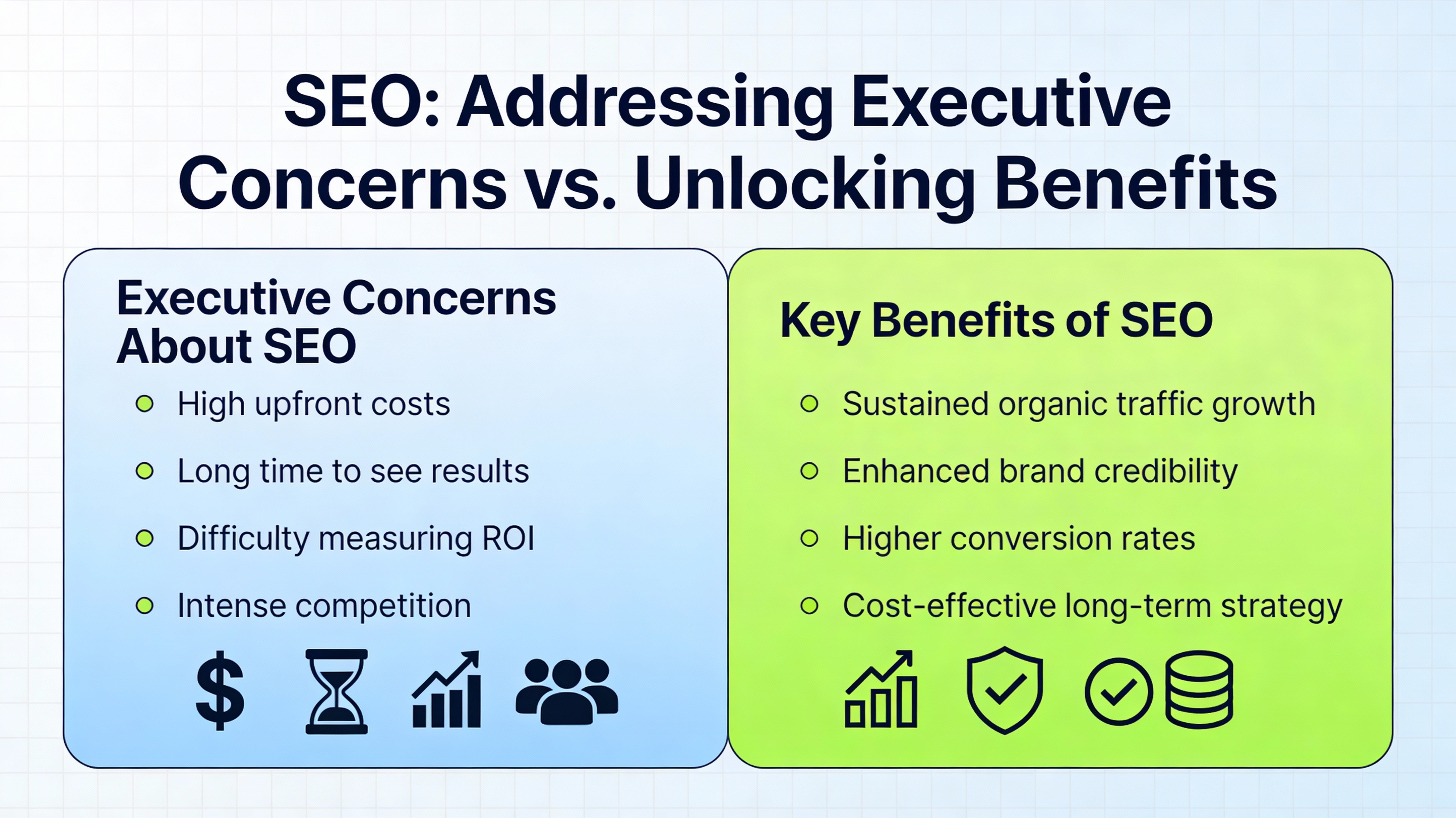
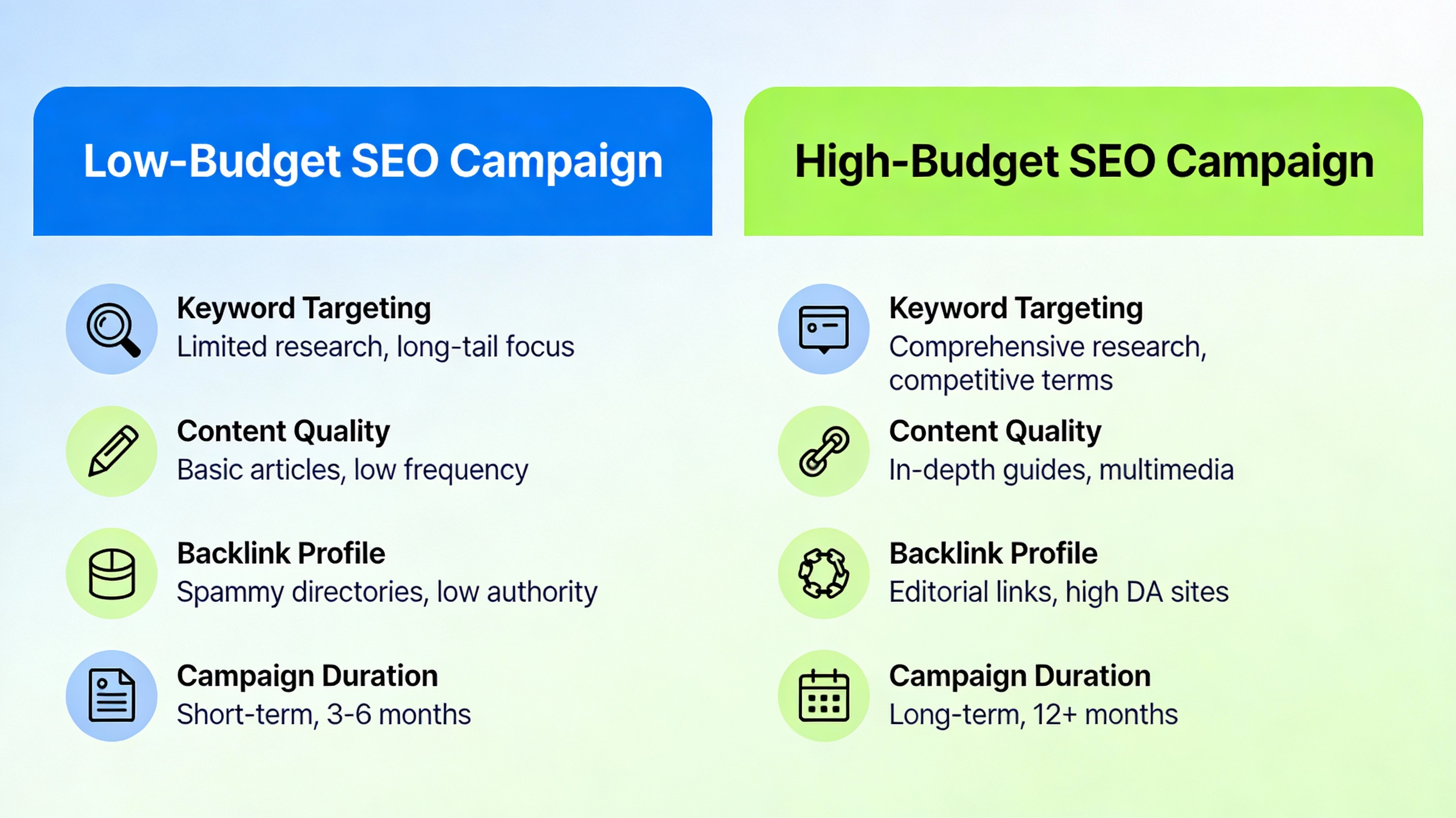
    Debunking myths about expensive SEO is crucial for small businesses and startups. Many believe that competing with high-spend campaigns requires an equally large budget, which is often not the case. This section aims to set realistic expectations by comparing typical agency fees with DIY costs and highlighting the long-term value of sustainable tactics.

    Understanding where money is actually spent in SEO can help identify areas for budget-friendly alternatives. Focus on strategy and consistent effort, rather than simply throwing money at the problem. This playbook will show you how smart decisions can lead to market advantage.

    Common Misconceptions About Pricey Campaigns

    A widespread myth suggests that higher spending guarantees top rankings in search engine results. However, this is a misconception; while budget can provide resources, it does not inherently buy success. Strategy, relevance, and consistent execution ultimately matter more than the sheer volume of investment.

    Many expensive campaigns can underperform if they lack a solid foundation or target irrelevant keywords. Conversely, well-executed, low-cost strategies can yield significant returns by focusing on niche relevance and user intent. The key is intelligent allocation of time and resources, not just capital.

    What Businesses Actually Pay For

    Businesses typically pay for a range of specialized services when investing in SEO. These often include technical audits, comprehensive content creation, and extensive link acquisition efforts. Each of these areas can incur significant costs when outsourced to agencies or specialists.

    However, there are effective ways to cut these expenses without sacrificing quality. Performing your own technical audits, creating content with existing resources, and implementing strategic link-building tactics can drastically reduce your overall spend. The goal is to achieve similar outcomes through smart, internal effort.

    SEO Approach Typical Activities Included Estimated Monthly Cost
    Agency Managed Full technical audits, content strategy & creation, link building outreach, reporting, competitor analysis $500 – $5,000+
    DIY (Self-Managed) Free tool usage (Google Search Console), content repurposing, local citations, basic on-page optimization $0 – $50

    Core Low-Cost SEO Tactics That Deliver Results

    Sticky notes with budget-friendly SEO keywords
    Photo Bruno Bueno from Pexels

    Foundational tactics that any budget can execute are the backbone of effective low-cost SEO. These strategies focus on maximizing your current resources and leveraging free tools to gain a competitive edge. You don’t need a huge budget to make a significant impact on your search rankings.

    From identifying the right keywords to optimizing your website’s pages, these methods are designed for immediate implementation. They prioritize efficiency and measurable results, proving that smart planning can outperform extensive spending. Let’s explore the core tactics that truly deliver.

    Keyword Research on a Budget

    Effective keyword research doesn’t require expensive software subscriptions. You can leverage free tools like Google Trends, AnswerThePublic, and the free tier of Ubersuggest to uncover valuable insights. These platforms help identify trending topics and user queries relevant to your business.

    The key is to focus on long-tail, low-competition terms that your target audience is actively searching for. These specific phrases often have lower search volume but much higher conversion potential. Targeting them allows you to rank more easily and attract highly qualified traffic.

    On-Page Optimization Hacks

    On-page optimization is one of the most impactful low-cost SEO tactics you can implement. Properly optimizing elements like title tags, meta descriptions, and header hierarchy (

    ,

    , etc.) signals to search engines what your content is about. Ensure your primary keywords are naturally included in these areas.

    Further enhance your visibility by implementing structured data snippets using schema.org markup. This helps search engines understand the context of your content, potentially leading to rich snippets in search results. These simple adjustments can significantly improve your click-through rates.

    Technical SEO Basics You Can DIY

    Addressing basic technical SEO issues is crucial for search engine discoverability and can often be done without professional help. Start by regularly checking Google Search Console for any crawl errors that might prevent search engines from accessing your content. Resolving these ensures your pages are properly indexed.

    Another vital step is to ensure your website is mobile-friendly, which you can easily check using Google PageSpeed Insights. A responsive design and fast loading times are non-negotiable for both user experience and search rankings. These simple DIY checks can make a big difference.

    Must-Do Low-Cost SEO Tactics Checklist

    • Utilize Google Trends for keyword discovery.
    • Optimize title tags and meta descriptions with target keywords.
    • Structure content with clear H2, H3, H4 headings.
    • Implement basic schema markup for rich snippets.
    • Monitor Google Search Console for crawl errors.
    • Ensure your website is mobile-friendly and loads quickly.
    • Create or update your Google My Business profile.

    Leveraging Free and Affordable Tools in 2026

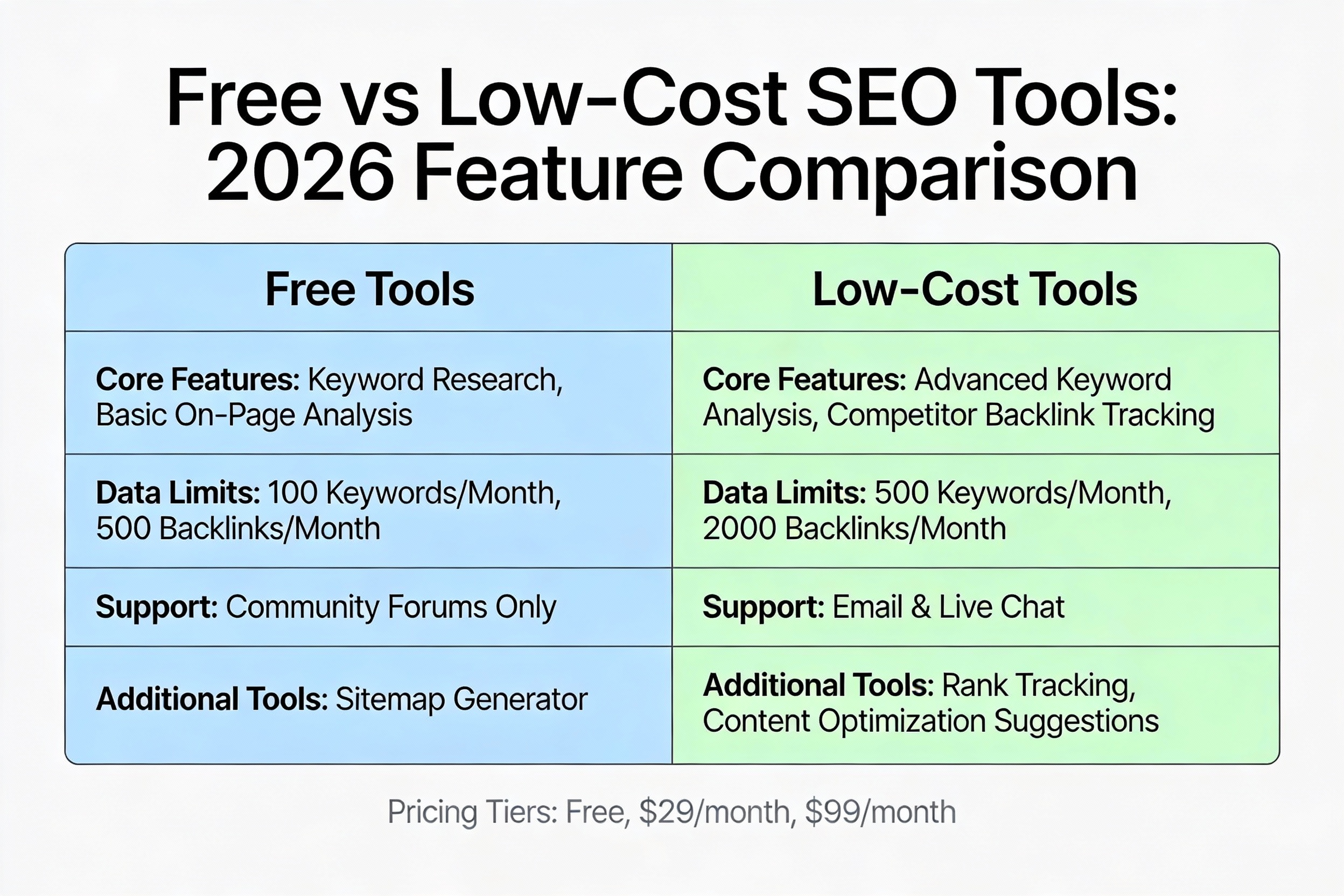
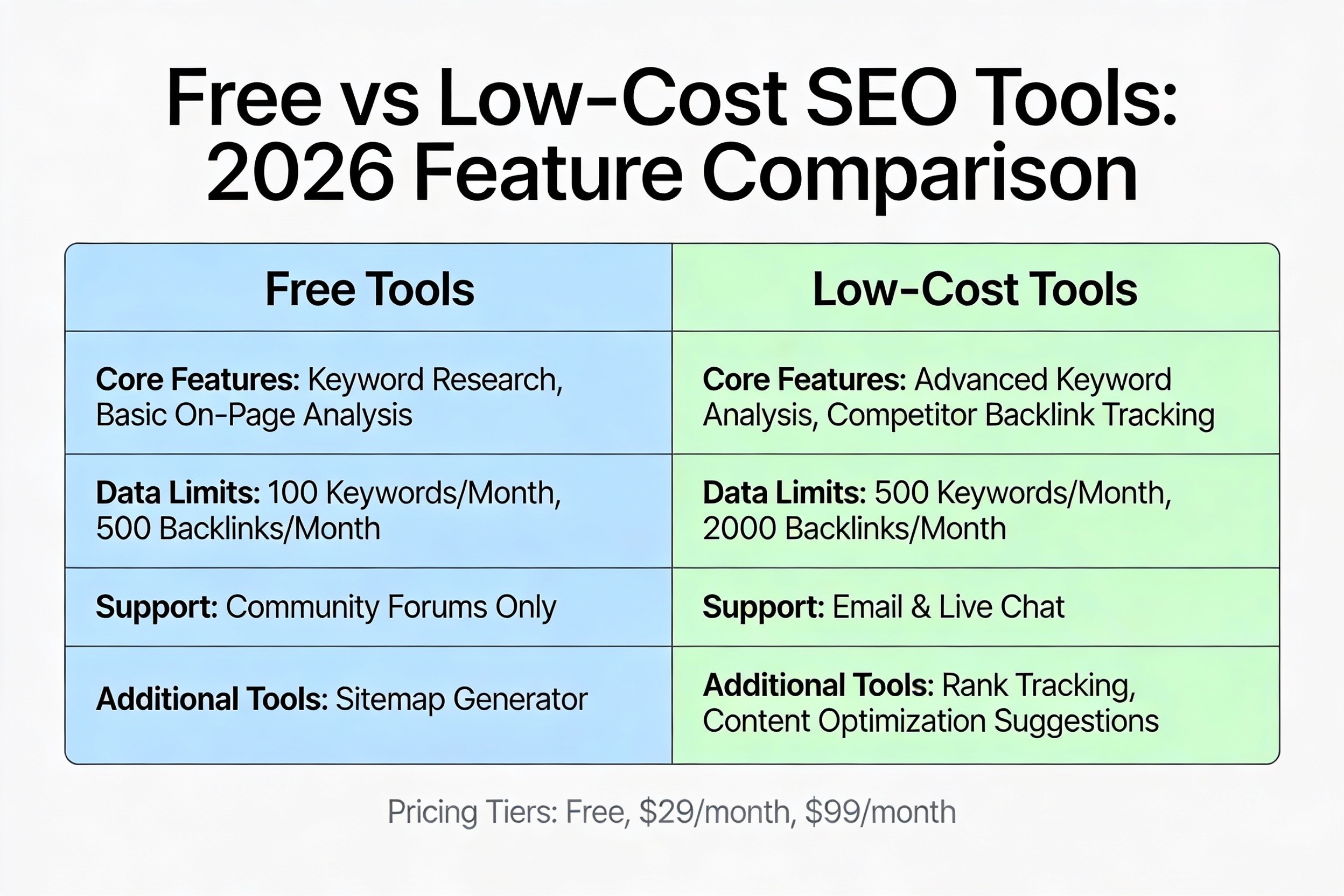
    Infographic comparing free and affordable SEO tools in 2026
    Generated by Articfly AI

    The right tools can significantly amplify your low-cost SEO efforts, even without a hefty budget. In 2026, there are more robust free and affordable options than ever before, enabling small businesses to compete effectively. Choosing the correct tools empowers you to streamline processes and gain valuable insights.

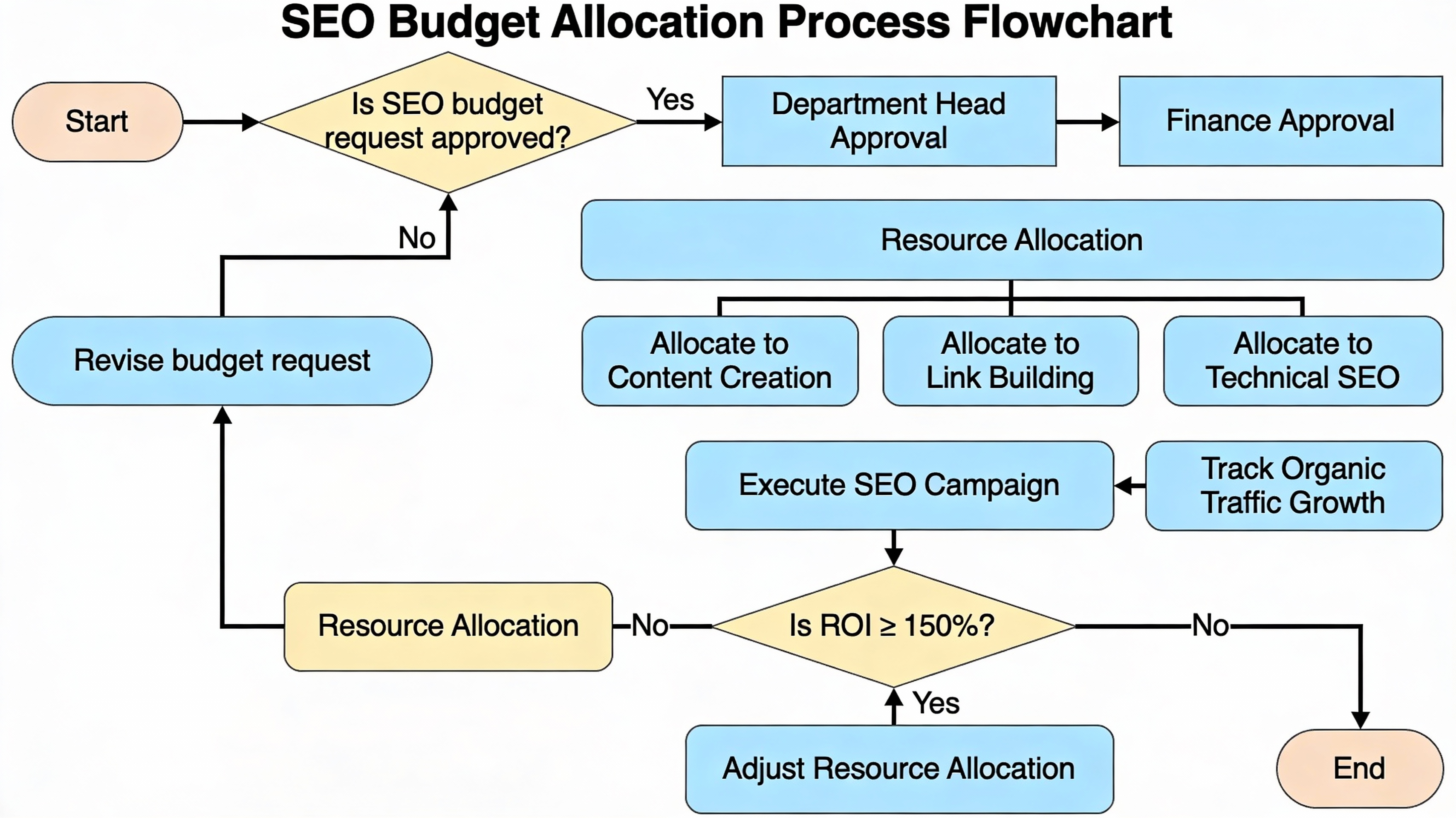
    This section will highlight the best current tools that either cost nothing or less than $20 per month. We’ll examine their core functionalities and criteria for selection, ensuring you can make informed decisions. Leveraging these resources efficiently is key to a successful budget-friendly strategy.

    Free Tools

    Many powerful SEO tasks can be accomplished using completely free tools. Google Search Console is indispensable for monitoring your site’s performance in Google Search, identifying indexing issues, and submitting sitemaps. Similarly, Bing Webmaster Tools offers similar functionality for the Bing search engine, providing valuable insights into your site’s visibility.

    For more technical audits, Screaming Frog SEO Spider Lite allows you to crawl up to 500 URLs for free, helping identify broken links, redirect chains, and missing meta descriptions. Mastering these free platforms provides a strong foundation for your SEO initiatives. Top Free SEO Tools 2026 offers more detailed guidance.

    Affordable Paid Tools

    When your budget allows for a small investment, affordable paid tools can offer enhanced features and deeper analysis. Ubersuggest, for instance, provides keyword research, content ideas, and competitor analysis at a low monthly cost. Surfer SEO Lite helps with on-page optimization by suggesting content adjustments based on top-ranking competitors.

    Ahrefs Webmaster Tools, while part of a larger paid suite, offers free access to a limited version that provides site audits and backlink data. Evaluate the cost-benefit of each tool based on your specific needs and budget constraints. Prioritize tools that address your most pressing SEO challenges and offer the highest potential ROI for your minimal spend.

    Choosing the Right Tool for Your Niche

    Selecting the optimal SEO tool depends heavily on your specific business niche and immediate goals. Consider what aspects of SEO you need to prioritize: keyword research, technical audits, content optimization, or backlink analysis. A tool that excels in your weakest area will provide the most value.

    Think of it as a decision-tree: if you’re struggling with keyword ideas, prioritize tools like Ubersuggest or AnswerThePublic. If technical errors are holding you back, Google Search Console and Screaming Frog are essential. Aligning tool capabilities with your strategic needs ensures maximum impact from minimal investment.

    Content Strategies on a Shoestring Budget

    Team brainstorming low-budget content strategies
    Photo Mikhail Nilov from Pexels

    Producing high-impact content without hiring expensive writers is entirely achievable with strategic planning. The key lies in leveraging your existing assets and community resources, along with smart content creation techniques. You don’t need a massive content budget to rank for valuable keywords and attract your target audience.

    This section will guide you through repurposing content, utilizing user-generated contributions, and applying techniques like the skyscraper method. These approaches ensure you maintain a robust content presence while keeping costs minimal. Remember, quality and relevance often trump sheer volume in content marketing.

    Repurposing Existing Assets

    Repurposing existing assets is an incredibly efficient way to generate new content without starting from scratch. Begin by identifying your evergreen content – blog posts, webinars, or PDFs that remain relevant over time. Update these pieces with current data, fresh examples, and enhanced SEO optimization.

    A webinar transcript can become several blog posts, social media snippets, or an infographic. A detailed PDF guide can be broken down into a series of email newsletters. This strategy maximizes the value of content you’ve already invested in, extending its reach and improving its search performance. Repurposing Content for SEO provides further insights.

    User-Generated Content & Community Building

    Harnessing user-generated content (UGC) is a powerful, low-cost strategy for enriching your site and building community. Encourage customers to leave reviews, submit Q&A, or participate in forums related to your products or services. This content is authentic, relevant, and directly addresses customer concerns, which search engines value.

    Additionally, leverage platforms like Reddit and Quora not only to engage with potential customers but also to gather topic ideas. Pay attention to common questions and discussions within your niche, using these insights to inform your content creation. This approach provides valuable, organic content that costs nothing to produce.

    Skyscraper Technique with Limited Resources

    The skyscraper technique can be adapted for limited resources to create high-ranking content. Instead of trying to create the “best” piece of content on a topic from scratch, identify an existing piece of content that performs well but lacks certain elements. Look for low-competition targets with solid but improvable content.

    Your goal is to make it significantly better by adding unique data, fresh perspectives, or compelling visuals that the original piece is missing. You don’t need to reinvent the wheel; just find a way to add substantial, unique value. Search Engine Journal article on the skyscraper technique offers more inspiration.

    Content Type Repurposed Example Brand-New Article Example
    Long-form Guide An old whitepaper on ‘Email Marketing Basics’ updated with 2026 stats and visuals. ‘The Ultimate Guide to AI-Powered Personalization in Email Marketing 2026’.
    Video Content A webinar recording transcribed into a blog post, then split into social media graphics. A professionally filmed interview series with industry leaders on new trends.
    Product Showcase Customer reviews & photos compiled into a ‘User Favorites’ blog post. A dedicated landing page with custom photography and expert-written descriptions for a new product launch.

    Building Authority Without Breaking the Bank

    Networking and guest posting on a shoestring budget
    Photo fauxels from Pexels

    Achieving strong domain authority and building valuable backlinks doesn’t require an enormous budget. Smart link-building and PR tactics can significantly boost your site’s credibility and search rankings for minimal cost. The focus here is on strategic outreach, leveraging existing platforms, and earning media through clever pitching.

    These methods allow small businesses to gain authoritative links and mentions that rival those secured by high-spend campaigns. It’s about being resourceful, providing value, and knowing where to find opportunities. Let’s explore how to build authority effectively and affordably.

    Strategic Outreach and Guest Posting

    Strategic outreach is vital for securing valuable guest posting opportunities and backlinks. Focus your efforts on researching low-authority sites that have high relevance to your niche. These sites are often more receptive to high-quality guest content than larger, more established publications.

    When you reach out, offer value-added content that addresses a specific need or fills a content gap for their audience. Personalized email templates can significantly increase your success rate. Effective Outreach Templates can help you craft compelling messages. Guest posting remains a strong tactic for increasing your domain authority and referral traffic.

    Local Citations and Business Listings

    For local businesses, maintaining consistent NAP (Name, Address, Phone number) information across online directories is paramount. This consistency is a critical signal for local SEO and helps search engines verify your business’s legitimacy. Start by ensuring your Google My Business profile is fully optimized and up-to-date with accurate information and compelling images.

    Beyond Google, leverage niche-specific industry directories and prominent local listing sites. Many of these platforms offer free basic listings that can significantly boost your local search presence. A comprehensive approach to local citations builds trust with both search engines and potential customers.

    Earned Media Through PR Hacks

    Earning media coverage without a PR agency is achievable through creative “PR hacks.” Identify newsworthy angles within your business or industry that could be of interest to journalists and bloggers. This might involve sharing unique data, commenting on a trend, or announcing a local community initiative.

    Platforms like HARO (Help A Reporter Out) connect journalists with expert sources, offering a fantastic opportunity to get featured in major publications for free. Additionally, engaging with micro-influencers in your niche can lead to valuable mentions and backlinks without significant financial outlay. HARO official site provides a direct avenue for these opportunities.

    “We started with a simple email outreach campaign, offering unique insights to local blogs. Within three months, we secured five high-quality backlinks and saw a 15% jump in organic traffic. It proves that personalized value trumps mass emails every time.”

    — A Small Business Owner on Low-Budget Outreach

    Measuring Success and Scaling Up

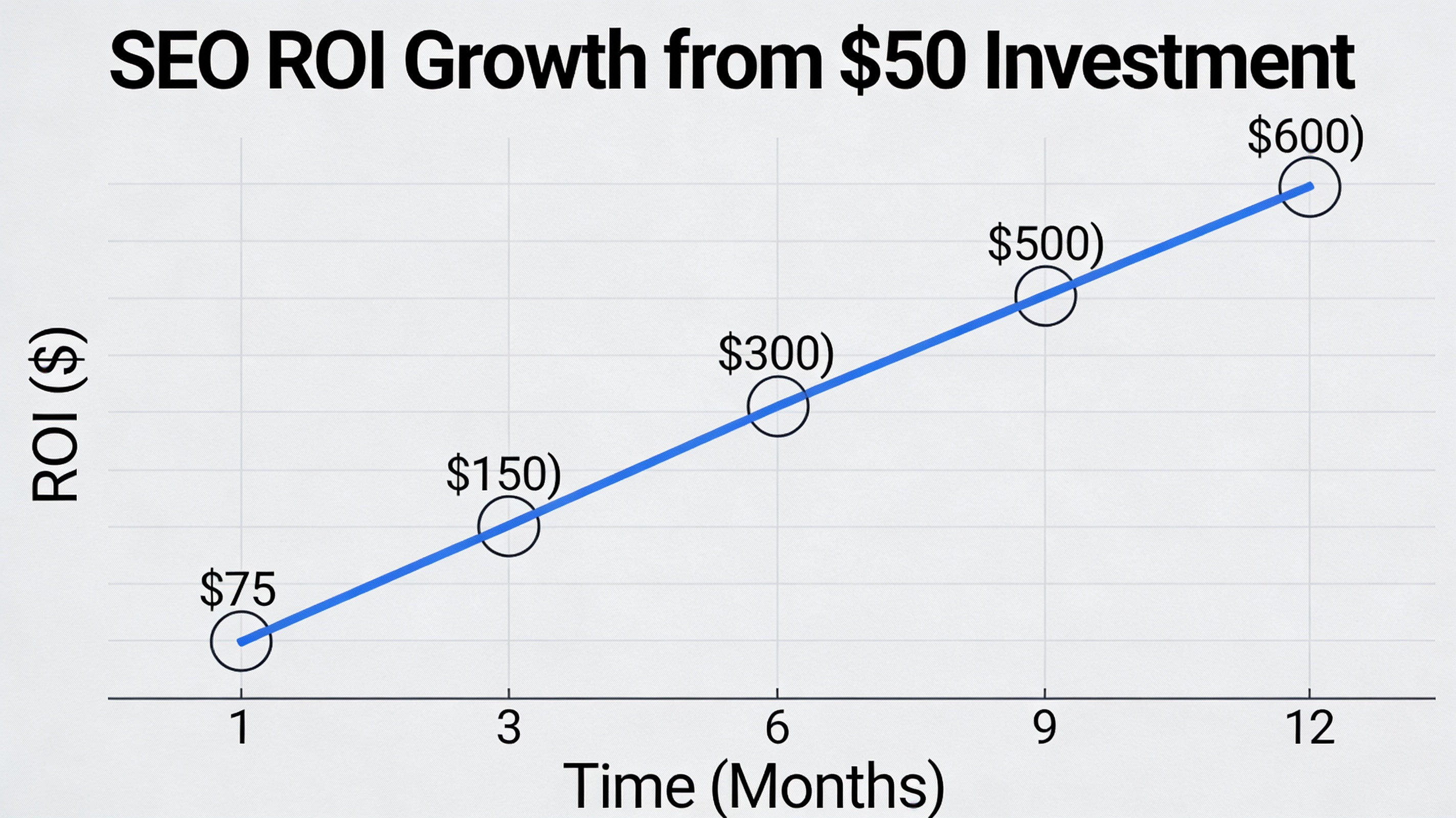
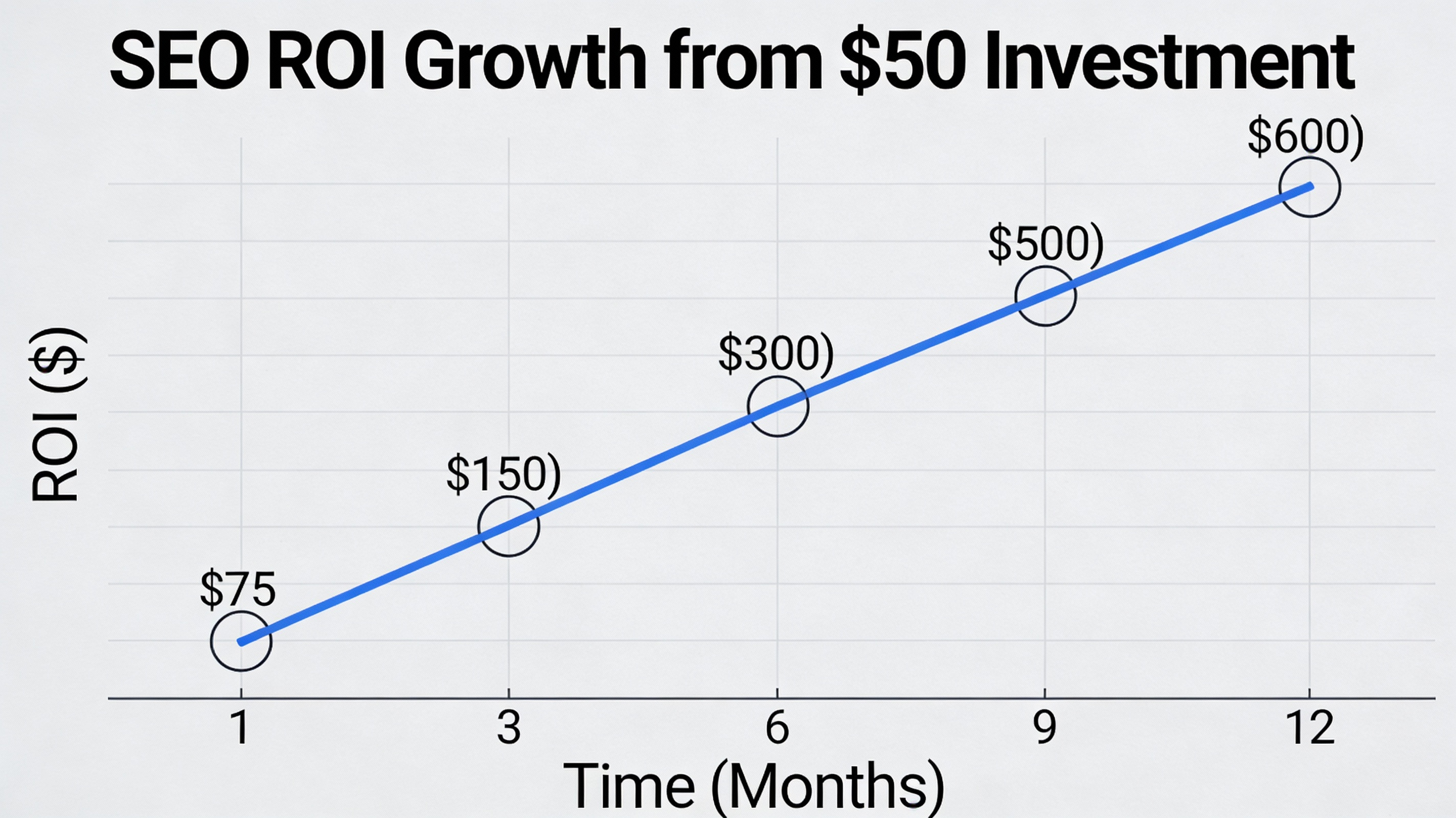
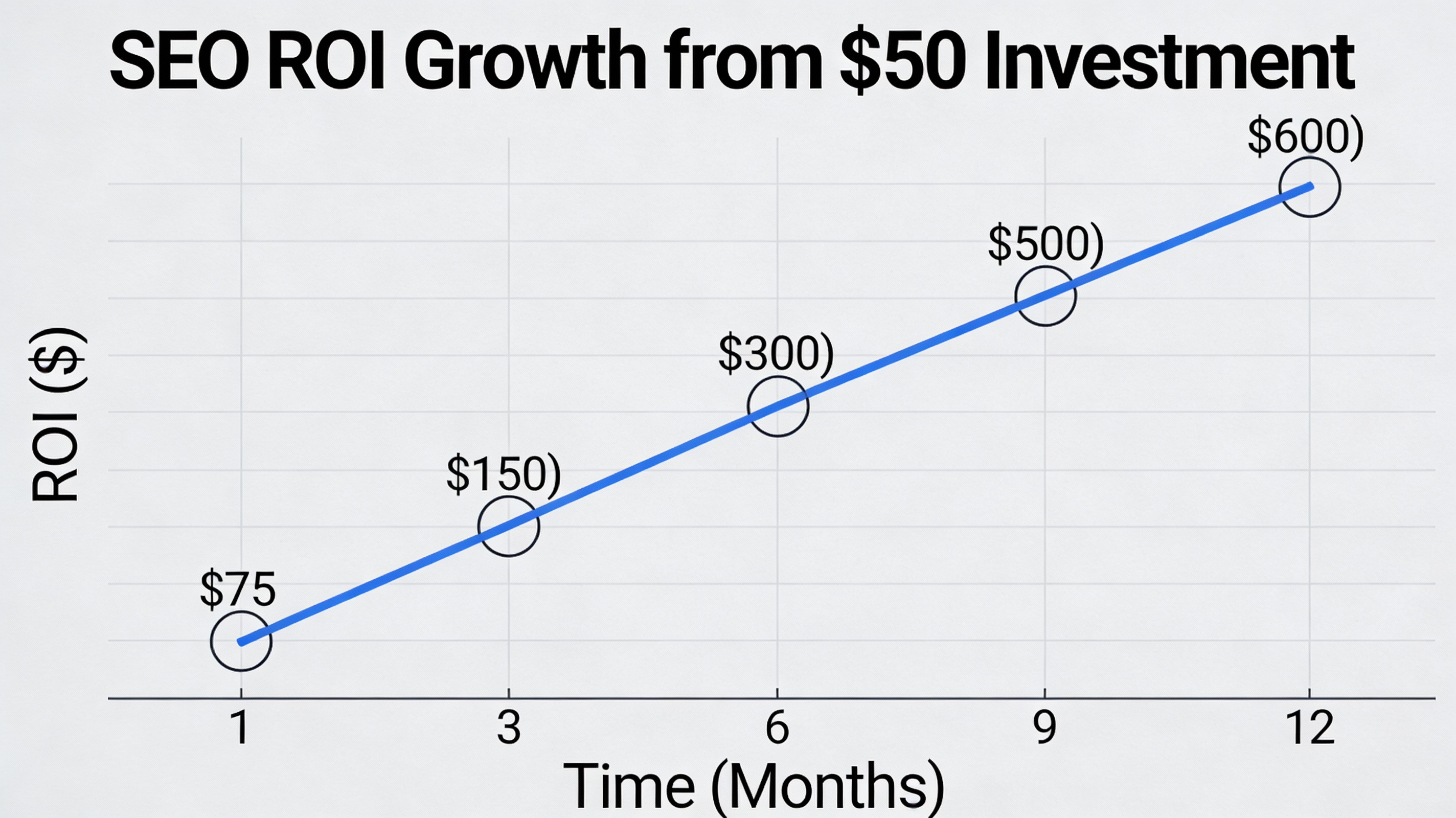
    Chart illustrating SEO ROI growth from a $50 start
    Generated by Articfly AI

    Equipping yourself with free metrics and a clear growth plan is essential for any low-cost SEO strategy. Understanding how to track your progress allows you to identify what’s working and what isn’t, enabling informed adjustments. You don’t need expensive software to monitor key performance indicators (KPIs).

    This section will guide you through the core metrics to focus on and how to use free tools to visualize your data. We’ll also cover when and how to reinvest any gains to scale your efforts effectively. Measuring success is the first step towards sustainable growth.

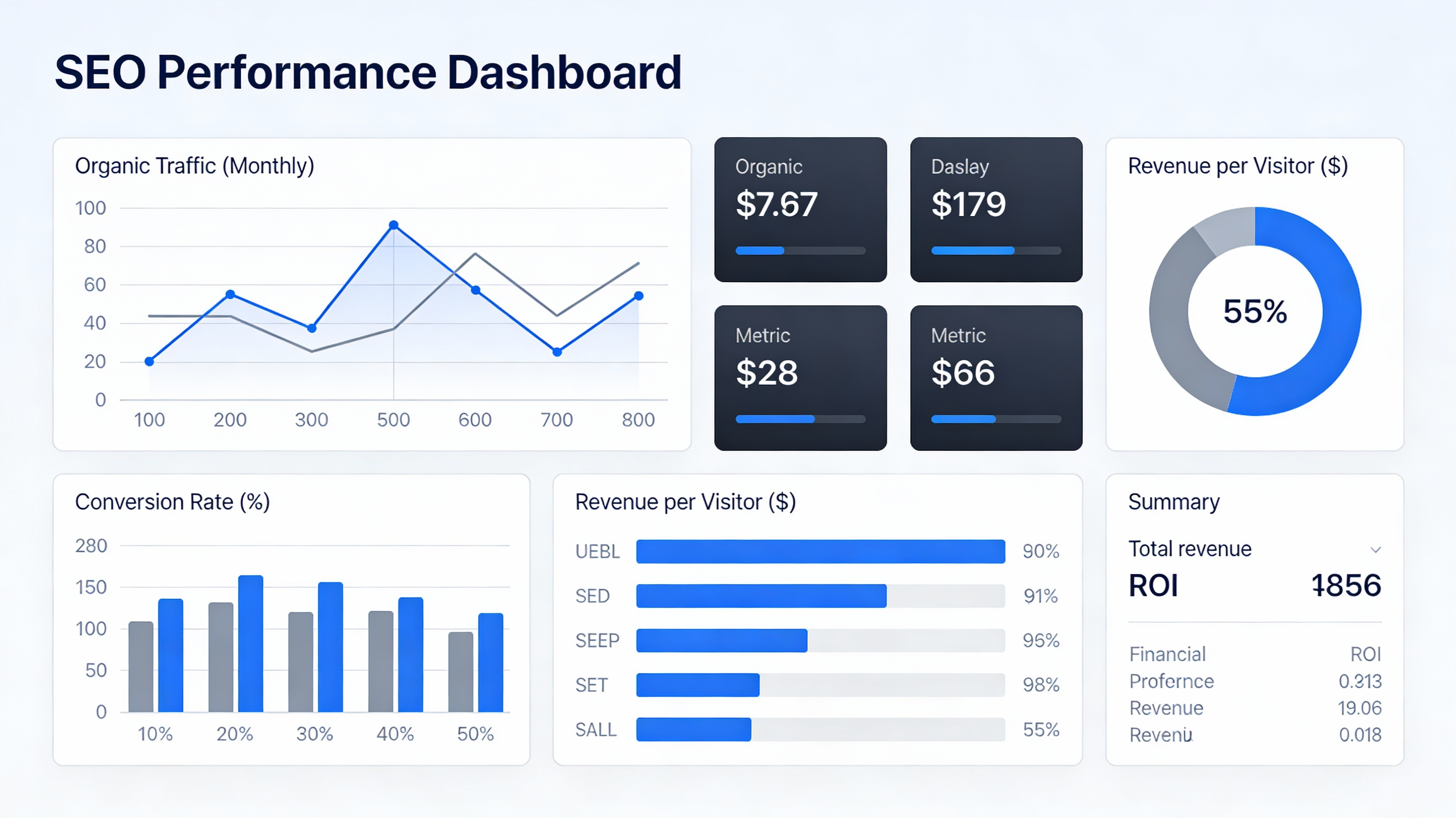
    Key Metrics to Track Without Expensive Software

    Tracking core KPIs is straightforward with readily available free tools. Organic traffic, keyword rankings, and click-through rate (CTR) are fundamental indicators of your SEO performance. Google Search Console provides invaluable data on keyword performance, impressions, clicks, and average position for your site.

    Google Analytics, another free tool, allows you to monitor organic traffic volume, user behavior on your site, and conversion rates stemming from organic search. By regularly reviewing these metrics, you can identify trends and pinpoint areas for improvement without any financial investment. SEO KPI Dashboard Template can offer more structure for this.

    When to Reinvest and How to Allocate Budget

    Knowing when to reinvest your profits back into SEO is crucial for sustainable growth. Establish clear thresholds for scaling your spend based on achieved organic traffic, lead generation, or sales increases. Once these milestones are met, consider dedicating a portion of your new revenue to expand your SEO efforts.

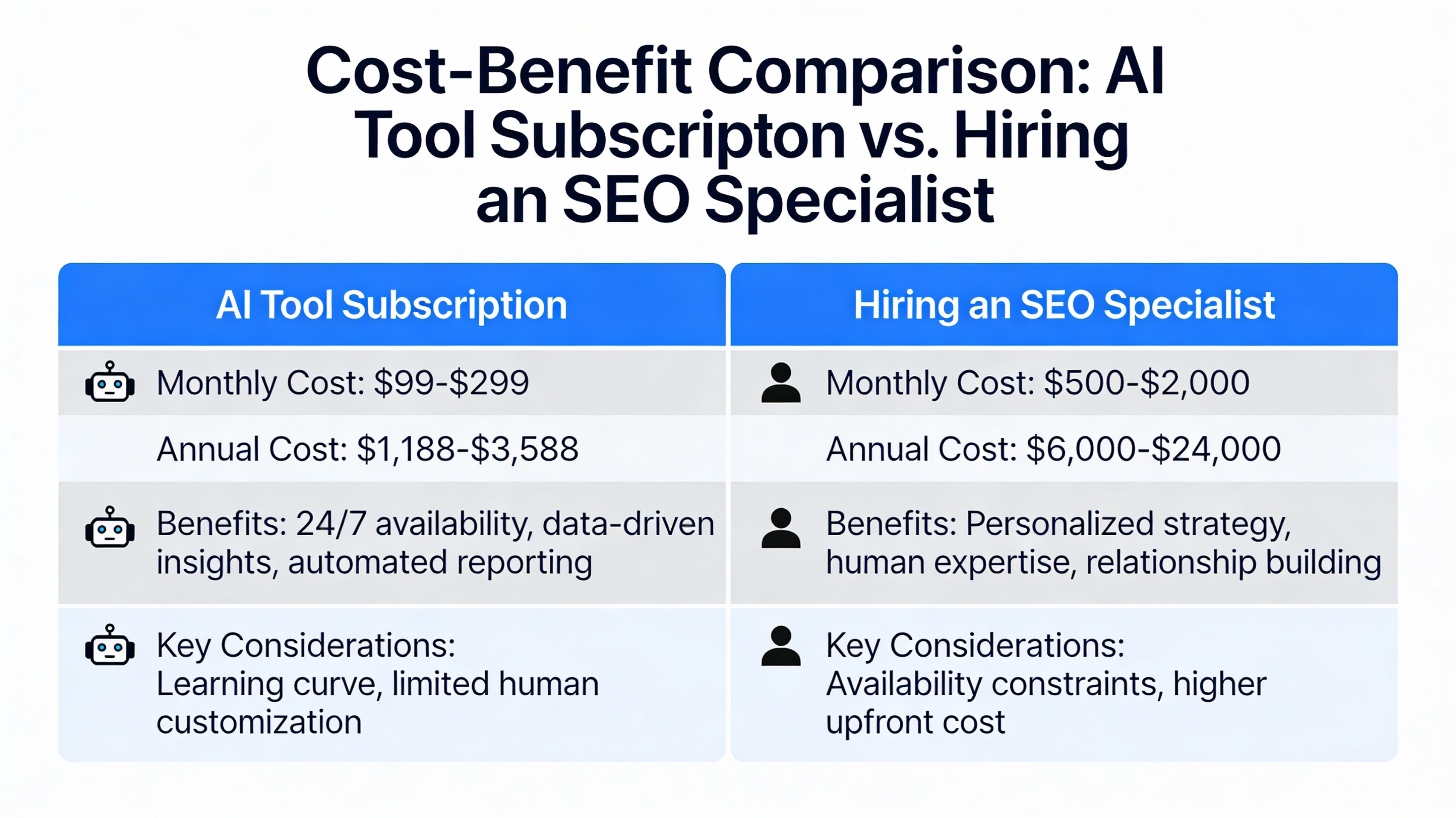
    Allocate this newfound budget strategically, focusing on high-ROI tactics that have already proven effective. This might include investing in a premium keyword research tool, subscribing to a content optimization platform, or hiring a freelance content writer for specific high-value pieces. Always prioritize actions that offer the greatest potential for further returns.

    Key Takeaways

    Achieving market advantage with ultra-low-cost SEO is not just possible, it’s a definitive playbook for 2026. Smart strategy consistently trumps big spend when executed effectively.

    Here are seven impactful low-cost actions you can start today to transform your SEO strategy:

    • **Master free keyword tools:** Use Google Trends, AnswerThePublic, and Ubersuggest to find long-tail, low-competition terms.
    • **Optimize on-page elements rigorously:** Perfect your title tags, meta descriptions, and header hierarchy, and add schema markup.
    • **Perform DIY technical audits:** Regularly check Google Search Console for errors and ensure mobile-friendliness with PageSpeed Insights.
    • **Leverage free tools daily:** Integrate Google Search Console and Bing Webmaster Tools into your routine for monitoring and improvements.
    • **Repurpose existing content creatively:** Transform old webinars, PDFs, and blog posts into fresh, SEO-optimized material.
    • **Build authority through strategic outreach:** Focus on guest posting on relevant, accessible sites and using HARO for earned media.
    • **Monitor KPIs with free dashboards:** Track organic traffic, keyword rankings, and CTR using Google Analytics and Search Console to guide your next moves.

    FAQ

    Can $50 really make a difference in SEO?

    Yes, absolutely. While $50 might not cover extensive campaigns, it can fund crucial tools like a month of Ubersuggest’s basic plan or a small advertising boost. More importantly, $50 can be used for training resources or to outsource a very specific, high-impact micro-task, significantly augmenting what you can do with free tools and your own time.

    How long before I see results from low-cost tactics?

    SEO is a long-term strategy, regardless of budget. You can expect to see initial improvements in areas like crawlability and indexing within weeks for technical fixes. For keyword rankings and significant organic traffic growth, it typically takes 3-6 months of consistent effort. Patience and persistence are key.

    Which free tool gives the best backlink data?

    For truly free backlink data, Google Search Console is invaluable for showing links *to your own site*. While it doesn’t show competitor backlinks, it’s essential for understanding your own link profile. Ahrefs Webmaster Tools also offers a powerful free tier for backlink analysis of your verified sites, which is highly recommended for deeper insights.

    Is guest posting still effective in 2026?

    Yes, guest posting remains highly effective in 2026 when done strategically. The focus has shifted from quantity to quality and relevance. Guest posts should offer genuine value to the host site’s audience and come from reputable, relevant sources. It’s about building genuine relationships and authority, not just acquiring links.

    How do I know when to upgrade to paid tools?

    You’ll know it’s time to consider paid tools when your free tools can no longer provide the depth of data or automation you need to scale. This might be when you hit URL limits, require more advanced competitor analysis, or need integrated reporting. Start with a small, specific paid tool that addresses your biggest bottleneck and demonstrates clear ROI before expanding further.

    Next steps for low-cost SEO

    Ready to unlock market advantage with smart, budget-friendly SEO strategies? Your journey to competing with high-spend campaigns starts now.

    Take action today by exploring these essential resources:

    • Download our free “Low-Cost SEO Starter Kit” checklist to begin implementing these tactics immediately.
    • Subscribe for weekly budget SEO tips delivered straight to your inbox, keeping you ahead of the curve.
    • Join our community forum for peer support, shared insights, and answers to your pressing SEO questions.
  • Cost of Living in South Korea: Detailed Guide & Budget Tips

    Cost of Living in South Korea: Detailed Guide & Budget Tips

    Overall Cost of Living Overview

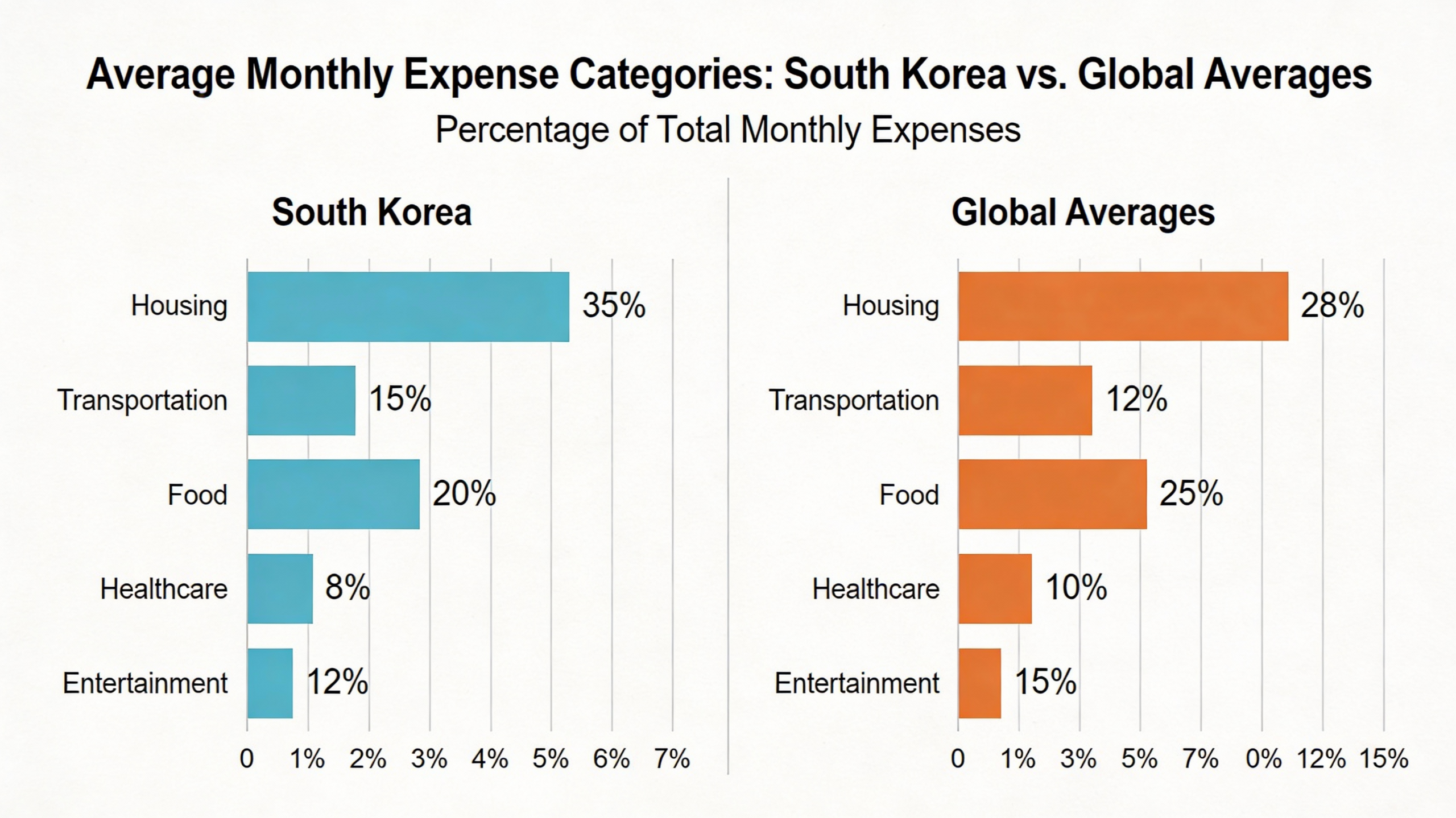
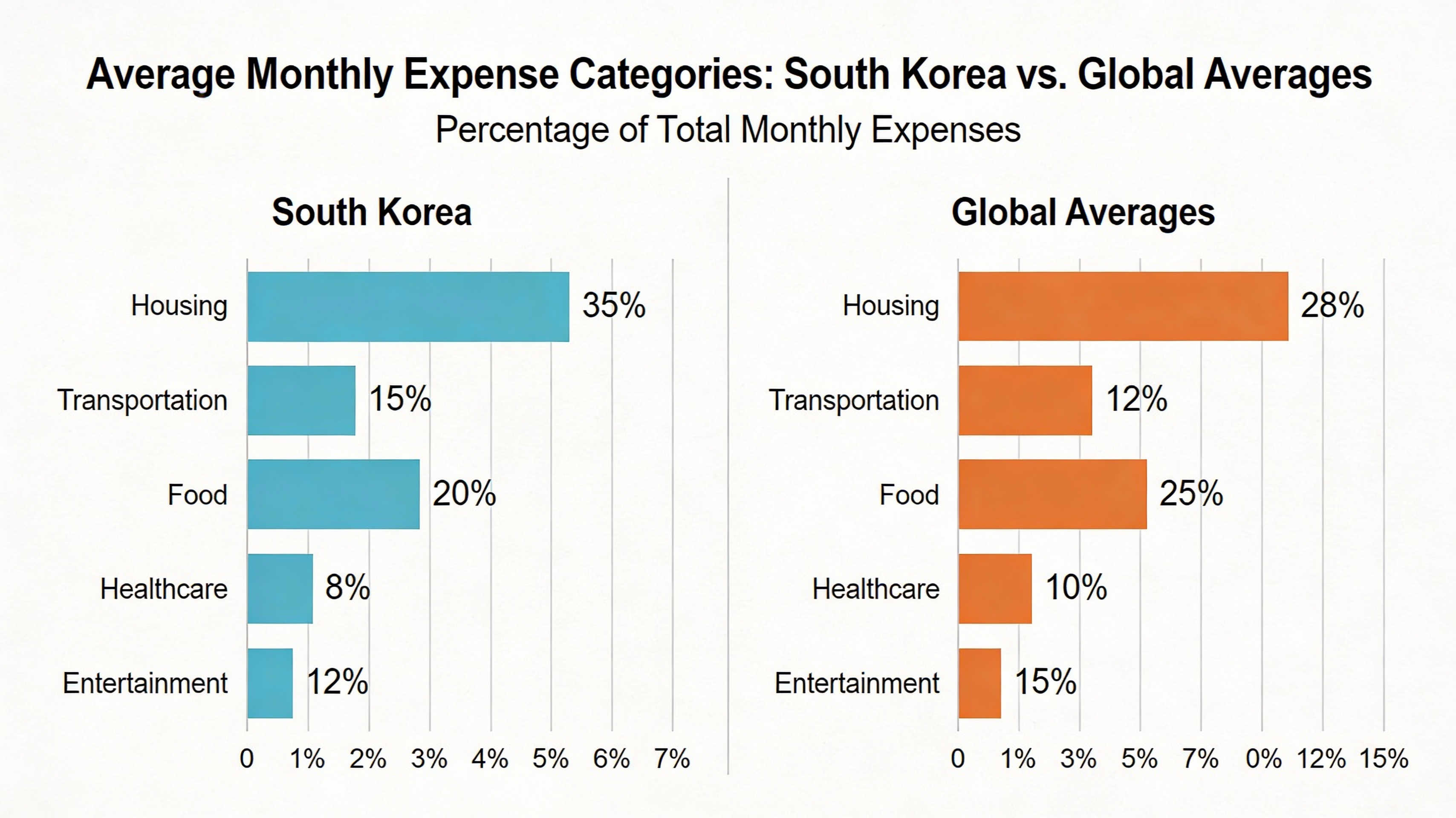
    Infographic of monthly expense breakdown in South Korea versus global averages
    Generated by Articfly AI

    Living costs in South Korea are shaped by a variety of major expense categories, including housing, food, transport, healthcare, and education. Generally, monthly expenses fall into low, mid, and high ranges that reflect individual lifestyle choices and geographic location. While Seoul is known for being more expensive, South Korea as a whole remains competitive when viewed through global cost indices.

    A high-level picture of monthly spending reveals that most expats can find a balance between modern amenities and affordable local living. According to data from Numbeo, the country offers a standard of living that is often more accessible than major Western metropolitan areas. Understanding these typical ranges is the first step in creating a realistic financial plan for your move.

    Monthly Expense Categories

    Typical Ranges (low‑mid‑high)

    Expense distributions typically vary from affordable local options to premium international standards. Essential costs such as public transportation and local groceries are consistently affordable, while international schooling and luxury housing in central Seoul occupy the premium end of the scale. Most residents find a comfortable middle ground that aligns with an average professional salary.

    Global Ranking

    Comparison Chart

    Country Relative Cost of Living Index Typical Expense Level
    South Korea Moderate Average
    USA High Premium
    UK High Premium
    Japan Moderate-High Average-High

    Housing Expenses

    Seoul apartment building with a rental sign
    Photo Adrian Frentescu from Pexels

    Rent variations by city play a massive role in your total monthly outlay, with Seoul commanding the highest prices for apartments. In contrast, cities like Busan and Daegu offer more space for a lower monthly commitment. Beyond base rent, tenants must also factor in monthly utility costs for electricity, water, gas, and high-speed internet, which can fluctuate with the seasons.

    Pros and cons of buying versus renting should be carefully weighed by expats planning a long-term stay. Renting is the most common path due to the unique “jeonse” (large deposit) or “wolse” (monthly rent) systems used in the country. For more detailed insights, refer to the Guide to Moving to South Korea or the Best Neighborhoods in Seoul.

    Rent by City and Type

    Typical Rent Ranges

    City Apartment Type Price Category
    Seoul Studio / 1-Bed Premium to Average
    Busan 1-Bed / 2-Bed Average
    Daegu 1-Bed / 2-Bed Affordable

    Utilities & Internet

    Monthly utility bills are generally manageable but require attention during peak summer and winter months. Cooling and heating costs often make up the bulk of these expenses, while internet and mobile data packages are widely regarded as some of the most efficient and cost-effective in the world. Reporting from the Korean Statistical Information Service (KOSIS) highlights these housing data trends for residents.

    Buying vs Renting

    The decision to buy property is often complex for foreign nationals due to financing regulations and market conditions. Most expats opt for the wolse system, which requires a smaller deposit and regular monthly payments, providing greater flexibility. This allows newcomers to explore different districts before committing to a long-term living arrangement.

    Food & Grocery Costs

    Korean market stalls with fresh produce and street food
    Photo Markus Winkler from Pexels

    Everyday food spending in South Korea can vary significantly depending on whether you prefer local markets or Western-style supermarkets. Dining at a local restaurant is often very cost-effective, whereas frequenting eateries that serve imported goods will quickly increase your budget. Balancing these two styles is key to maintaining a healthy and affordable diet.

    Grocery staples like rice, kimchi, and seasonal vegetables are best purchased at traditional markets for the best value. Supermarkets offer convenience and a wider range of international products, but often at a higher price point. For more on local culinary habits, see Korean Food 101 or check Expatistan food price data for South Korea.

    Dining Out

    Price Ranges

    • Street Food: Highly affordable, perfect for quick snacks.
    • Casual Restaurants: Average pricing, typically including free side dishes (banchan).
    • Fine Dining: Premium pricing, found mostly in major city centers.

    Grocery Shopping

    Weekly Basket Price Categories

    • Rice and Grains: Affordable
    • Kimchi and Banchan: Affordable
    • Fresh Meat: Average to Premium
    • Imported Fruits: Premium
    • Local Vegetables: Affordable (Seasonal)

    Transportation Costs

    Inside a Seoul subway train with passengers
    Photo Theodore Nguyen from Pexels

    Public transport fares are remarkably consistent and provide some of the best value for money in the country. Using a T-money card allows for seamless transfers between the subway and city buses, keeping daily commuting costs low. Most residents find that they do not need a private vehicle due to the efficiency of the urban transit networks.

    Taxis and ride-hailing services offer a convenient alternative for late-night travel or trips to areas less served by the subway. While more expensive than a bus or train, taxi rates remain reasonable compared to other major global cities. For those looking to explore the country, the KTX high-speed rail and intercity buses provide fast and reliable connections between provinces.

    Public Transit

    The subway system in major cities like Seoul is extensive and clean, with fares based on the distance traveled. Detailed fare guides are available via the Seoul Metropolitan Subway fare guide. Regular commuters can benefit from integrated transfer discounts when switching between different modes of transport within a specific timeframe.

    Taxis & Ride-hailing

    Ride-hailing apps are widely used and integrated with local payment systems, making it easy to book a car without a language barrier. Taxis are plentiful in urban areas and are strictly regulated, ensuring that fares are transparent and predictable. This is a reliable option for travelers who need direct door-to-door service.

    Intercity Travel

    Traveling between cities is made easy by the KTX high-speed train, which connects Seoul to Busan in just a few hours. For those on a tighter budget, express buses offer a comfortable and even more affordable way to see the country. More tips on navigating these systems can be found in the Getting Around Seoul guide.

    Healthcare Expenses

    South Korean clinic reception area
    Photo Pavel Danilyuk from Pexels

    Medical costs for residents are largely covered by the National Health Insurance (NHI) system, which is mandatory for most foreigners living in the country. This system provides high-quality care with relatively low co-pay rates for doctor visits and prescriptions. Understanding the basics of this coverage is essential for any expat managing their health and finances.

    Out-of-pocket costs for emergencies or specialized treatments are generally lower than in many Western countries, but still require budgeting. Some expats choose to supplement their NHI coverage with private insurance to ensure access to international clinics and shorter wait times. Detailed information is available through the Korean Ministry of Health & Welfare insurance overview.

    National Health Insurance

    The NHI system is funded through monthly contributions, often split between an employer and the employee. It covers a vast majority of medical procedures and essential medications, making healthcare accessible to the general population. For more details, consult the guide on Health Insurance for Expats in Korea.

    Out‑of‑Pocket Costs

    Routine check-ups and dental cleanings often involve a small co-payment that is easily managed within a monthly budget. Pharmacy costs for standard prescriptions are also subsidized under the national plan, keeping the cost of regular medication very low for residents.

    Private Insurance Options

    Private medical insurance can provide additional peace of mind by covering the “gap” in public insurance or providing higher levels of comfort during hospital stays. Many international schools and multinational corporations include private plans as part of their benefit packages for foreign staff. This is particularly useful for those who prefer English-speaking medical environments.

    Education Costs

    Schooling expenses vary dramatically based on the type of institution your children attend. While public school tuition is essentially free for residents, international schools command significant fees that must be factored into a family’s budget. Higher education also presents a range of tuition costs depending on the university and the student’s residency status.

    Additional costs for books, extracurricular activities, and private tutoring (hagwons) are common in South Korean culture. These supplementary expenses can add up, especially for families seeking a competitive edge in the local or international education system. For statistics on these costs, refer to the Korean Education Ministry tuition statistics.

    K‑12 Education

    Public education offers a high standard of learning at a very low cost, though the language of instruction is Korean. International schools follow various foreign curricula and are popular among the expat community, though they sit at the premium end of the spending scale. Many families consider the proximity of these schools when choosing a neighborhood.

    Higher Education

    University tuition ranges for foreign students are generally competitive compared to institutions in the US or UK. Many universities offer scholarships for international applicants, which can significantly reduce the financial burden of obtaining a degree. Further information can be found in the Studying in South Korea resource.

    Supplementary Costs

    • Private Tutoring (Hagwons): Average to Premium
    • School Uniforms and Supplies: Average
    • Extracurricular Clubs: Affordable to Average

    Entertainment & Leisure

    Discretionary spending options in South Korea are diverse, ranging from free outdoor activities like hiking to premium memberships at high-end gyms. Popular leisure activities such as visiting the cinema, singing at a noraebang (karaoke), or attending cultural festivals are generally affordable and widely accessible. Budgeting for these activities ensures a balanced and enjoyable lifestyle.

    Memberships and subscriptions for language clubs or fitness centers are common ways for expats to socialize and stay active. These costs are usually predictable and can be adjusted based on your financial goals. For more ideas on local entertainment, see the Top Things to Do in Seoul guide.

    Popular Activities

    Activity Typical Frequency Cost Category
    Cinema Per Visit Average
    Noraebang (Karaoke) Per Hour Affordable
    Hiking/Parks Unlimited Free / Minimal
    Cultural Festivals Per Event Affordable to Average

    Memberships & Subscriptions

    Monthly gym memberships vary by facility quality, with luxury fitness centers in business districts charging premium rates. Language exchange clubs and hobby groups often have minimal fees, providing a cost-effective way to integrate into the local community. Many residents also budget for digital subscriptions like streaming services and specialized apps.

    Budgeting Tips for South Korea

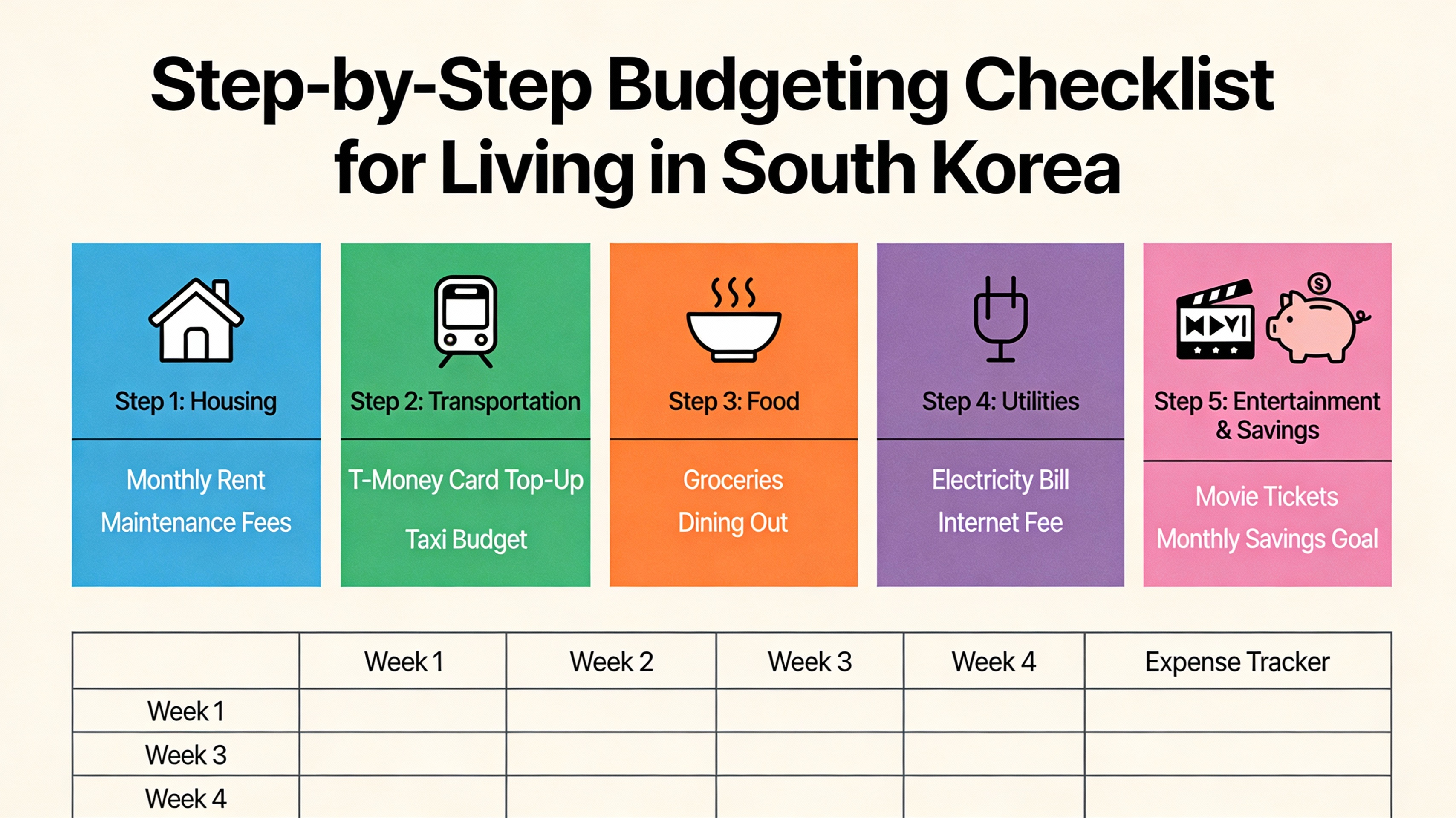
    Budgeting checklist infographic for South Korea
    Generated by Articfly AI

    Actionable steps to manage your finances can make the transition to life in South Korea much smoother. Creating a monthly budget that accounts for both fixed and variable costs is the most effective way to avoid overspending. Using local money-management tools and adopting specific cost-saving strategies can further stretch your won.

    Local apps like KakaoPay and Naver Pay are essential for tracking spending and making seamless digital payments. These tools often offer rewards or cash-back features that benefit regular users. For more advice on financial tools, check out the section on Money Management Apps in Korea or visit expat budgeting blogs like Expat Focus.

    Building a Monthly Budget

    Budgeting Checklist

    • Calculate total monthly income.
    • Identify fixed costs (Rent, Utilities, Insurance).
    • Estimate variable costs (Food, Transport, Leisure).
    • Allocate funds for savings and emergencies.

    Money‑Management Tools

    Digital payment platforms are the norm in South Korea, and they often integrate directly with your local bank account. These apps provide real-time updates on your spending habits, helping you stay within your predefined limits. They are particularly useful for managing small daily transactions like coffee or convenience store purchases.

    Cost‑Saving Strategies

    Saving on housing can be achieved by looking for apartments slightly further from subway stations or in up-and-coming neighborhoods. Eating like a local and utilizing the extensive public transport system are other primary ways to keep your expenses low. Bulk buying non-perishables at large discount stores can also provide significant long-term savings.

    Key Takeaways

    Managing your budget effectively requires a clear understanding of both fixed and discretionary expenses. By prioritizing high-value categories like public transit and local dining, you can maintain a high standard of living without excessive spending. Keep these primary considerations in mind as you plan your move.

    • Housing is your biggest variable; research cities like Busan for better value.
    • Public transportation is highly efficient and keeps commuting costs low.
    • National Health Insurance is a mandatory but cost-effective necessity.
    • Local markets offer the best prices for grocery staples and fresh produce.
    • Digital apps like KakaoPay are vital for tracking daily expenditures.

    Quick Budget Formula: Fixed Housing Costs + (Daily Food & Transport x 30) + 15% Buffer = Recommended Monthly Budget.

    FAQ

    What is the average monthly rent for a one-bedroom apartment in Seoul?

    The average rent for a one-bedroom apartment in Seoul typically falls into the average to premium range, depending heavily on the district (gu). Central areas like Gangnam or Yongsan are significantly more expensive than residential neighborhoods on the outskirts.

    How much should I budget for food per month?

    A monthly food budget depends on your ratio of dining out to home cooking. Most residents find an average budget is sufficient if they balance local restaurant visits with grocery shopping at traditional markets.

    Is health insurance mandatory for foreigners?

    Yes, participation in the National Health Insurance (NHI) system is mandatory for most foreigners residing in South Korea for more than six months. This ensures access to the national healthcare network at subsidized rates.

    Can I live comfortably on a $2,000 monthly budget?

    Living comfortably on $2,000 per month is generally possible in many parts of South Korea, including Seoul, provided you manage housing and dining costs carefully. This budget typically covers a standard studio apartment, regular use of public transit, and a mix of local dining and home-cooked meals.

    Next steps for South Korea

    Taking the next step toward your move involves gathering the right tools and professional advice to ensure financial stability. You can start by downloading a free budgeting worksheet tailored for the Korean market or exploring our relocation consulting service for personalized guidance. Subscribe to our newsletter to receive the latest expat guides and up-to-date cost of living information directly in your inbox.

  • Cost of Living in Japan 2024: Detailed Breakdown by City

    Cost of Living in Japan 2024: Detailed Breakdown by City

    Overview of Living Costs in Japan

    Breakdown of average monthly living expenses in Japan
    Generated by Articfly AI

    Understanding the average monthly budget is essential for anyone planning a move to the Land of the Rising Sun. Japan offers a high standard of living, but costs can vary significantly based on your lifestyle choices and regional location. Most expats should prepare for expenses related to housing, food, transportation, and healthcare as their primary monthly buckets.

    The cost of living fluctuates greatly depending on whether you choose a metropolitan hub like Tokyo or a more rural setting. Major cities offer convenience and job opportunities but come with higher rent and service costs. Conversely, rural areas provide a more affordable lifestyle but may require additional expenses like car ownership.

    City Estimated Monthly Cost (Single Person) Estimated Monthly Cost (Family of Four)
    Tokyo Around ¥150,000 – ¥250,000 Around ¥400,000 – ¥600,000
    Osaka Around ¥120,000 – ¥180,000 Around ¥350,000 – ¥500,000
    Kyoto Around ¥110,000 – ¥170,000 Around ¥330,000 – ¥480,000
    Rural Areas Around ¥80,000 – ¥130,000 Around ¥250,000 – ¥400,000

    For more detailed planning, you may find the Japan Relocation Checklist useful or refer to the Japan-Guide.com cost-of-living page for further insights.

    Major Expense Categories

    • Housing: Includes rent, management fees, and initial move-in costs.
    • Utilities: Covers electricity, gas, water, and home internet services.
    • Food: Encompasses groceries and dining out at restaurants.
    • Transportation: Includes daily commuting passes and occasional travel.
    • Healthcare: Focuses on national health insurance premiums and co-pays.

    Regional Cost Variations

    High-cost versus low-cost regions are primarily defined by the proximity to major economic centers. Kanto and Kansai regions generally represent the higher end of the spectrum, while prefectures in Kyushu or Tohoku offer more budget-friendly living conditions.

    Housing Expenses

    Typical Japanese apartment interior illustrating housing costs
    Photo Max Vakhtbovycn from Pexels

    Monthly rent and utilities typically constitute the largest portion of an expat’s budget. While city centers in Tokyo are known for premium prices, more affordable options exist in suburban areas and smaller cities. It is important to account for “reikin” (key money) and security deposits when first securing a lease.

    Utility costs remain relatively stable but can spike during extreme summer or winter months due to air conditioning and heating needs. Standard services such as electricity, water, and gas are efficient and easily managed through monthly billing systems. For more information, check the Ministry of Land, Infrastructure, Transport and Tourism stats or the guide on Finding an Apartment in Japan.

    City Average Rent (1-Bedroom) Typical Utility Cost
    Tokyo ¥80,000 – ¥150,000 ¥15,000 – ¥20,000
    Osaka ¥50,000 – ¥90,000 ¥12,000 – ¥18,000
    Kyoto ¥45,000 – ¥85,000 ¥12,000 – ¥18,000

    Rent vs. Purchase

    Renting provides flexibility for those new to Japan, whereas purchasing property can be a long-term investment. Most foreigners choose to rent initially to understand different neighborhoods before committing to a mortgage, which typically requires a significant down payment and permanent residency status for the best rates.

    Typical Prices by City

    Safe rent ranges for a standard one-bedroom apartment often begin at approximately ¥80,000 in central Tokyo. In contrast, similar accommodations in Osaka or Kyoto may range from approximately ¥50,000 to ¥80,000, depending on the age of the building and proximity to the nearest station.

    Food and Groceries

    Japanese supermarket shelves showing grocery options
    Photo Markus Winkler from Pexels

    Budgeting for food and groceries allows for a mix of high-quality local produce and affordable dining out experiences. Japan is famous for its convenience stores and local eateries that provide nutritious meals at reasonable prices. Shopping at local supermarkets and discount stores can significantly lower your monthly expenditures compared to relying on imported goods.

    Average meal prices at restaurants range from budget-friendly “teishoku” sets to high-end dining experiences. A typical lunch at a local cafe might cost around ¥800 to ¥1,200, while a mid-range dinner could range from ¥2,000 to ¥4,000. For data on current prices, consult a reputable consumer price index source or the Japanese Grocery Shopping Guide.

    Eating Out vs. Home Cooking

    Cooking at home is generally the most cost-effective way to live in Japan, especially when buying seasonal vegetables and local meats. While eating out at “gyudon” shops or ramen stalls is affordable, consistent restaurant dining can quickly inflate a monthly budget. Preparing bento lunches is a common strategy used by residents to save money during the work week.

    Average Monthly Grocery Budget

    Typical grocery costs for a single person usually range from approximately ¥30,000 to ¥50,000 per month. Families should expect this figure to increase based on the number of members and dietary preferences. Seasonal variations in fruit and vegetable prices are common, so buying what is currently in season helps maintain a steady budget.

    Transportation

    Tokyo subway train representing public transportation costs
    Photo Valent Lau from Pexels

    Reliable public transportation networks make it possible to live comfortably in Japan without owning a personal vehicle. Most residents rely on the extensive train and bus systems, which are known for their punctuality and efficiency. Commuter passes are often subsidized by employers, which can greatly reduce the financial burden of daily travel.

    Intercity travel, such as using the Shinkansen, is a premium expense that should be budgeted for occasionally. For those planning extensive travel, the Japan Rail Pass official site provides options for visitors, while residents can look for local discount tickets. You can learn more through the guide on Navigating Japan’s Public Transit.

    • Train/Subway: High efficiency, predictable costs, but can be crowded during peak hours.
    • Buses: Excellent for reaching areas not served by trains, generally affordable flat fares.
    • Bicycles: Very common for short commutes, low maintenance, and easy to park.
    • Car Ownership: High fixed costs like parking and insurance, but provides maximum freedom in rural areas.

    Public Transit Passes

    Monthly commuter passes are calculated based on the specific route between your home station and work or school station. In Tokyo, a typical monthly pass might cost between ¥10,000 and ¥20,000 depending on the distance covered. These passes often allow for unlimited travel between the designated stations, providing extra value for weekend trips along that route.

    Owning a Car

    Vehicle maintenance and fees include mandatory bi-annual inspections (shaken), insurance, and parking fees, which can be quite expensive in urban centers. In cities like Tokyo, monthly parking alone can cost as much as a small apartment in a rural prefecture. Gasoline prices are generally stable but higher than in the United States.

    Healthcare and Insurance

    Japanese clinic reception area showing health insurance usage
    Photo Pavel Danilyuk from Pexels

    Enrolling in the National Health Insurance system is a mandatory requirement for long-term residents in Japan. This system ensures that medical costs remain manageable by covering a significant percentage of doctor visits and prescriptions. Premiums are typically based on your previous year’s income in Japan, making it very affordable for newcomers.

    For more specific details on enrollment, you can visit the Ministry of Health, Labour and Welfare website or read the Health Insurance for Expats guide. Most residents find the quality of care to be excellent with relatively short wait times for standard consultations.

    The Japanese healthcare system is designed to provide universal coverage, ensuring that all residents have access to necessary medical services at a standardized cost regulated by the government.

    Ministry of Health FAQ

    National Health Insurance Basics

    Premiums for insurance are calculated by your local municipal office and are usually billed monthly. For students or those with no income in the previous year, the cost is often reduced to a minimum base rate. It is important to register at your local ward office shortly after moving to ensure continuous coverage.

    Out-of-Pocket Costs

    Typical co-payment rates in Japan are 30% of the total medical bill for most residents. A standard visit to a general practitioner might cost approximately ¥1,000 to ¥3,000 out-of-pocket, including basic medications. Specialized treatments or hospital stays are also subsidized, preventing catastrophic financial loss from illness.

    Key Takeaways

    Summary of key cost of living takeaways in Japan
    Generated by Articfly AI

    Summarizing your financial plan involves looking at the most impactful ways to save while maintaining a high quality of life. By focusing on regional choices and smart grocery habits, you can significantly reduce your monthly overhead. Use the Budget Planner Spreadsheet to track your specific numbers and stay on target.

    • Choose housing outside of major city centers to save up to 40% on rent.
    • Utilize “teishoku” lunch specials and supermarket discounts after 7:00 PM.
    • Register for a commuter train pass to cover your most frequent travel routes.
    • Stay within the National Health Insurance system to cap medical expenses.
    • Budget for seasonal utility spikes in the height of summer and winter.

    Frequently Asked Questions

    How much does a typical monthly rent cost in Tokyo?
    Rent for a one-bedroom apartment in Tokyo typically ranges from approximately ¥80,000 to ¥150,000 depending on the neighborhood and building age.

    Is it cheaper to cook at home than eat out?
    Yes, cooking at home is generally more cost-effective, especially when utilizing local supermarkets. However, budget restaurant options like ramen or beef bowl shops are also very affordable.

    Do I need private health insurance as a foreigner?
    Most foreigners are required to join the National Health Insurance system. Private insurance is usually optional and used only for supplementary coverage or specific international needs.

    What transportation pass offers the best value?
    The monthly commuter pass (teikiken) offers the best value for daily travel between two specific points, such as home and work.

    How do regional costs differ for families?
    Families can save significantly on housing and food by living in prefectures outside of Tokyo, though they may need to budget more for transportation if a car is required.

    Next steps for planning your budget

    Taking action on your finances is the best way to ensure a smooth transition to life in Japan. Start by downloading the Budget Template Download to see how your expected income matches these typical expenses. You can also use the Numbeo cost-of-living calculator for real-time data comparisons between your current city and your destination in Japan. Finally, consider joining expat forums for real-world insights from people currently living in your target neighborhood.

  • Can You Live in North Korea? Truth About Daily Life

    Can You Live in North Korea? Truth About Daily Life

    Overview – Is Living in North Korea Possible?

    Exploring the practicalities of residing in North Korea reveals a stark reality shaped by its unique political and social landscape. The Democratic People’s Republic of Korea (DPRK) has historically maintained a deeply closed society, making long-term foreign residency exceptionally rare and highly restricted.

    For most, visits are limited to short-term, guided tours, which differ significantly from establishing legal residency. The government’s stance on foreign residents is stringent, typically allowing only those with diplomatic postings, humanitarian aid workers, or specific government-approved roles to live within its borders.

    A recent statement from a CNN report, discussing topics such as ongoing development and housing in Pyongyang (as described in the master plan), would be presented here.

    For those seeking deeper insight into the country, resources such as the brand’s About North Korea page provide comprehensive background. News coverage, like this CNN article, often sheds light on recent developments and aspects of daily life, though access to information remains limited.

    Housing and Living Conditions

    Where foreign residents sleep and the quality of their dwellings varies dramatically depending on their status and location, primarily between urban centers and rural areas. Pyongyang, the capital, presents a distinct living experience compared to the rest of the country.

    Typical rural North Korean mud‑brick home with surrounding farmland
    Photo photos from Pexels

    Urban housing in Pyongyang

    In Pyongyang, foreign residents are typically housed in modern high-rise apartment blocks, often within designated compounds. These residences may offer some amenities, though consistent electricity supply can be an issue, leading to intermittent power outages.

    Access to reliable water is generally better in these urban settings compared to rural areas. These buildings, while appearing modern, operate under strict regulations regarding their foreign occupants.

    Feature Average Apartment Size Electricity Reliability Access to Water
    Pyongyang Foreigner Housing Varies (e.g., 2-3 rooms) Intermittent Generally reliable
    Average Rural Home Small (1-2 rooms) Highly unreliable Often limited/manual

    Rural housing

    Outside Pyongyang, housing conditions are significantly more basic, with most North Koreans living in traditional mud-brick or concrete homes. These dwellings often lack modern utilities, presenting substantial challenges for daily life.

    Foreigners rarely, if ever, reside in rural areas unless part of specific, highly supervised projects. Common challenges include rudimentary heating systems, limited or no access to clean running water, and inadequate sanitation facilities.

    • Heating: Often relies on wood or coal, leading to indoor air pollution.
    • Water: Typically sourced from communal wells or hand pumps, requiring manual transport.
    • Sanitation: Primitive latrines are common, with limited modern plumbing.

    Further details on housing challenges can be found in reports like those from Radio Free Asia housing article.

    Food, Rations, and Daily Needs

    Understanding how food is obtained and the reality of nutrition is crucial for anyone considering life in North Korea. The primary system for citizens is government rations, which have historically provided limited quantities.

    According to the World Food Programme, rations for individuals are typically between 300-400g per person per day. Foreign residents, particularly those with diplomatic status, often have access to different supply chains or special stores, but the general population faces significant limitations.

    Market stall showing limited food items available in North Korea
    Photo Kamaji Ogino from Pexels

    Beyond official rations, markets, known as jangmadang, exist and serve as crucial supplements for many, offering a wider variety of goods including some food items. However, access to these markets for foreigners can be restricted and monitored.

    Access to clean water, while better in privileged urban areas, can be a concern nationwide. Healthcare basics are universally available but often lack advanced equipment, medication, and highly trained specialists, particularly outside the capital.

    Insights into daily life, including food and other necessities, are often documented in reports such as the PSCORE report on daily life.

    Work, Employment, and Legal Status

    The avenues for foreigners to secure work and obtain legal permits in North Korea are extremely narrow. Unlike most countries, there is no open private sector employment for foreign nationals.

    Work opportunities are almost exclusively limited to specific roles within diplomatic missions, international non-governmental organizations (NGOs), or United Nations (UN) agencies. These positions require direct invitation and extensive government approval.

    Diplomat discussing work permissions with North Korean officials
    Photo MART PRODUCTION from Pexels

    Visa categories for foreigners are highly specialized, often tied directly to their sponsoring organization or government. Each visa application undergoes a rigorous approval process, emphasizing the restrictive nature of long-term stays.

    Visa Type Purpose Eligibility
    Diplomatic Visa Official government representation Accredited diplomats/staff
    Humanitarian Visa Aid work, NGO operations Approved NGO/UN personnel
    Business Visa Specific, state-approved projects Foreign investors/technicians on invitation
    Tourist Visa Short-term, guided travel Organized tour participants

    For detailed information on the various entry and residency requirements, consulting a Visa Guide page is recommended.

    Travel, Movement, and Surveillance

    Internal travel for foreigners within North Korea is severely restricted and subject to constant monitoring. Movement between cities and regions requires explicit permission from relevant authorities, and travel outside designated areas is prohibited.

    Surveillance is a pervasive aspect of life, not only for citizens but also for foreign residents. Methods include extensive use of cameras in public spaces and the presence of informants, making privacy a significant concern.

    Surveillance camera overlooking a street in North Korea
    Photo Henrikas Mackevicius from Pexels

    Restrictions on photography are particularly strict, with specific sites and individuals forbidden from being photographed without permission. Violations can lead to serious consequences, as detailed in articles like RAW in Focus.

    A personal account from a defector, detailing experiences with movement restrictions and surveillance, would be featured here.

    These controls underscore the government’s tight grip on information and interaction. Further analysis on such restrictions can be found in sources like the Daily NK analysis.

    Cultural Norms and Social Life

    Navigating the cultural norms and social expectations in North Korea requires careful adherence to local customs and ideological pressures. Foreigners are expected to show respect for the country’s leaders and its socialist system.

    Mandatory portrait displays of the leaders, Kim Il Sung and Kim Jong Il, are ubiquitous in public buildings and private homes, symbolizing their revered status. Community meetings, known as samul nori (though this term usually refers to a musical genre, in context here, it refers to collective activities or meetings), and other collective activities are central to daily life for citizens, fostering a sense of collective identity and ideological unity.

    Infographic of cultural etiquette guidelines for foreigners in North Korea
    Generated by Articfly AI

    Internet access is extremely limited for both citizens and most foreign residents, typically restricted to a state-controlled intranet. State media consumption is the primary source of information, shaping public perception and understanding.

    For a comprehensive guide on proper conduct, reviewing a Cultural Etiquette page is highly advisable.

    Risks and Legal Consequences

    Understanding the potential dangers of overstaying a visa or violating rules is paramount for anyone in North Korea. The legal system is opaque, and foreigners found in contravention of laws can face severe repercussions.

    Possible consequences range from detention and interrogation to deportation, or in more serious cases, long prison sentences. There have been several high-profile cases of tourists and foreign residents being expelled or detained for alleged infractions, underscoring the strict legal environment.

    It is crucial to have emergency contacts readily available and to register with your country’s embassy or consulate if such services are available. News sources often cover incidents involving foreigners, such as BBC coverage, offering insights into the legal risks.

    Key Takeaways

    Summarizing the most critical points provides quick reference for those considering North Korea.

    • Legal residency is highly restricted, primarily for diplomats and aid workers.
    • Housing and amenities vary, with Pyongyang offering more modern but still limited facilities.
    • Food is rationed for citizens, with foreign residents often having different supply channels.
    • Employment for foreigners is almost non-existent outside specific diplomatic or NGO roles.
    • Strict controls on travel, movement, and pervasive surveillance are daily realities.
    • Adherence to cultural norms and respect for leadership are strictly enforced.
    • Violating laws carries severe risks, including detention and deportation.

    This overview provides a foundational understanding, but further research is always encouraged.

    Frequently Asked Questions

    Here are answers to common queries regarding life in North Korea, presented concisely.

    Can a tourist stay longer than 30 days?

    Generally, tourist visas are strictly limited to the duration of the organized tour, typically not exceeding 30 days. Extending a tourist stay is highly uncommon and would require exceptional, government-approved circumstances.

    Are there any legal ways to own property?

    Foreigners are generally not permitted to own property in North Korea. Any arrangements for housing are typically rental agreements facilitated by sponsoring organizations or the government itself.

    How does the food ration system work for foreigners?

    Foreigners, especially diplomatic staff or NGO workers, usually do not rely on the public food ration system designed for citizens. They often have access to dedicated foreign currency stores or import their own supplies, though options are still limited.

    What happens if you are caught photographing restricted sites?

    Unauthorized photography of restricted sites, military personnel, or ordinary people without permission can lead to immediate detention, interrogation, confiscation of equipment, and potential deportation or more severe penalties. It is a serious offense.

    Is there any path to permanent residency?

    There is currently no established or recognized path for foreigners to obtain permanent residency in North Korea in the conventional sense. Long-term stays are contingent upon ongoing employment with an approved organization or diplomatic mission.

    For more answers, consult a comprehensive FAQ hub page.

    Next steps for living in North Korea

    If you are seriously considering the extraordinary prospect of moving to North Korea, thorough preparation and adherence to official channels are absolutely critical. This is not a decision to be taken lightly, given the unique challenges and constraints.

    Begin by meticulously researching official visa channels, typically through DPRK embassies or diplomatic missions in select countries. Direct engagement with their consular sections will provide the most accurate and up-to-date requirements for any form of long-term stay.

    Additionally, connecting with international NGOs or UN agencies that have operations in the DPRK can provide invaluable insights and potential pathways, as these are the primary entities that facilitate foreign long-term presence. Ensure all your documentation is culturally sensitive and meticulously prepared according to strict guidelines.

    Crucially, develop a robust emergency plan and identify key contacts both within North Korea and externally, as communication infrastructure can be unreliable. For further assistance in planning, download our free North Korea Relocation Checklist from our resource library. You may also consult an official DPRK embassy page for initial inquiries.

  • Low-Cost SEO Strategies That Beat Expensive Campaigns in 2026

    Low-Cost SEO Strategies That Beat Expensive Campaigns in 2026

    Understanding the Real Cost of SEO

    Magnifying glass highlighting SEO costs vs price tags
    Photo Hanna Pad from Pexels

    Debunking myths about expensive SEO is crucial for small businesses and startups. Many believe that competing with high-spend campaigns requires an equally large budget, which is often not the case. This section aims to set realistic expectations by comparing typical agency fees with DIY costs and highlighting the long-term value of sustainable tactics.

    Understanding where money is actually spent in SEO can help identify areas for budget-friendly alternatives. Focus on strategy and consistent effort, rather than simply throwing money at the problem. This playbook will show you how smart decisions can lead to market advantage.

    Common Misconceptions About Pricey Campaigns

    A widespread myth suggests that higher spending guarantees top rankings in search engine results. However, this is a misconception; while budget can provide resources, it does not inherently buy success. Strategy, relevance, and consistent execution ultimately matter more than the sheer volume of investment.

    Many expensive campaigns can underperform if they lack a solid foundation or target irrelevant keywords. Conversely, well-executed, low-cost strategies can yield significant returns by focusing on niche relevance and user intent. The key is intelligent allocation of time and resources, not just capital.

    What Businesses Actually Pay For

    Businesses typically pay for a range of specialized services when investing in SEO. These often include technical audits, comprehensive content creation, and extensive link acquisition efforts. Each of these areas can incur significant costs when outsourced to agencies or specialists.

    However, there are effective ways to cut these expenses without sacrificing quality. Performing your own technical audits, creating content with existing resources, and implementing strategic link-building tactics can drastically reduce your overall spend. The goal is to achieve similar outcomes through smart, internal effort.

    SEO Approach Typical Activities Included Estimated Monthly Cost
    Agency Managed Full technical audits, content strategy & creation, link building outreach, reporting, competitor analysis $500 – $5,000+
    DIY (Self-Managed) Free tool usage (Google Search Console), content repurposing, local citations, basic on-page optimization $0 – $50

    Core Low-Cost SEO Tactics That Deliver Results

    Sticky notes with budget-friendly SEO keywords
    Photo Bruno Bueno from Pexels

    Foundational tactics that any budget can execute are the backbone of effective low-cost SEO. These strategies focus on maximizing your current resources and leveraging free tools to gain a competitive edge. You don’t need a huge budget to make a significant impact on your search rankings.

    From identifying the right keywords to optimizing your website’s pages, these methods are designed for immediate implementation. They prioritize efficiency and measurable results, proving that smart planning can outperform extensive spending. Let’s explore the core tactics that truly deliver.

    Keyword Research on a Budget

    Effective keyword research doesn’t require expensive software subscriptions. You can leverage free tools like Google Trends, AnswerThePublic, and the free tier of Ubersuggest to uncover valuable insights. These platforms help identify trending topics and user queries relevant to your business.

    The key is to focus on long-tail, low-competition terms that your target audience is actively searching for. These specific phrases often have lower search volume but much higher conversion potential. Targeting them allows you to rank more easily and attract highly qualified traffic.

    On-Page Optimization Hacks

    On-page optimization is one of the most impactful low-cost SEO tactics you can implement. Properly optimizing elements like title tags, meta descriptions, and header hierarchy (

    ,

    , etc.) signals to search engines what your content is about. Ensure your primary keywords are naturally included in these areas.

    Further enhance your visibility by implementing structured data snippets using schema.org markup. This helps search engines understand the context of your content, potentially leading to rich snippets in search results. These simple adjustments can significantly improve your click-through rates.

    Technical SEO Basics You Can DIY

    Addressing basic technical SEO issues is crucial for search engine discoverability and can often be done without professional help. Start by regularly checking Google Search Console for any crawl errors that might prevent search engines from accessing your content. Resolving these ensures your pages are properly indexed.

    Another vital step is to ensure your website is mobile-friendly, which you can easily check using Google PageSpeed Insights. A responsive design and fast loading times are non-negotiable for both user experience and search rankings. These simple DIY checks can make a big difference.

    Must-Do Low-Cost SEO Tactics Checklist

    • Utilize Google Trends for keyword discovery.
    • Optimize title tags and meta descriptions with target keywords.
    • Structure content with clear H2, H3, H4 headings.
    • Implement basic schema markup for rich snippets.
    • Monitor Google Search Console for crawl errors.
    • Ensure your website is mobile-friendly and loads quickly.
    • Create or update your Google My Business profile.

    Leveraging Free and Affordable Tools in 2026

    Infographic comparing free and affordable SEO tools in 2026
    Generated by Articfly AI

    The right tools can significantly amplify your low-cost SEO efforts, even without a hefty budget. In 2026, there are more robust free and affordable options than ever before, enabling small businesses to compete effectively. Choosing the correct tools empowers you to streamline processes and gain valuable insights.

    This section will highlight the best current tools that either cost nothing or less than $20 per month. We’ll examine their core functionalities and criteria for selection, ensuring you can make informed decisions. Leveraging these resources efficiently is key to a successful budget-friendly strategy.

    Free Tools

    Many powerful SEO tasks can be accomplished using completely free tools. Google Search Console is indispensable for monitoring your site’s performance in Google Search, identifying indexing issues, and submitting sitemaps. Similarly, Bing Webmaster Tools offers similar functionality for the Bing search engine, providing valuable insights into your site’s visibility.

    For more technical audits, Screaming Frog SEO Spider Lite allows you to crawl up to 500 URLs for free, helping identify broken links, redirect chains, and missing meta descriptions. Mastering these free platforms provides a strong foundation for your SEO initiatives. Top Free SEO Tools 2026 offers more detailed guidance.

    Affordable Paid Tools

    When your budget allows for a small investment, affordable paid tools can offer enhanced features and deeper analysis. Ubersuggest, for instance, provides keyword research, content ideas, and competitor analysis at a low monthly cost. Surfer SEO Lite helps with on-page optimization by suggesting content adjustments based on top-ranking competitors.

    Ahrefs Webmaster Tools, while part of a larger paid suite, offers free access to a limited version that provides site audits and backlink data. Evaluate the cost-benefit of each tool based on your specific needs and budget constraints. Prioritize tools that address your most pressing SEO challenges and offer the highest potential ROI for your minimal spend.

    Choosing the Right Tool for Your Niche

    Selecting the optimal SEO tool depends heavily on your specific business niche and immediate goals. Consider what aspects of SEO you need to prioritize: keyword research, technical audits, content optimization, or backlink analysis. A tool that excels in your weakest area will provide the most value.

    Think of it as a decision-tree: if you’re struggling with keyword ideas, prioritize tools like Ubersuggest or AnswerThePublic. If technical errors are holding you back, Google Search Console and Screaming Frog are essential. Aligning tool capabilities with your strategic needs ensures maximum impact from minimal investment.

    Content Strategies on a Shoestring Budget

    Team brainstorming low-budget content strategies
    Photo Mikhail Nilov from Pexels

    Producing high-impact content without hiring expensive writers is entirely achievable with strategic planning. The key lies in leveraging your existing assets and community resources, along with smart content creation techniques. You don’t need a massive content budget to rank for valuable keywords and attract your target audience.

    This section will guide you through repurposing content, utilizing user-generated contributions, and applying techniques like the skyscraper method. These approaches ensure you maintain a robust content presence while keeping costs minimal. Remember, quality and relevance often trump sheer volume in content marketing.

    Repurposing Existing Assets

    Repurposing existing assets is an incredibly efficient way to generate new content without starting from scratch. Begin by identifying your evergreen content – blog posts, webinars, or PDFs that remain relevant over time. Update these pieces with current data, fresh examples, and enhanced SEO optimization.

    A webinar transcript can become several blog posts, social media snippets, or an infographic. A detailed PDF guide can be broken down into a series of email newsletters. This strategy maximizes the value of content you’ve already invested in, extending its reach and improving its search performance. Repurposing Content for SEO provides further insights.

    User-Generated Content & Community Building

    Harnessing user-generated content (UGC) is a powerful, low-cost strategy for enriching your site and building community. Encourage customers to leave reviews, submit Q&A, or participate in forums related to your products or services. This content is authentic, relevant, and directly addresses customer concerns, which search engines value.

    Additionally, leverage platforms like Reddit and Quora not only to engage with potential customers but also to gather topic ideas. Pay attention to common questions and discussions within your niche, using these insights to inform your content creation. This approach provides valuable, organic content that costs nothing to produce.

    Skyscraper Technique with Limited Resources

    The skyscraper technique can be adapted for limited resources to create high-ranking content. Instead of trying to create the “best” piece of content on a topic from scratch, identify an existing piece of content that performs well but lacks certain elements. Look for low-competition targets with solid but improvable content.

    Your goal is to make it significantly better by adding unique data, fresh perspectives, or compelling visuals that the original piece is missing. You don’t need to reinvent the wheel; just find a way to add substantial, unique value. Search Engine Journal article on the skyscraper technique offers more inspiration.

    Content Type Repurposed Example Brand-New Article Example
    Long-form Guide An old whitepaper on ‘Email Marketing Basics’ updated with 2026 stats and visuals. ‘The Ultimate Guide to AI-Powered Personalization in Email Marketing 2026’.
    Video Content A webinar recording transcribed into a blog post, then split into social media graphics. A professionally filmed interview series with industry leaders on new trends.
    Product Showcase Customer reviews & photos compiled into a ‘User Favorites’ blog post. A dedicated landing page with custom photography and expert-written descriptions for a new product launch.

    Building Authority Without Breaking the Bank

    Networking and guest posting on a shoestring budget
    Photo fauxels from Pexels

    Achieving strong domain authority and building valuable backlinks doesn’t require an enormous budget. Smart link-building and PR tactics can significantly boost your site’s credibility and search rankings for minimal cost. The focus here is on strategic outreach, leveraging existing platforms, and earning media through clever pitching.

    These methods allow small businesses to gain authoritative links and mentions that rival those secured by high-spend campaigns. It’s about being resourceful, providing value, and knowing where to find opportunities. Let’s explore how to build authority effectively and affordably.

    Strategic Outreach and Guest Posting

    Strategic outreach is vital for securing valuable guest posting opportunities and backlinks. Focus your efforts on researching low-authority sites that have high relevance to your niche. These sites are often more receptive to high-quality guest content than larger, more established publications.

    When you reach out, offer value-added content that addresses a specific need or fills a content gap for their audience. Personalized email templates can significantly increase your success rate. Effective Outreach Templates can help you craft compelling messages. Guest posting remains a strong tactic for increasing your domain authority and referral traffic.

    Local Citations and Business Listings

    For local businesses, maintaining consistent NAP (Name, Address, Phone number) information across online directories is paramount. This consistency is a critical signal for local SEO and helps search engines verify your business’s legitimacy. Start by ensuring your Google My Business profile is fully optimized and up-to-date with accurate information and compelling images.

    Beyond Google, leverage niche-specific industry directories and prominent local listing sites. Many of these platforms offer free basic listings that can significantly boost your local search presence. A comprehensive approach to local citations builds trust with both search engines and potential customers.

    Earned Media Through PR Hacks

    Earning media coverage without a PR agency is achievable through creative “PR hacks.” Identify newsworthy angles within your business or industry that could be of interest to journalists and bloggers. This might involve sharing unique data, commenting on a trend, or announcing a local community initiative.

    Platforms like HARO (Help A Reporter Out) connect journalists with expert sources, offering a fantastic opportunity to get featured in major publications for free. Additionally, engaging with micro-influencers in your niche can lead to valuable mentions and backlinks without significant financial outlay. HARO official site provides a direct avenue for these opportunities.

    “We started with a simple email outreach campaign, offering unique insights to local blogs. Within three months, we secured five high-quality backlinks and saw a 15% jump in organic traffic. It proves that personalized value trumps mass emails every time.”

    — A Small Business Owner on Low-Budget Outreach

    Measuring Success and Scaling Up

    Chart illustrating SEO ROI growth from a $50 start
    Generated by Articfly AI

    Equipping yourself with free metrics and a clear growth plan is essential for any low-cost SEO strategy. Understanding how to track your progress allows you to identify what’s working and what isn’t, enabling informed adjustments. You don’t need expensive software to monitor key performance indicators (KPIs).

    This section will guide you through the core metrics to focus on and how to use free tools to visualize your data. We’ll also cover when and how to reinvest any gains to scale your efforts effectively. Measuring success is the first step towards sustainable growth.

    Key Metrics to Track Without Expensive Software

    Tracking core KPIs is straightforward with readily available free tools. Organic traffic, keyword rankings, and click-through rate (CTR) are fundamental indicators of your SEO performance. Google Search Console provides invaluable data on keyword performance, impressions, clicks, and average position for your site.

    Google Analytics, another free tool, allows you to monitor organic traffic volume, user behavior on your site, and conversion rates stemming from organic search. By regularly reviewing these metrics, you can identify trends and pinpoint areas for improvement without any financial investment. SEO KPI Dashboard Template can offer more structure for this.

    When to Reinvest and How to Allocate Budget

    Knowing when to reinvest your profits back into SEO is crucial for sustainable growth. Establish clear thresholds for scaling your spend based on achieved organic traffic, lead generation, or sales increases. Once these milestones are met, consider dedicating a portion of your new revenue to expand your SEO efforts.

    Allocate this newfound budget strategically, focusing on high-ROI tactics that have already proven effective. This might include investing in a premium keyword research tool, subscribing to a content optimization platform, or hiring a freelance content writer for specific high-value pieces. Always prioritize actions that offer the greatest potential for further returns.

    Key Takeaways

    Achieving market advantage with ultra-low-cost SEO is not just possible, it’s a definitive playbook for 2026. Smart strategy consistently trumps big spend when executed effectively.

    Here are seven impactful low-cost actions you can start today to transform your SEO strategy:

    • **Master free keyword tools:** Use Google Trends, AnswerThePublic, and Ubersuggest to find long-tail, low-competition terms.
    • **Optimize on-page elements rigorously:** Perfect your title tags, meta descriptions, and header hierarchy, and add schema markup.
    • **Perform DIY technical audits:** Regularly check Google Search Console for errors and ensure mobile-friendliness with PageSpeed Insights.
    • **Leverage free tools daily:** Integrate Google Search Console and Bing Webmaster Tools into your routine for monitoring and improvements.
    • **Repurpose existing content creatively:** Transform old webinars, PDFs, and blog posts into fresh, SEO-optimized material.
    • **Build authority through strategic outreach:** Focus on guest posting on relevant, accessible sites and using HARO for earned media.
    • **Monitor KPIs with free dashboards:** Track organic traffic, keyword rankings, and CTR using Google Analytics and Search Console to guide your next moves.

    FAQ

    Can $50 really make a difference in SEO?

    Yes, absolutely. While $50 might not cover extensive campaigns, it can fund crucial tools like a month of Ubersuggest’s basic plan or a small advertising boost. More importantly, $50 can be used for training resources or to outsource a very specific, high-impact micro-task, significantly augmenting what you can do with free tools and your own time.

    How long before I see results from low-cost tactics?

    SEO is a long-term strategy, regardless of budget. You can expect to see initial improvements in areas like crawlability and indexing within weeks for technical fixes. For keyword rankings and significant organic traffic growth, it typically takes 3-6 months of consistent effort. Patience and persistence are key.

    Which free tool gives the best backlink data?

    For truly free backlink data, Google Search Console is invaluable for showing links *to your own site*. While it doesn’t show competitor backlinks, it’s essential for understanding your own link profile. Ahrefs Webmaster Tools also offers a powerful free tier for backlink analysis of your verified sites, which is highly recommended for deeper insights.

    Is guest posting still effective in 2026?

    Yes, guest posting remains highly effective in 2026 when done strategically. The focus has shifted from quantity to quality and relevance. Guest posts should offer genuine value to the host site’s audience and come from reputable, relevant sources. It’s about building genuine relationships and authority, not just acquiring links.

    How do I know when to upgrade to paid tools?

    You’ll know it’s time to consider paid tools when your free tools can no longer provide the depth of data or automation you need to scale. This might be when you hit URL limits, require more advanced competitor analysis, or need integrated reporting. Start with a small, specific paid tool that addresses your biggest bottleneck and demonstrates clear ROI before expanding further.

    Next steps for low-cost SEO

    Ready to unlock market advantage with smart, budget-friendly SEO strategies? Your journey to competing with high-spend campaigns starts now.

    Take action today by exploring these essential resources:

    • Download our free “Low-Cost SEO Starter Kit” checklist to begin implementing these tactics immediately.
    • Subscribe for weekly budget SEO tips delivered straight to your inbox, keeping you ahead of the curve.
    • Join our community forum for peer support, shared insights, and answers to your pressing SEO questions.
  • How Small Teams Can Outperform Giants Through Automation

    How Small Teams Can Outperform Giants Through Automation

    Why Automation Levels the Playing Field

    Comparison infographic of automation benefits for small teams
    Generated by Articfly AI

    Strategic automation allows small teams to compete with large firms by streamlining complex processes and reducing manual labor. By shifting focus from administrative maintenance to high-level strategy, organizations can optimize existing resources without the need for massive headcount expansion. This narrowed gap in speed and accuracy often defines the difference between growth and stagnation.

    Cost vs. Capability Comparison

    Resource allocation becomes much more efficient when technology handles repetitive tasks. Small businesses can operate with lower overhead costs while maintaining the same output quality as corporations with significantly larger departments. This efficiency allows for a more agile response to market changes and customer needs.

    Real-World Success Snapshots

    Operational speed is significantly increased when software handles the heavy lifting of data management and communications. Small firms that adopt these workflows report fewer human errors and faster turnaround times for client deliverables. These gains prove that size disadvantage can be offset by a smart technical foundation.

    Process Type Manual Effort Automated Effort
    Data Entry Approximately 4 hours daily Instant synchronization
    Reporting Manual monthly consolidation Real-time dashboard updates
    Customer Follow-up Daily manual emails Triggered workflow sequences

    Identifying Repetitive Tasks in Small Teams

    Employee doing repetitive data entry tasks
    Photo Karola G from Pexels

    Workflow auditing is the essential first step for any team looking to pinpoint exactly where time is being lost to repetition. Analyzing hidden inefficiencies in sales, marketing, and general operations helps leaders identify which tasks are the best candidates for removal from the human workload. This process requires an honest assessment of daily habits across every team function.

    Common Pain Points Across Functions

    Functional bottlenecks often occur in areas where data must be moved between different software platforms manually. Sales teams frequently struggle with lead notifications, while marketing departments may lose hours to social media scheduling and content distribution. Recognizing these specific pain points allows for a more targeted automation strategy.

    Task Mapping Worksheet

    Structured assessment is made easier by using a task mapping worksheet to document every recurring action. Team leads should encourage staff to record how much time is spent on non-strategic duties each week. This documentation provides the data needed to justify the implementation of new tools.

    • Sales lead notifications and routing
    • Invoice generation and payment tracking
    • Social media post scheduling
    • Customer support ticket categorization
    • Meeting scheduling and reminders

    Choosing the Right Automation Tools

    Selection of popular automation tool logos
    Photo Pavel Danilyuk from Pexels

    Tool selection involves evaluating platforms based on their ease of use, integration capabilities, and total cost for small teams. The goal is to find software that connects existing apps without requiring deep technical knowledge or a full-time developer. High ROI tools often offer tiered pricing that fits teams of 2 to 20 people perfectly.

    Low-Code vs. No-Code Platforms

    Platform accessibility is a major factor when choosing between no-code and low-code solutions. No-code tools allow team leads to build workflows using visual drag-and-drop interfaces, which is ideal for non-technical staff. Low-code options provide more flexibility for complex logic but may require some basic scripting knowledge.

    Criteria Checklist for Small Teams

    Selection criteria must include the quality of the integration ecosystem and the level of customer support provided. Small teams should prioritize tools that offer pre-built templates for common tasks like email marketing and CRM management. Testing the software with a small pilot project is the best way to ensure it fits the team’s specific needs.

    Tool Cost Tier Ease of Use Integrations
    Zapier Free to Enterprise High 5,000+
    Make Tiered Monthly Medium 1,000+
    Power Automate License-based Medium Microsoft Ecosystem

    Implementing Automation: A Step-by-Step Guide

    Flowchart of automation implementation process
    Generated by Articfly AI

    Implementation strategy begins with a single pilot project designed to deliver quick results and build team confidence. Rather than attempting to automate every department at once, focus on one high-impact workflow that is currently draining resources. This focused approach ensures that the transition is manageable and results are measurable.

    Pilot Project Selection

    Priority setting should focus on processes with clear, repetitive steps and a high volume of transactions. Examples include automated lead capturing or standardized internal status updates that happen daily. Selecting a project with a low margin for error and high frequency ensures the most significant early impact.

    Building and Testing Workflows

    Workflow construction involves mapping out the trigger, the logic, and the resulting action within your chosen platform. It is vital to test these sequences with a small group of users to identify any edge cases or errors before a full rollout. Iterative testing prevents large-scale failures that could discourage the team.

    Training the Team

    Knowledge sharing ensures that every team member understands how to interact with the new automated systems. Creating a simple knowledge base or documentation set helps maintain the workflows even if the primary creator leaves the company. Training reduces friction and encourages further ideas for automation from within the team.

    1. Select a high-impact pilot process with clear ROI.
    2. Map the current manual workflow and identify logic steps.
    3. Build the automation in a sandbox or test environment.
    4. Test with a small user group and iterate based on feedback.
    5. Document the process and conduct final team training.

    Measuring Success and Scaling Automation

    Chart illustrating efficiency improvements post-automation
    Photo Lukas from Pexels

    Performance measurement allows leadership to quantify the specific impact of automation on the business’s bottom line. By tracking how many hours are recovered and how much error rates decrease, managers can justify further investment in technology. These metrics are critical for securing stakeholder buy-in for future scaling efforts.

    Key Metrics to Track

    Success indicators should include time saved per task, the reduction in manual data errors, and the overall cost per transaction. Utilizing simple dashboards or even basic spreadsheets can help visualize these trends over several months. Consistent monitoring ensures that the automation continues to function as intended as the business grows.

    Iterative Scaling Framework

    Scaling automation should follow a structured framework where new projects are selected based on the success of previous ones. Once a pilot is successful, look for similar tasks in other departments that can benefit from the same logic. This gradual expansion helps maintain a high ROI while minimizing organizational stress.

    Key Takeaways

    Key action items provide a roadmap for small businesses looking to harness the power of digital efficiency. By focusing on high-frequency tasks and choosing the right no-code tools, even a small team can achieve massive operational gains. Consistency and clear documentation are the foundations of long-term success.

    “Automation is not about replacing people; it is about freeing them to do the work that only humans can do.”Strategic Automation Guide

    • Start with a single pilot project to prove immediate ROI.
    • Focus on high-frequency, low-complexity tasks first.
    • Use no-code tools to keep technical costs low.
    • Document all workflows to ensure long-term sustainability.
    • Measure time and cost savings to justify future scaling.

    FAQ

    Common questions often arise when small teams begin their digital transformation journey. Understanding the costs and requirements helps leadership move forward with confidence and clarity. Addressing these concerns early prevents friction during the implementation phase.

    Do I need coding skills to start?

    Most modern no-code platforms use visual builders that allow non-technical staff to create complex workflows without writing code.

    What is the typical cost for a small team?

    Many automation tools offer free entry-level tiers or affordable monthly subscriptions tailored for businesses with fewer than 20 users.

    Can automation replace my existing staff?

    Automation is typically used to reallocate staff to higher-value, strategic work by removing the burden of repetitive administrative tasks.

    How long does implementation take?

    A simple pilot project can often be built and tested within a few days, while more complex systems may take several weeks to fully integrate.

    Next steps for small teams

    Call to action image encouraging starting automation
    Photo Andrea Piacquadio from Pexels

    Taking action is the final step in turning automation from a theoretical concept into a tangible competitive advantage. Small business owners should begin by downloading a task-mapping worksheet to perform a thorough internal audit of their daily operations. Scheduling a consultation or exploring a starter guide will provide the technical clarity needed to launch your first pilot project today.
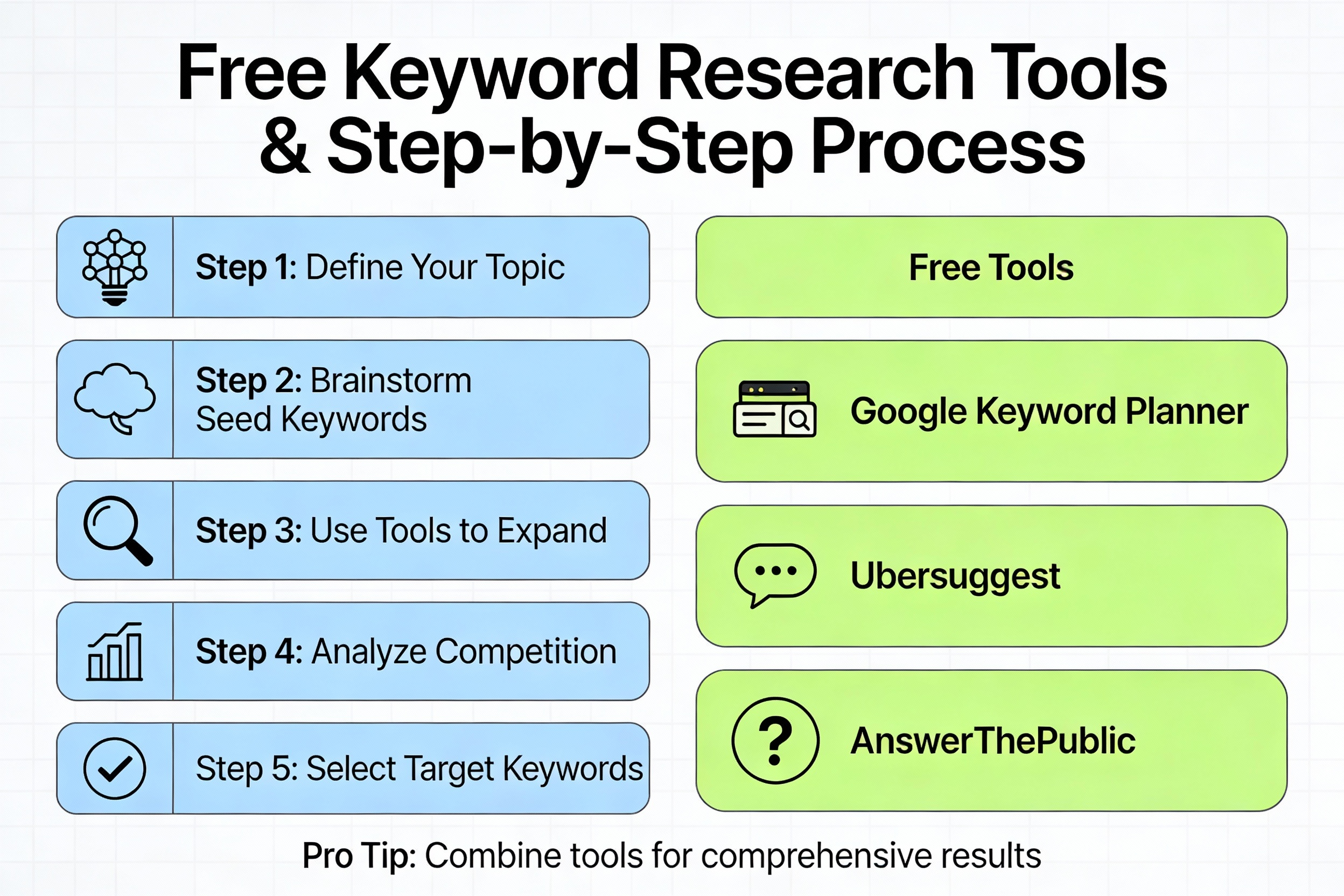
  • How Manual Workflows Erode SaaS Margins as You Scale

    How Manual Workflows Erode SaaS Margins as You Scale

    The Hidden Cost of Manual Workflows in SaaS

    Employee manually entering data, illustrating hidden workflow costs
    Photo Andrea Piacquadio from Pexels

    Manual workflows in a SaaS context refer to any operational process that requires human intervention to transfer data, trigger actions, or update records across systems. While these tasks may seem manageable in the early stages of a startup, they often mask significant hidden costs that drain resources as the company matures.

    Labor expenses are the most obvious burden, but the real damage comes from error correction and delayed revenue. When team members spend hours on administrative data entry, they are not focusing on product innovation or customer success, creating an opportunity cost that is difficult to recover. Furthermore, manual hand-offs frequently lead to data silos and internal friction.

    Process Type Average Time Spent (Manual) Average Time Spent (Automated) Efficiency Gain
    Data Reconciliation 10-15 Hours/Week < 1 Hour/Week 90%+
    User Provisioning 30 Minutes/User Instant 100%
    Reporting & Analytics 5 Hours/Month Real-time 95%+

    Understanding these costs is essential for maintaining long-term profitability. By reviewing SaaS automation best practices and consulting a SaaS benchmark report, leaders can identify where their overhead deviates from industry standards.

    How Manual Processes Amplify Margin Pressure as You Grow

    Bar chart showing margin decline due to manual processes as SaaS scales
    Photo AlphaTradeZone from Pexels

    Diseconomies of manual effort occur when the growth of a SaaS company is met with a disproportionate increase in operational complexity. In a perfectly scalable model, margins should expand as the customer base grows; however, manual steps create a linear relationship between headcount and revenue that eats away at those expected gains.

    As volume increases, the probability of human error compounds, requiring more staff solely for “clean-up” operations. This creates a cycle where more labor is hired to fix the mistakes of previous manual tasks, leading to a noticeable increase in the cost of goods sold (COGS). This operational inefficiency is often cited in Harvard Business Review articles as a primary reason for scaling plateaus.

    To visualize this, consider a bar chart representing margin performance. In an automated environment, the margin percentage climbs steadily alongside revenue. In a manual environment, the margin stays flat or even dips as the “labor tax” of handling more users outweighs the incremental revenue gained from those users. Improving SaaS margins requires breaking this link between growth and manual labor.

    Key Areas Where Manual Workflows Drain Profitability

    Profitability leaks are rarely located in one single department; rather, they are distributed across the entire customer lifecycle. Identifying these specific points of friction is the first step toward reclaiming your margins and ensuring every dollar of revenue is as profitable as possible.

    • Onboarding bottlenecks: High-touch manual setups that slow down the time-to-value for new customers.
    • Billing friction: Invoicing and reconciliation processes that rely on spreadsheets and manual verification.
    • Support overhead: High volumes of repetitive tickets that require manual routing and basic troubleshooting.

    Customer Onboarding

    Diagram comparing manual and automated onboarding processes
    Generated by Articfly AI

    Manual data entry during the onboarding phase often leads to significant delays in product adoption. When a new user has to wait for a human agent to provision an account or upload a configuration file, the risk of early churn increases significantly. Errors made during this stage can haunt the customer relationship for months, requiring constant re-work by the customer success team.

    “Our biggest hurdle wasn’t finding customers; it was the two weeks of manual configuration we had to do for every new sign-up. It felt like we were building a bespoke house for every user instead of a scalable software product.” — SaaS Founder

    Billing & Revenue Recognition

    Flowchart of manual billing errors causing revenue loss
    Generated by Articfly AI

    Manual invoicing creates a ripple effect of compliance risks and missed revenue opportunities. If a finance team has to manually calculate prorated charges or verify usage data, the window for billing errors opens wide. These mistakes don’t just cost money; they erode trust with the customer and increase the finance team’s overhead as they spend days on monthly reconciliation.

    Metric Manual Billing Cycle Automated Billing Cycle
    Invoicing Time 3-5 Days Minutes
    Error Rate Approx. 5-10% Near 0%
    Revenue Leakage Noticeable increase Minimal

    Support & issue Resolution

    Support agent manually handling tickets, illustrating inefficiency
    Photo Jep Gambardella from Pexels

    Ticket triage by hand is an incredibly slow and expensive way to manage customer service. When a support lead has to read every incoming email to decide which department it belongs to, resolution times balloon. This duplicate effort often results in engineers spending time on basic issues that could have been resolved through automated self-service or smarter routing logic.

    A common scenario involves a support team reaching a “breaking point” where they can no longer keep up with the volume of simple password resets and basic queries. Without automation, the only solution is to hire more agents, which further compresses the margins and does nothing to solve the underlying inefficiency of the support flow.

    The Business Impact: From Reduced Margins to Stunted Growth

    Strategic outcomes are directly influenced by the operational health of the organization. When margins are suppressed by manual labor, a company has less capital available to reinvest in Research and Development (R&D), key leadership hires, or aggressive marketing campaigns. This creates a ceiling on growth that competitors with automated stacks can easily bypass.

    This creates a negative feedback loop: higher operational costs lead to slower growth, which creates more pressure to handle things manually “just for now” to save on software costs, which in turn drives costs even higher. According to McKinsey articles on scaling SaaS operations, the most successful companies are those that prioritize operational excellence as a core growth lever rather than a secondary concern.

    The visual representation of this loop shows how manual pressure leads to employee burnout, which leads to higher turnover and further training costs. Breaking this cycle requires a fundamental shift in how the leadership team views the ROI of internal tooling and workflow optimization.

    Automating for Margin Recovery: Strategic Steps

    Roadmap infographic of automation steps to improve SaaS margins
    Generated by Articfly AI

    The ROI of automation is often realized much faster than founders anticipate. By shifting from human-dependent tasks to software-driven workflows, a SaaS company can achieve higher throughput without increasing headcount. The goal is to move the company toward a “low-touch” operational model that supports rapid scaling with consistent costs.

    Taking the first step involves a cold-eyed assessment of current processes. Choosing the right automation tools is not about buying the most expensive software, but about finding the tools that integrate seamlessly with your existing stack and solve your most acute pain points first.

    Prioritize High-Impact Processes

    High-impact processes are those that combine a high frequency of occurrence with a high risk of error. Start by auditing your team’s weekly activities to identify which tasks consume the most “human hours.” Using a simple impact-effort matrix can help you visualize which automation projects will yield the quickest results for the least amount of engineering resources.

    For example, automating a task that takes 10 hours a week but is very easy to script should be prioritized over a task that takes 2 hours but requires a complex custom integration. Focus on the “low-hanging fruit” to build momentum and prove the value of automation to the wider organization.

    Choose Scalable Automation Tools

    Scalable automation tools must be evaluated based on their integration ecosystem and API availability. If a tool doesn’t “talk” to the rest of your tech stack, it simply creates another manual bridge for your team to cross. Many modern SaaS companies are finding success with low-code platforms that allow non-technical staff to build their own workflow triggers.

    • Check for native integrations with your CRM and Billing software.
    • Ensure the pricing model scales with your usage, not just your headcount.
    • Prioritize tools with robust documentation and support.

    Measure ROI and Iterate

    Baseline metrics must be established before any automation is implemented to accurately track progress. Without a “before” snapshot of cost per transaction and error rates, it is impossible to quantify the margin recovery achieved through your efforts. Continuous improvement is key; automation is not a “set it and forget it” project but a core part of operational maintenance.

    Metric to Track Before Automation Target Post-Automation Actual Result
    Cost per Account Setup $XX.XX $X.XX
    Error-related Re-work X Hours/Month < 1 Hour/Month
    Time to Revenue X Days < 1 Day

    Key Takeaways

    Regaining your profit margins requires a disciplined approach to identifying and eliminating manual workflows. By focusing on scalability and automation, SaaS leaders can ensure their business grows more profitable as it expands, rather than more complex and expensive.

    • Manual workflows create a “labor tax” that compounds with growth and suppresses profit margins.
    • Onboarding, billing, and support are the most common areas where manual effort drains profitability.
    • Automation breaks the link between headcount and revenue, allowing for true economies of scale.
    • Success requires a strategic roadmap: prioritize high-impact tasks, use scalable tools, and measure ROI.

    FAQ

    Common questions about transitioning from manual to automated workflows often center on cost and the impact on the customer experience. Here are the most frequent considerations for SaaS leaders.

    • Is automation expensive for early-stage SaaS?While there is an upfront cost in time and software, the long-term savings in labor and the prevention of revenue leakage usually provide a positive ROI within the first year.
    • Can automation affect customer experience negatively?If done poorly, yes. However, well-designed automation usually improves the experience by providing faster response times, fewer errors, and smoother onboarding flows.
    • What’s the quickest manual process to automate?User provisioning and basic notification triggers (like welcome emails or billing alerts) are typically the fastest to implement and provide immediate relief to operational teams.

    For more detailed advice on implementation, see our guide on cost-effective automation for startups.

    Next steps for manual workflows

    Ready to reclaim your margins and build a more scalable SaaS business? The transition from manual chaos to automated efficiency starts with a clear understanding of your current operational leaks and a commitment to fixing them. Taking action today will prevent your growth from being stalled by the weight of human-dependent processes.

    To begin your journey toward operational excellence, consider conducting a comprehensive internal workflow audit. This will allow you to pinpoint the exact tasks that are hurting your profitability the most. You can also reach out for a consultation to see how professional automation strategies can be applied to your specific business model.

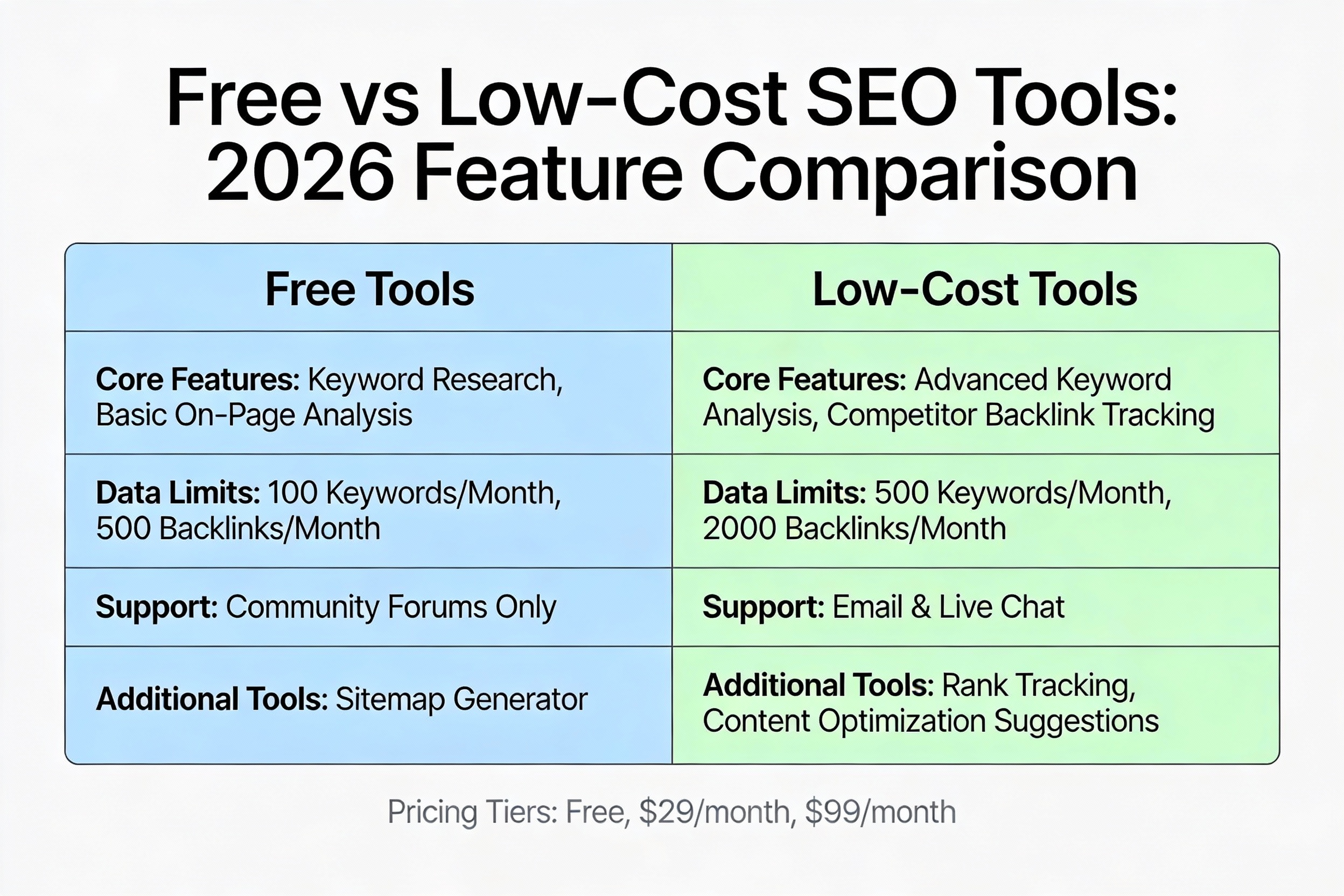

  • Dlaczego siłownia jest bezpieczna w 1. tygodniu stycznia?

    Dlaczego siłownia jest bezpieczna w 1. tygodniu stycznia?

    Dlaczego siłownia jest mniej zatłoczona w pierwszym tygodniu stycznia?

    Wnętrze siłowni z małą liczbą osób w styczniu
    Photo Tima Miroshnichenko from Pexels

    Mniejsza gęstość osób w klubach fitness w pierwszym tygodniu stycznia jest zjawiskiem, które zaskakuje wielu początkujących. Choć przyjęło się uważać, że nowy rok to moment oblężenia siłowni, faktyczna frekwencja w pierwszych siedmiu dniach bywa niższa ze względu na okres poświątecznej regeneracji. Dzięki temu użytkownicy mogą cieszyć się większą przestrzenią i swobodniejszym dostępem do urządzeń.

    Mniejsza liczba ćwiczących bezpośrednio przekłada się na łatwiejsze zachowanie dystansu społecznego. Skróceniu ulega również czas oczekiwania na wolne ciężary czy maszyny cardio, co pozwala na płynniejszy i szybszy trening. Jest to idealny moment dla osób, które cenią sobie spokój i chcą uniknąć tłumów typowych dla końcówki stycznia.

    Okres czasu Poziom obłożenia Dostępność sprzętu
    20–31 grudnia Średni Wysoka
    1–7 stycznia Niski Bardzo wysoka
    Po 15 stycznia Wysoki Ograniczona

    Zwiększone standardy higieny i bezpieczeństwa w siłowni

    Stacja dezynfekcji w siłowni
    Photo Stacey Koenitz from Pexels

    Wysokie wymogi sanitarne stały się stałym elementem funkcjonowania nowoczesnych obiektów sportowych. Siłownie wdrożyły zaawansowane protokoły czyszczenia, które obejmują nie tylko regularną dezynfekcję powierzchni płaskich, ale również modernizację systemów wentylacyjnych. Dzięki wymianie filtrów powietrza i monitorowaniu przepływu, środowisko zamknięte staje się znacznie bardziej przyjazne dla zdrowia.

    Kluby fitness udostępniają liczne stacje z płynem dezynfekującym, które są strategicznie rozmieszczone w każdej strefie treningowej. Obsługa regularnie sprawdza stan czystości maszyn, używając do tego atestowanych środków o szerokim spektrum działania. Troska o higienę wspólną buduje zaufanie i pozwala skupić się wyłącznie na celach sylwetkowych.

    • Obowiązkowe punkty dezynfekcji rąk przy wejściu i w strefach ćwiczeń.
    • Częsta dezynfekcja urządzeń zgodnie z ustalonym harmonogramem.
    • Zmodernizowane systemy wentylacyjne zapewniające świeże powietrze.
    • Regularne kontrole jakości powietrza w godzinach szczytu.

    Noworoczne promocje i dodatkowa motywacja

    Plakat z noworoczną promocją w siłowni
    Photo Max Fischer from Pexels

    Atrakcyjne oferty startowe w styczniu są projektowane tak, aby promować nie tylko regularność, ale i bezpieczeństwo. Wiele klubów oferuje darmowe zajęcia wprowadzające z ograniczoną liczbą uczestników, co pozwala na naukę poprawnej techniki pod okiem profesjonalisty. Takie podejście minimalizuje ryzyko kontuzji i ułatwia aklimatyzację w nowym miejscu.

    Niektóre siłownie wprowadzają systemy motywacyjne dla osób przestrzegających zasad regulaminu i higieny, oferując na przykład zniżki na kolejne miesiące członkostwa. Sesje z trenerem personalnym w promocyjnych cenach pomagają ułożyć bezpieczny plan treningowy dostosowany do indywidualnych możliwości. To świetna okazja, by zacząć ćwiczyć mądrze i pod nadzorem ekspertów.

    Naszym priorytetem w nowym roku jest stworzenie warunków, w których każdy czuje się bezpiecznie. Promocje mają na celu zachęcenie do mądrego startu, a nie tylko wypełnienie sali po brzegi.

    Praktyczne wskazówki na bezpieczny trening w styczniu

    Infografika z poradami na bezpieczny trening w styczniu
    Generated by Articfly AI

    Świadome podejście do ćwiczeń w okresie zimowym wymaga uwzględnienia różnic temperatur oraz specyfiki otoczenia. Ważne jest, aby ubierać się warstwowo, co pozwala na stopniowe przyzwyczajanie organizmu do wysiłku i zapobiega wychłodzeniu po wyjściu z budynku. Prawidłowa rozgrzewka wewnątrz siłowni jest kluczowa dla ochrony stawów przed urazami w chłodne dni.

    Podczas treningu należy bezwzględnie korzystać z własnego ręcznika i przecierać sprzęt każdorazowo przed oraz po użyciu. Zachowanie dystansu co najmniej 1,5 metra od innych ćwiczących jest możliwe dzięki mniejszemu obłożeniu sali w pierwszym tygodniu stycznia. Stałe nawadnianie organizmu oraz monitorowanie temperatury ciała pozwala utrzymać wysoką wydajność przez cały czas trwania sesji.

    Kluczowe wnioski

    Główne aspekty bezpiecznego treningu w nowym roku skupiają się na wykorzystaniu mniejszego ruchu w klubach oraz wysokich standardów sanitarnych. Wybór pierwszego tygodnia stycznia na powrót do aktywności to strategiczna decyzja dla każdego, kto obawia się tłumów. Przestrzeganie prostych zasad higieny i korzystanie z profesjonalnego wsparcia znacząco podnosi komfort ćwiczeń.

    1. Wykorzystaj niski poziom obłożenia siłowni w dniach 1–7 stycznia.
    2. Stosuj się do nowych procedur dezynfekcji dostępnych w obiekcie.
    3. Korzystaj z promocji na zajęcia z trenerem, aby zadbać o technikę.
    4. Pamiętaj o dystansie społecznym i własnym ręczniku treningowym.
    5. Zadbaj o ubiór warstwowy, aby chronić organizm przed zmianami temperatur.

    FAQ

    Czy mogę ćwiczyć, jeśli mam objawy przeziębienia?

    W przypadku wystąpienia jakichkolwiek objawów infekcji zaleca się pozostanie w domu dla bezpieczeństwa własnego oraz innych klubowiczów. Powrót do treningów powinien nastąpić dopiero po całkowitym ustąpieniu symptomów.

    Jakie środki dezynfekujące są używane w siłowni?

    Kluby fitness stosują zazwyczaj atestowane preparaty wirusobójcze i bakteriobójcze, które są bezpieczne dla skóry, a jednocześnie skutecznie neutralizują drobnoustroje na powierzchniach maszyn.

    Czy promocje noworoczne ograniczają liczbę uczestników?

    Wiele nowoczesnych promocji obejmuje limity miejsc na zajęcia grupowe, co ma na celu zapewnienie każdemu uczestnikowi odpowiedniej przestrzeni do bezpiecznego wykonywania ćwiczeń.

    Czy siłownia zapewnia kontrolę temperatury w styczniu?

    Tak, systemy klimatyzacji i wentylacji są konfigurowane tak, aby utrzymać optymalną temperaturę do ćwiczeń, niezależnie od warunków atmosferycznych panujących na zewnątrz.

    Czy mogę przyprowadzić gościa w czasie promocji?

    Większość klubów oferuje taką możliwość, jednak często wymagana jest wcześniejsza rezerwacja terminu dla gościa, aby uniknąć przekroczenia limitów osób w danej strefie.

    Następne kroki dla bezpiecznego treningu

    Zarezerwuj bezpłatne zajęcia próbne przez system rezerwacji, aby sprawdzić warunki panujące w naszym klubie. Możesz również pobrać PDF z listą kontrolną bezpiecznego treningu w styczniu, która pomoże Ci przygotować się do pierwszej wizyty. Zachęcamy także do zapisania się do naszego newslettera, aby otrzymywać bieżące informacje o standardach bezpieczeństwa i nowych ofertach.

  • Hello world!

    Welcome to WordPress. This is your first post. Edit or delete it, then start writing!