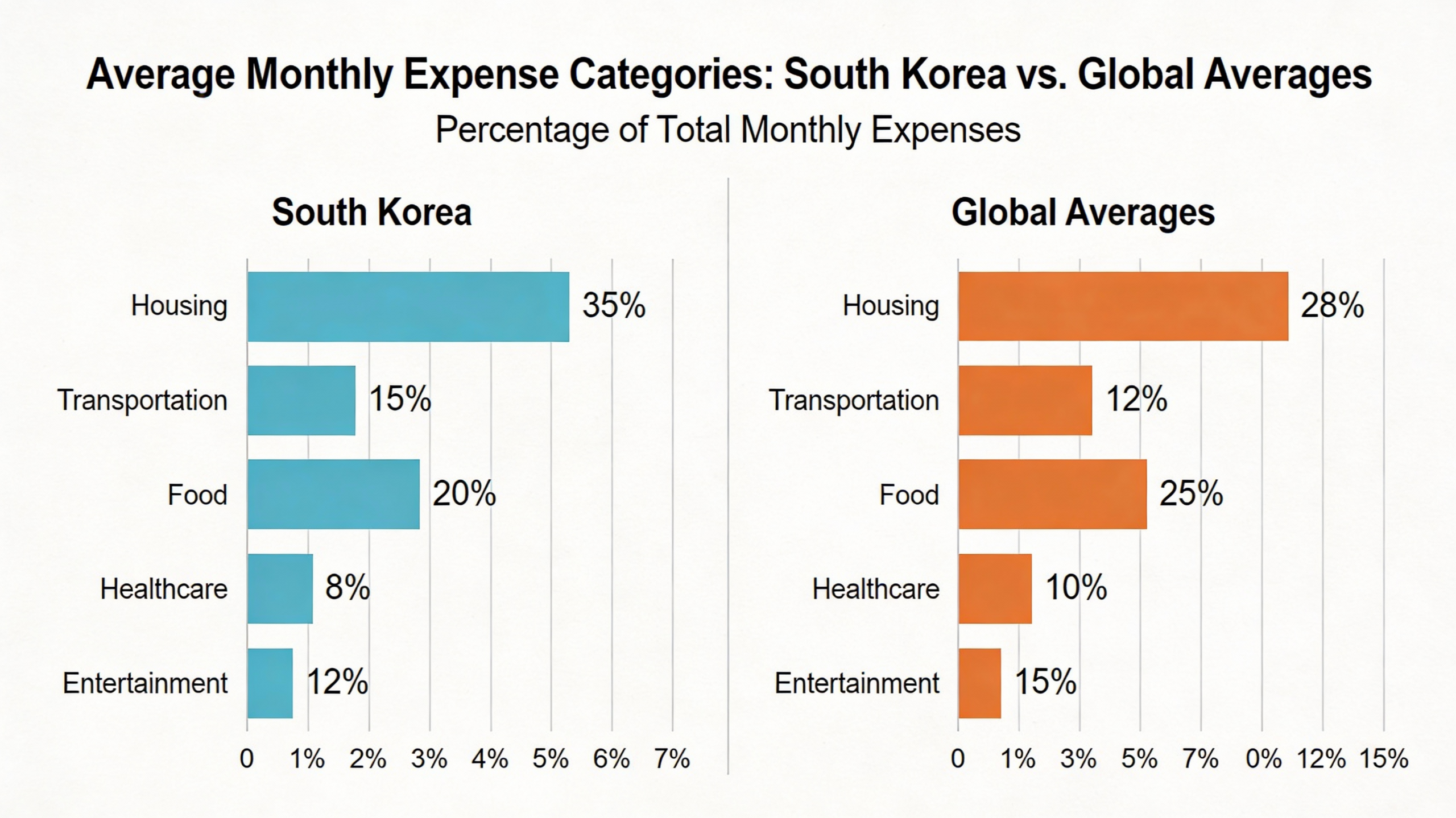
Overall Cost of Living Overview
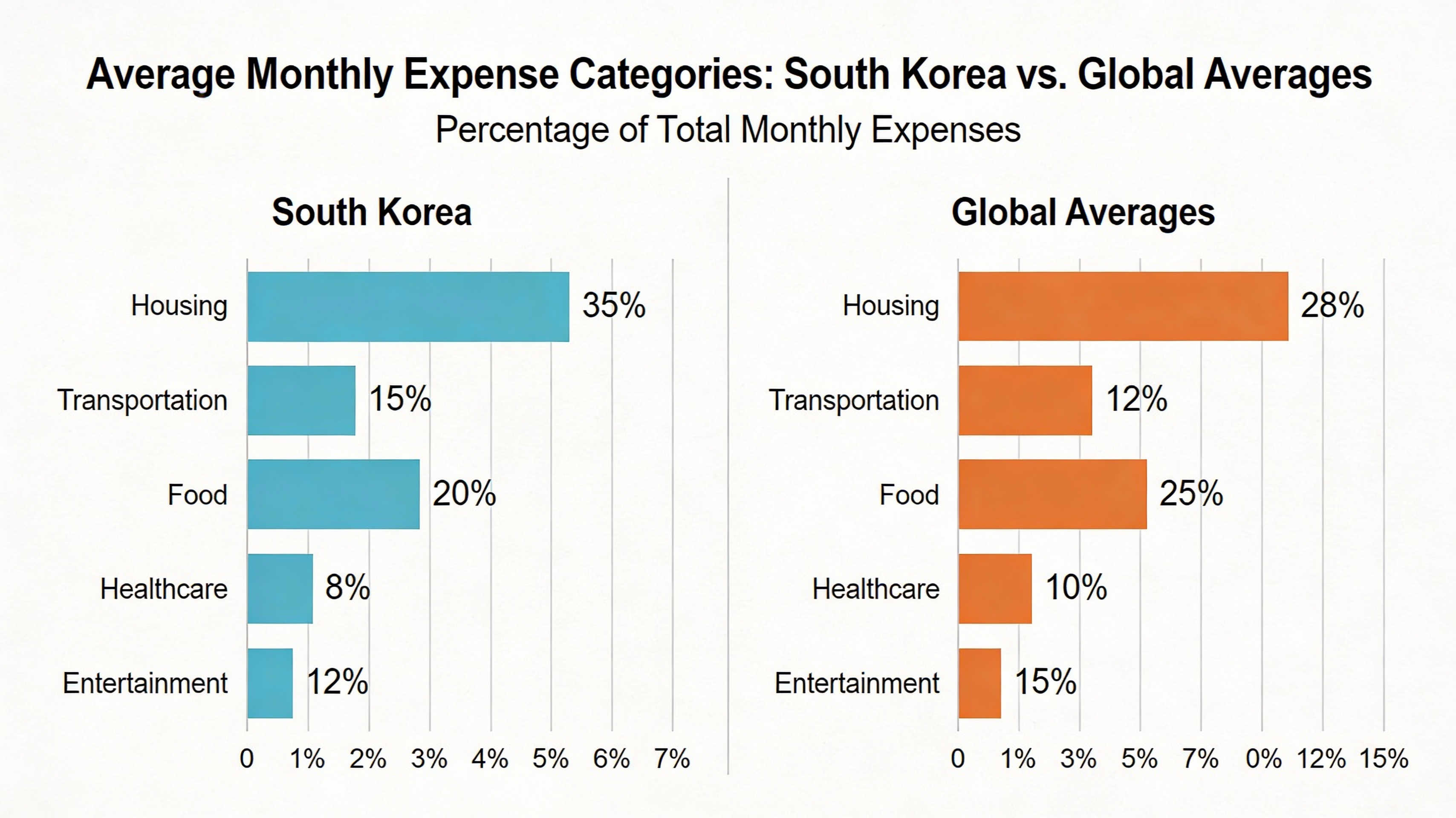
Living costs in South Korea are shaped by a variety of major expense categories, including housing, food, transport, healthcare, and education. Generally, monthly expenses fall into low, mid, and high ranges that reflect individual lifestyle choices and geographic location. While Seoul is known for being more expensive, South Korea as a whole remains competitive when viewed through global cost indices.
A high-level picture of monthly spending reveals that most expats can find a balance between modern amenities and affordable local living. According to data from Numbeo, the country offers a standard of living that is often more accessible than major Western metropolitan areas. Understanding these typical ranges is the first step in creating a realistic financial plan for your move.
Monthly Expense Categories
Typical Ranges (low‑mid‑high)
Expense distributions typically vary from affordable local options to premium international standards. Essential costs such as public transportation and local groceries are consistently affordable, while international schooling and luxury housing in central Seoul occupy the premium end of the scale. Most residents find a comfortable middle ground that aligns with an average professional salary.
Global Ranking
Comparison Chart
| Country | Relative Cost of Living Index | Typical Expense Level |
|---|---|---|
| South Korea | Moderate | Average |
| USA | High | Premium |
| UK | High | Premium |
| Japan | Moderate-High | Average-High |
Housing Expenses
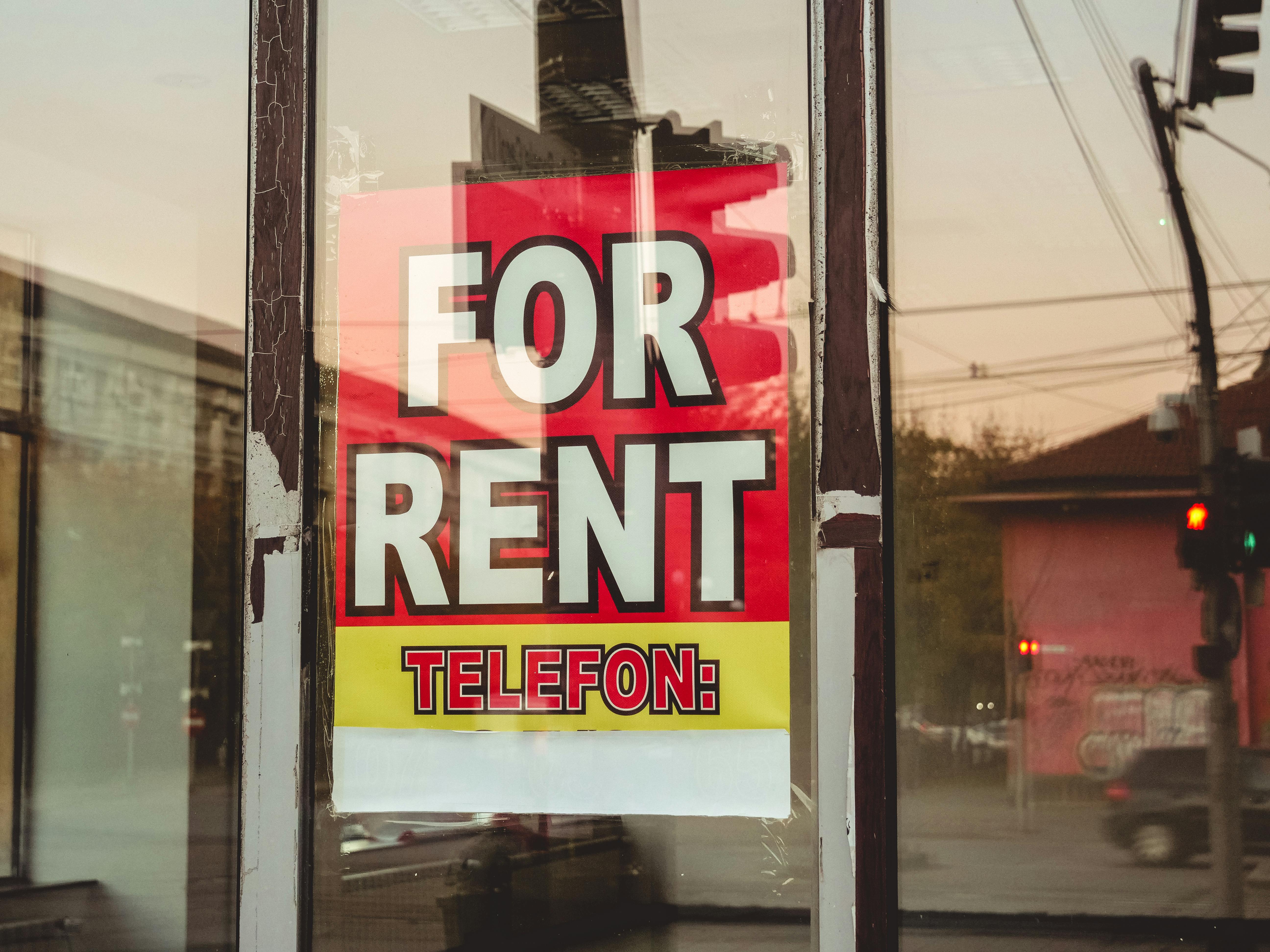
Rent variations by city play a massive role in your total monthly outlay, with Seoul commanding the highest prices for apartments. In contrast, cities like Busan and Daegu offer more space for a lower monthly commitment. Beyond base rent, tenants must also factor in monthly utility costs for electricity, water, gas, and high-speed internet, which can fluctuate with the seasons.
Pros and cons of buying versus renting should be carefully weighed by expats planning a long-term stay. Renting is the most common path due to the unique “jeonse” (large deposit) or “wolse” (monthly rent) systems used in the country. For more detailed insights, refer to the Guide to Moving to South Korea or the Best Neighborhoods in Seoul.
Rent by City and Type
Typical Rent Ranges
| City | Apartment Type | Price Category |
|---|---|---|
| Seoul | Studio / 1-Bed | Premium to Average |
| Busan | 1-Bed / 2-Bed | Average |
| Daegu | 1-Bed / 2-Bed | Affordable |
Utilities & Internet
Monthly utility bills are generally manageable but require attention during peak summer and winter months. Cooling and heating costs often make up the bulk of these expenses, while internet and mobile data packages are widely regarded as some of the most efficient and cost-effective in the world. Reporting from the Korean Statistical Information Service (KOSIS) highlights these housing data trends for residents.
Buying vs Renting
The decision to buy property is often complex for foreign nationals due to financing regulations and market conditions. Most expats opt for the wolse system, which requires a smaller deposit and regular monthly payments, providing greater flexibility. This allows newcomers to explore different districts before committing to a long-term living arrangement.
Food & Grocery Costs
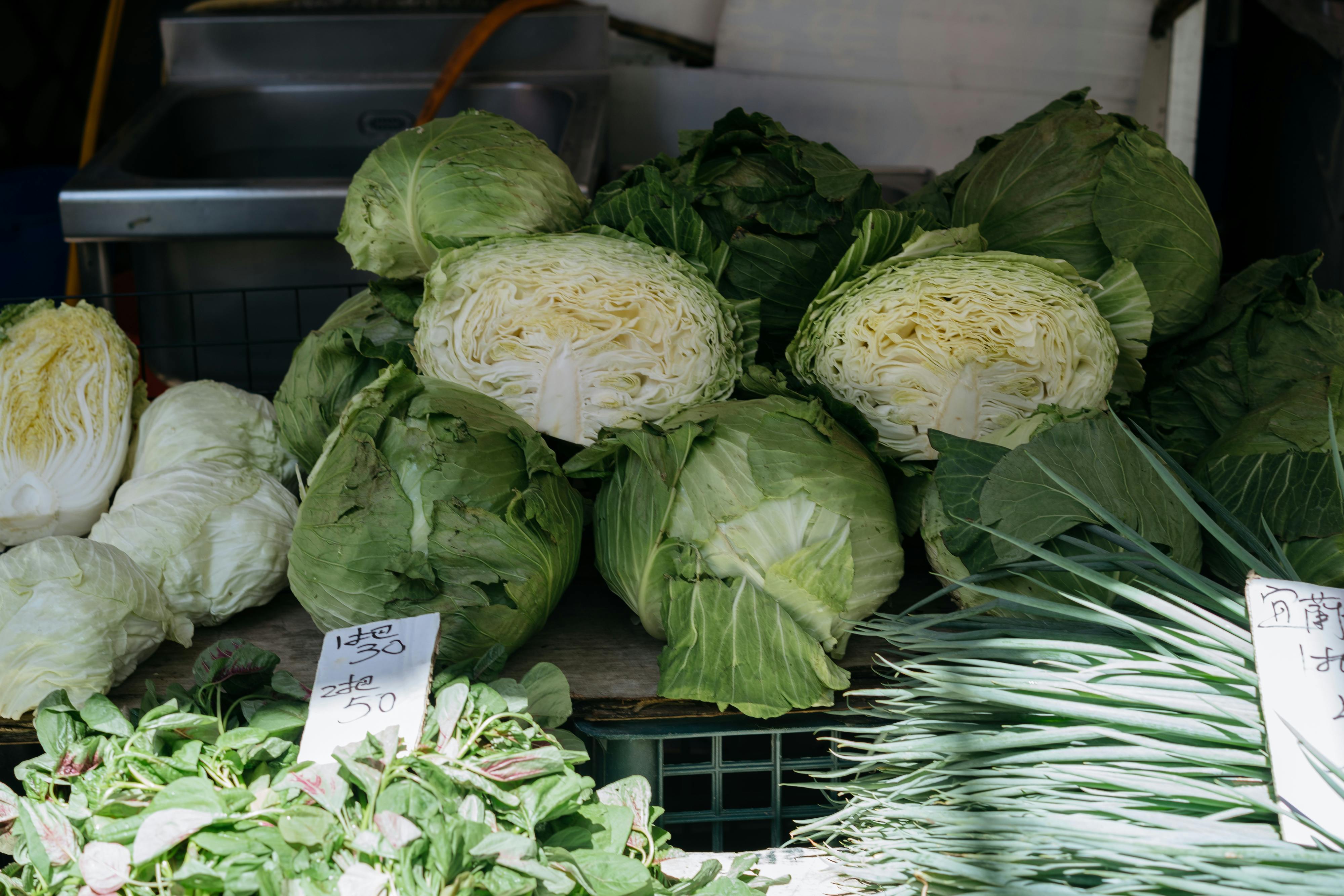
Everyday food spending in South Korea can vary significantly depending on whether you prefer local markets or Western-style supermarkets. Dining at a local restaurant is often very cost-effective, whereas frequenting eateries that serve imported goods will quickly increase your budget. Balancing these two styles is key to maintaining a healthy and affordable diet.
Grocery staples like rice, kimchi, and seasonal vegetables are best purchased at traditional markets for the best value. Supermarkets offer convenience and a wider range of international products, but often at a higher price point. For more on local culinary habits, see Korean Food 101 or check Expatistan food price data for South Korea.
Dining Out
Price Ranges
- Street Food: Highly affordable, perfect for quick snacks.
- Casual Restaurants: Average pricing, typically including free side dishes (banchan).
- Fine Dining: Premium pricing, found mostly in major city centers.
Grocery Shopping
Weekly Basket Price Categories
- Rice and Grains: Affordable
- Kimchi and Banchan: Affordable
- Fresh Meat: Average to Premium
- Imported Fruits: Premium
- Local Vegetables: Affordable (Seasonal)
Transportation Costs

Public transport fares are remarkably consistent and provide some of the best value for money in the country. Using a T-money card allows for seamless transfers between the subway and city buses, keeping daily commuting costs low. Most residents find that they do not need a private vehicle due to the efficiency of the urban transit networks.
Taxis and ride-hailing services offer a convenient alternative for late-night travel or trips to areas less served by the subway. While more expensive than a bus or train, taxi rates remain reasonable compared to other major global cities. For those looking to explore the country, the KTX high-speed rail and intercity buses provide fast and reliable connections between provinces.
Public Transit
The subway system in major cities like Seoul is extensive and clean, with fares based on the distance traveled. Detailed fare guides are available via the Seoul Metropolitan Subway fare guide. Regular commuters can benefit from integrated transfer discounts when switching between different modes of transport within a specific timeframe.
Taxis & Ride-hailing
Ride-hailing apps are widely used and integrated with local payment systems, making it easy to book a car without a language barrier. Taxis are plentiful in urban areas and are strictly regulated, ensuring that fares are transparent and predictable. This is a reliable option for travelers who need direct door-to-door service.
Intercity Travel
Traveling between cities is made easy by the KTX high-speed train, which connects Seoul to Busan in just a few hours. For those on a tighter budget, express buses offer a comfortable and even more affordable way to see the country. More tips on navigating these systems can be found in the Getting Around Seoul guide.
Healthcare Expenses

Medical costs for residents are largely covered by the National Health Insurance (NHI) system, which is mandatory for most foreigners living in the country. This system provides high-quality care with relatively low co-pay rates for doctor visits and prescriptions. Understanding the basics of this coverage is essential for any expat managing their health and finances.
Out-of-pocket costs for emergencies or specialized treatments are generally lower than in many Western countries, but still require budgeting. Some expats choose to supplement their NHI coverage with private insurance to ensure access to international clinics and shorter wait times. Detailed information is available through the Korean Ministry of Health & Welfare insurance overview.
National Health Insurance
The NHI system is funded through monthly contributions, often split between an employer and the employee. It covers a vast majority of medical procedures and essential medications, making healthcare accessible to the general population. For more details, consult the guide on Health Insurance for Expats in Korea.
Out‑of‑Pocket Costs
Routine check-ups and dental cleanings often involve a small co-payment that is easily managed within a monthly budget. Pharmacy costs for standard prescriptions are also subsidized under the national plan, keeping the cost of regular medication very low for residents.
Private Insurance Options
Private medical insurance can provide additional peace of mind by covering the “gap” in public insurance or providing higher levels of comfort during hospital stays. Many international schools and multinational corporations include private plans as part of their benefit packages for foreign staff. This is particularly useful for those who prefer English-speaking medical environments.
Education Costs
Schooling expenses vary dramatically based on the type of institution your children attend. While public school tuition is essentially free for residents, international schools command significant fees that must be factored into a family’s budget. Higher education also presents a range of tuition costs depending on the university and the student’s residency status.
Additional costs for books, extracurricular activities, and private tutoring (hagwons) are common in South Korean culture. These supplementary expenses can add up, especially for families seeking a competitive edge in the local or international education system. For statistics on these costs, refer to the Korean Education Ministry tuition statistics.
K‑12 Education
Public education offers a high standard of learning at a very low cost, though the language of instruction is Korean. International schools follow various foreign curricula and are popular among the expat community, though they sit at the premium end of the spending scale. Many families consider the proximity of these schools when choosing a neighborhood.
Higher Education
University tuition ranges for foreign students are generally competitive compared to institutions in the US or UK. Many universities offer scholarships for international applicants, which can significantly reduce the financial burden of obtaining a degree. Further information can be found in the Studying in South Korea resource.
Supplementary Costs
- Private Tutoring (Hagwons): Average to Premium
- School Uniforms and Supplies: Average
- Extracurricular Clubs: Affordable to Average
Entertainment & Leisure
Discretionary spending options in South Korea are diverse, ranging from free outdoor activities like hiking to premium memberships at high-end gyms. Popular leisure activities such as visiting the cinema, singing at a noraebang (karaoke), or attending cultural festivals are generally affordable and widely accessible. Budgeting for these activities ensures a balanced and enjoyable lifestyle.
Memberships and subscriptions for language clubs or fitness centers are common ways for expats to socialize and stay active. These costs are usually predictable and can be adjusted based on your financial goals. For more ideas on local entertainment, see the Top Things to Do in Seoul guide.
Popular Activities
| Activity | Typical Frequency | Cost Category |
|---|---|---|
| Cinema | Per Visit | Average |
| Noraebang (Karaoke) | Per Hour | Affordable |
| Hiking/Parks | Unlimited | Free / Minimal |
| Cultural Festivals | Per Event | Affordable to Average |
Memberships & Subscriptions
Monthly gym memberships vary by facility quality, with luxury fitness centers in business districts charging premium rates. Language exchange clubs and hobby groups often have minimal fees, providing a cost-effective way to integrate into the local community. Many residents also budget for digital subscriptions like streaming services and specialized apps.
Budgeting Tips for South Korea
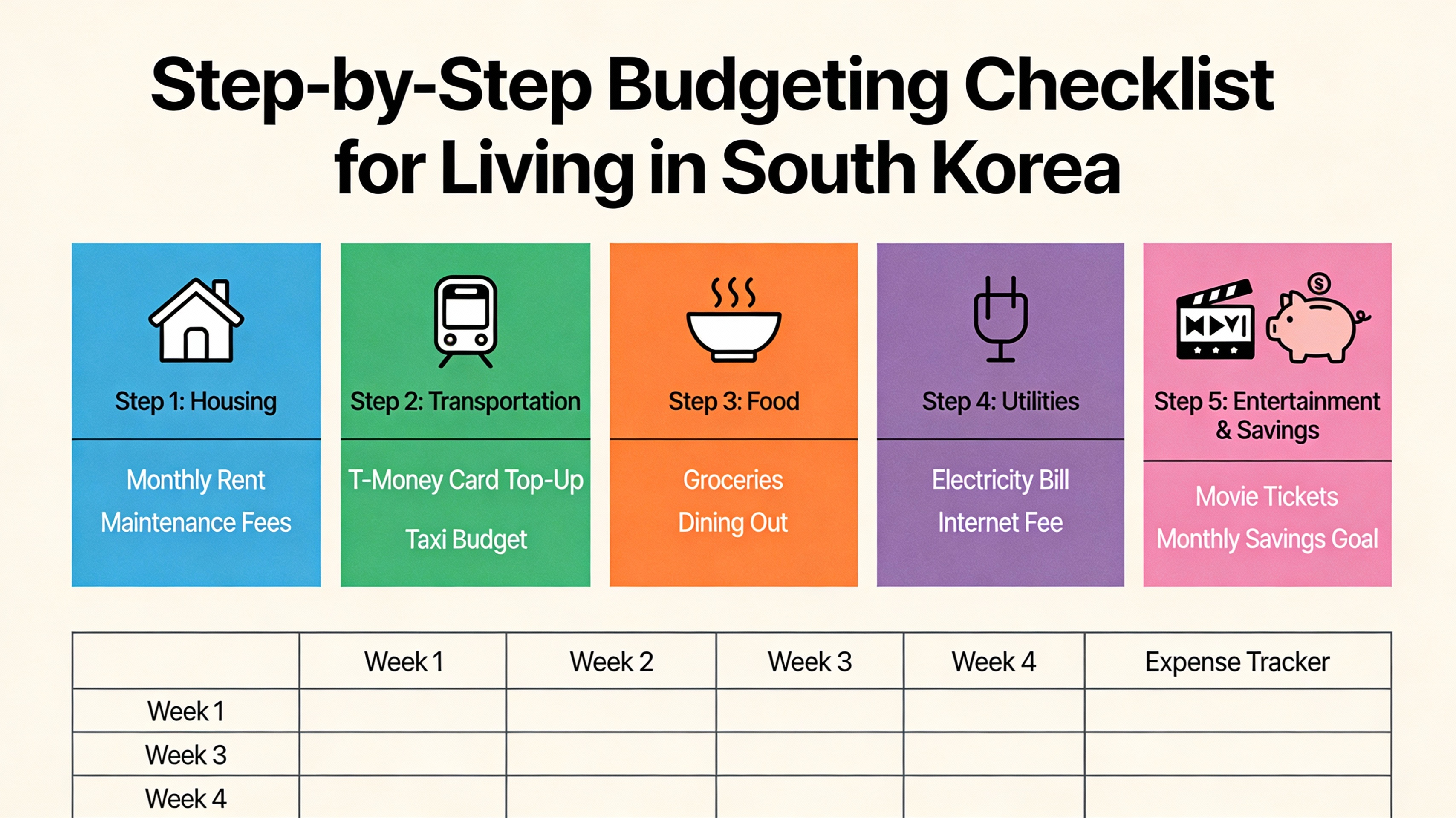
Actionable steps to manage your finances can make the transition to life in South Korea much smoother. Creating a monthly budget that accounts for both fixed and variable costs is the most effective way to avoid overspending. Using local money-management tools and adopting specific cost-saving strategies can further stretch your won.
Local apps like KakaoPay and Naver Pay are essential for tracking spending and making seamless digital payments. These tools often offer rewards or cash-back features that benefit regular users. For more advice on financial tools, check out the section on Money Management Apps in Korea or visit expat budgeting blogs like Expat Focus.
Building a Monthly Budget
Budgeting Checklist
- Calculate total monthly income.
- Identify fixed costs (Rent, Utilities, Insurance).
- Estimate variable costs (Food, Transport, Leisure).
- Allocate funds for savings and emergencies.
Money‑Management Tools
Digital payment platforms are the norm in South Korea, and they often integrate directly with your local bank account. These apps provide real-time updates on your spending habits, helping you stay within your predefined limits. They are particularly useful for managing small daily transactions like coffee or convenience store purchases.
Cost‑Saving Strategies
Saving on housing can be achieved by looking for apartments slightly further from subway stations or in up-and-coming neighborhoods. Eating like a local and utilizing the extensive public transport system are other primary ways to keep your expenses low. Bulk buying non-perishables at large discount stores can also provide significant long-term savings.
Key Takeaways
Managing your budget effectively requires a clear understanding of both fixed and discretionary expenses. By prioritizing high-value categories like public transit and local dining, you can maintain a high standard of living without excessive spending. Keep these primary considerations in mind as you plan your move.
- Housing is your biggest variable; research cities like Busan for better value.
- Public transportation is highly efficient and keeps commuting costs low.
- National Health Insurance is a mandatory but cost-effective necessity.
- Local markets offer the best prices for grocery staples and fresh produce.
- Digital apps like KakaoPay are vital for tracking daily expenditures.
Quick Budget Formula: Fixed Housing Costs + (Daily Food & Transport x 30) + 15% Buffer = Recommended Monthly Budget.
FAQ
What is the average monthly rent for a one-bedroom apartment in Seoul?
The average rent for a one-bedroom apartment in Seoul typically falls into the average to premium range, depending heavily on the district (gu). Central areas like Gangnam or Yongsan are significantly more expensive than residential neighborhoods on the outskirts.
How much should I budget for food per month?
A monthly food budget depends on your ratio of dining out to home cooking. Most residents find an average budget is sufficient if they balance local restaurant visits with grocery shopping at traditional markets.
Is health insurance mandatory for foreigners?
Yes, participation in the National Health Insurance (NHI) system is mandatory for most foreigners residing in South Korea for more than six months. This ensures access to the national healthcare network at subsidized rates.
Can I live comfortably on a $2,000 monthly budget?
Living comfortably on $2,000 per month is generally possible in many parts of South Korea, including Seoul, provided you manage housing and dining costs carefully. This budget typically covers a standard studio apartment, regular use of public transit, and a mix of local dining and home-cooked meals.
Next steps for South Korea
Taking the next step toward your move involves gathering the right tools and professional advice to ensure financial stability. You can start by downloading a free budgeting worksheet tailored for the Korean market or exploring our relocation consulting service for personalized guidance. Subscribe to our newsletter to receive the latest expat guides and up-to-date cost of living information directly in your inbox.