Category: Uncategorized

  • 2026 Exec Playbook: Justify SEO Investment in AI Market

    2026 Exec Playbook: Justify SEO Investment in AI Market

    Understanding the New AI-Dominated Search Landscape

    Illustration of AI influencing search results
    Photo Google DeepMind from Pexels

    The **search landscape is undergoing a profound transformation**, driven by the rapid evolution of artificial intelligence. AI models, including generative search experiences and large language models, are now fundamentally influencing how search engine results pages (SERPs) are ranked and presented. This shift necessitates a fresh perspective on SEO strategy for executives and marketing leaders.

    This evolving environment moves beyond traditional keyword density, emphasizing a deeper understanding of user intent and semantic relevance. Emerging AI-driven SERP features, such as AI snippets and highly visual answers, are reshaping how users interact with search results. To remain competitive, businesses must adapt their SEO efforts to this AI-centric reality.

    Top 3 AI changes to SEO:

    • AI models directly influence SERP rankings and content synthesis.
    • Emphasis on intent and semantic relevance over exact keyword matches.
    • New SERP features like AI snippets and visual results emerge.

    For more detailed insights, explore our AI and SEO hub article. You can also review an external reputable AI-search overview from searchenginejournal.com AI impact.

    The Business Case for SEO in 2026

    Executive presentation on SEO ROI
    Photo Karola G from Pexels

    Building a **robust business case for SEO investment in 2026** requires aligning SEO goals directly with key organizational objectives. This includes quantifiable targets related to revenue generation, enhancing brand authority, and optimizing customer acquisition costs. SEO’s strategic value must be articulated in terms of its tangible contribution to these corporate priorities.

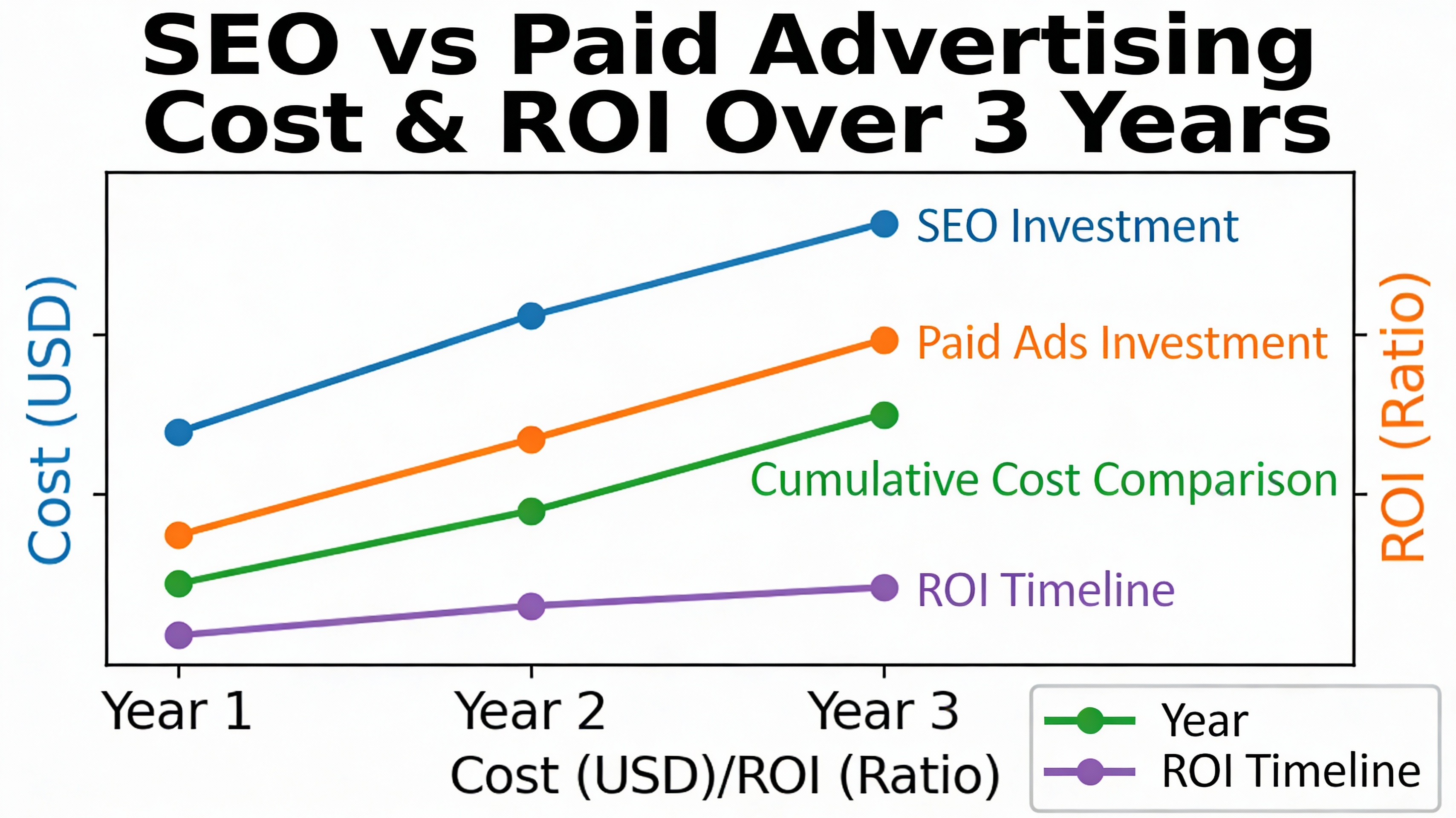
    In an AI-augmented ecosystem, SEO offers long-term cost efficiency that often surpasses paid media strategies. While paid campaigns provide immediate visibility, SEO builds sustainable organic presence and authority. Underfunding SEO in this new era poses a significant risk of competitive disadvantage, leaving market share vulnerable to more forward-thinking competitors.

    Comparison: SEO vs Paid Media ROI in AI Era

    Feature SEO in AI Era Paid Media in AI Era
    Cost Efficiency Long-term, compounding returns Immediate, continuous spend
    Brand Authority Builds trust and organic reputation Limited direct impact
    Sustainability Durable, resilient to ad fatigue Requires constant optimization
    Adaptation to AI Leverages semantic search, intent AI optimizes targeting, bidding

    To further quantify your investment, utilize our SEO ROI calculator. Industry reports on AI and digital spend, such as those from Gartner, provide additional context on market trends.

    Crafting a Persuasive SEO Investment Proposal

    A **persuasive SEO investment proposal** must start with a compelling executive summary that includes a bold impact statement. This section should immediately grab leadership’s attention by outlining the core benefits and strategic imperatives of the proposed investment. It sets the tone for the entire document and underscores the urgency of action.

    The proposal should feature data-driven forecasts, using safe language like “industry trends suggest” rather than inventing specific numbers. Addressing risk mitigation is also crucial, demonstrating foresight in areas such as AI tool integration and talent upskilling. A clear budget breakdown and timeline will provide the necessary financial and operational transparency for decision-makers.

    Proposal Components Checklist:

    • Executive Summary with Bold Impact Statement
    • Current SEO Landscape Analysis
    • Strategic Objectives and Alignment
    • Data-Driven Forecasts and Expected ROI
    • Risk Mitigation Strategies (AI tool integration, talent upskilling)
    • Detailed Budget Breakdown
    • Implementation Timeline and Milestones
    • Key Performance Indicators (KPIs)
    • Call to Action/Next Steps

    For a foundational guide, consider our proposal template page. Additionally, reputable resources like Harvard Business Review offer insights on building strong business cases.

    Communicating ROI to Leadership

    CEO reviewing SEO KPI dashboard
    Photo Lukas from Pexels

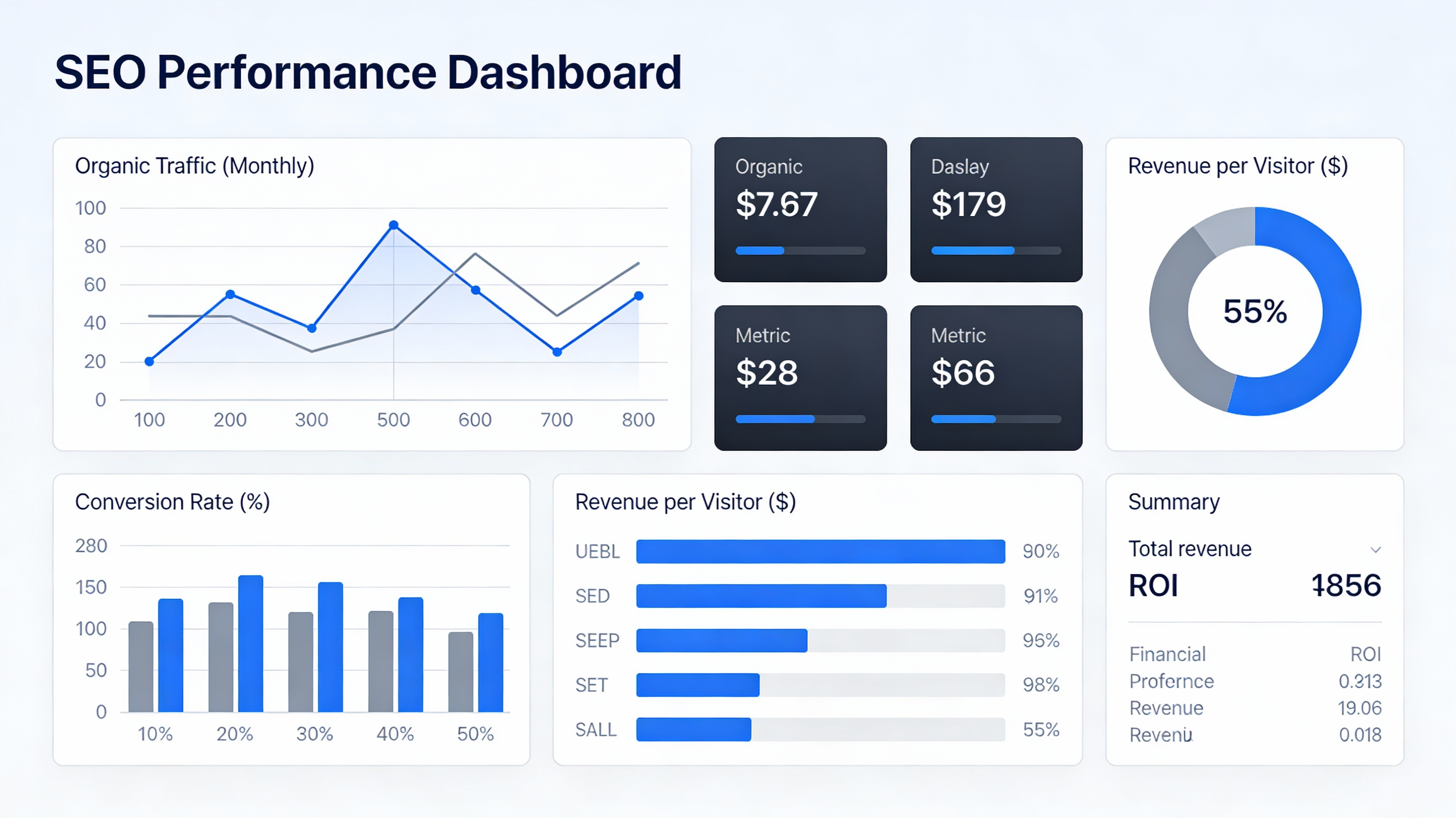
    Effectively **communicating SEO ROI to leadership** demands more than just presenting raw numbers; it requires compelling storytelling. Concepts like visual KPI dashboards can effectively illustrate progress in traffic, conversions, and AI-adjusted rankings. These visual aids transform complex data into easily digestible insights for busy executives.

    Narrative framing is essential, tying SEO outcomes directly to overarching strategic objectives of the business. Using relatable analogies and short, impactful anecdotes can make the data resonate more deeply. This approach helps leadership visualize the real-world impact of SEO investments beyond technical metrics.

    Consider an infographic illustrating KPI flow from initial investment to strategic outcomes, clearly linking SEO activities to business results such as increased market share and customer engagement.

    Explore our KPI dashboard examples for inspiration. A Moz case study on SEO ROI can also provide valuable insights into successful communication strategies.

    Overcoming Common Objections

    Visual metaphor for overcoming SEO objections
    Photo Karola G from Pexels

    When presenting an SEO investment proposal, **anticipating and overcoming common objections** is critical for securing budget approval. A frequent concern is the notion that “AI will replace SEO.” It’s important to clarify that AI acts as an enhancer, providing powerful tools for analysis and content creation, rather than a substitute for strategic SEO expertise.

    Another objection, “SEO is too slow,” can be addressed by highlighting how AI-assisted insights can significantly accelerate strategic adjustments and content optimization. For “budget constraints,” propose a phased investment approach, focusing on quick-win tactics that demonstrate early ROI to build confidence for larger allocations. These preemptive rebuttals build trust and demonstrate a comprehensive understanding of the challenges.

    “Investing in SEO today, especially with AI integration, is not just about visibility; it’s about building a digital asset that compounds value. It’s an essential pillar for sustainable growth.”

    Refer to our objection handling guide for more strategies. An article on SEO longevity from Search Engine Land provides further context on the enduring value of SEO.

    Implementation Roadmap and Next Steps

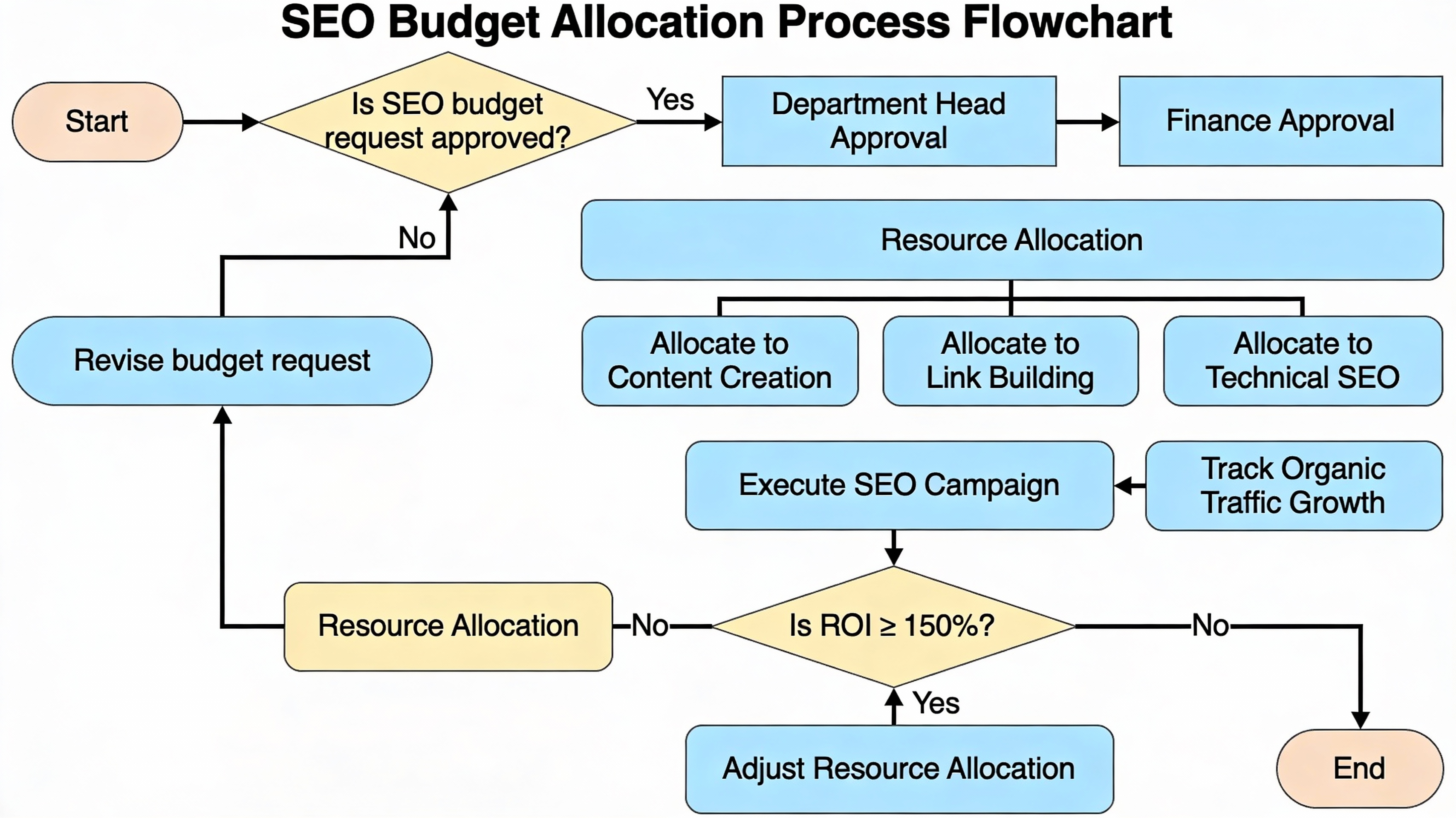
    An **effective implementation roadmap provides a clear 12-month action plan** for your SEO strategy. Outline quarterly milestones, beginning with a comprehensive audit and subsequent AI tool integration. This ensures that the foundational elements are in place before moving to more advanced content revamp and performance tracking initiatives.

    Clearly assign responsibilities to key team members, such as an SEO lead, data analyst, and AI specialist, to ensure accountability. Establish a regular review cadence with leadership to report progress, discuss challenges, and adapt the strategy as needed. This systematic approach ensures sustained momentum and transparent communication.

    12-Month SEO Implementation Timeline:

    • Quarter 1: Foundation & AI Integration
      • Comprehensive SEO Audit
      • AI Tool Selection and Integration
      • Initial Content Strategy Review
    • Quarter 2: Content Optimization & Technical Enhancements
      • AI-Assisted Content Revamp (key pages)
      • Technical SEO Fixes (crawlability, site speed)
      • SERP Feature Optimization
    • Quarter 3: Authority Building & Performance Tracking
      • Link Building Strategy Implementation
      • Advanced Analytics & AI-Driven Reporting
      • User Experience (UX) Enhancements
    • Quarter 4: Scaling & Future Planning
      • Expand AI-Powered Content Creation
      • Explore New AI-Driven Search Opportunities
      • Annual Performance Review & 2027 Planning

    Our roadmap template can help structure your plan. For broader project management insights, consult reputable frameworks such as PMBOK.

    Key Takeaways

    To effectively secure your SEO budget in an AI-dominated market, focus on these core actions:

    • Understand the AI-driven search shift: Adapt to generative search and semantic relevance.
    • Quantify SEO’s business value: Align goals with revenue, brand, and customer acquisition.
    • Craft data-driven proposals: Use forecasts and address risk with AI integration.
    • Communicate ROI effectively: Employ visual KPIs and compelling narratives for leadership.
    • Prepare for objections: Frame AI as an enhancer and present phased investment plans.

    FAQ

    Here are answers to common questions about justifying SEO spend in today’s evolving market:

    How quickly can AI tools show SEO impact?

    AI tools can accelerate certain aspects of SEO, offering quicker insights for content optimization, keyword research, and technical analysis. While immediate ranking changes are rare, AI-driven strategies can lead to noticeable improvements in efficiency and early indicators of performance within weeks to a few months, particularly in content quality and relevance.

    What metrics matter most to the C-suite?

    The C-suite primarily focuses on metrics that directly impact business growth and profitability. Key metrics include return on investment (ROI), customer acquisition cost (CAC) reduction, revenue generated from organic search, brand visibility and authority, and market share growth. Connecting SEO efforts to these high-level business outcomes is crucial.

    Can SEO budget be justified without historic data?

    Yes, it’s possible. Focus on industry benchmarks, competitive analysis, and forward-looking market trends. Highlight the potential opportunity cost of inaction and leverage projected growth based on similar businesses or market size. Emphasize quick-win strategies that can demonstrate early value and build a foundation for future data collection.

    How does AI affect keyword research?

    AI enhances keyword research by moving beyond simple volume to understand user intent, semantic relationships, and conversational queries. AI tools can identify long-tail opportunities, cluster related topics, and predict emerging trends more effectively. This allows for a more nuanced and strategically aligned keyword strategy.

    What’s the safest way to allocate SEO spend in 2026?

    The safest approach involves a phased investment. Start with foundational elements like a technical audit and AI tool integration, followed by strategic content optimization. Prioritize initiatives that offer the highest potential ROI and measurable impact, allowing for adjustments as performance data becomes available. Continuous monitoring and adaptation are key.

    For a detailed breakdown of metrics, consult our detailed metric guide.

    Ready to take action?

    Transform your approach to SEO budgeting and secure the investment your business needs to thrive in an AI-dominated search world. Our comprehensive resources are designed to equip you with everything necessary to make a compelling case.

    Download our free SEO Investment Proposal Template to streamline your planning and presentation. For a personalized strategy discussion, schedule a consultation with our experts. We’re here to help you turn insights into approved budgets and tangible results.

    Download Your Free Proposal Template Schedule a Consultation

  • Low-Cost SEO Strategies That Beat Expensive Campaigns in 2026

    Low-Cost SEO Strategies That Beat Expensive Campaigns in 2026

    Understanding the Real Cost of SEO

    Magnifying glass highlighting SEO costs vs price tags
    Photo Hanna Pad from Pexels

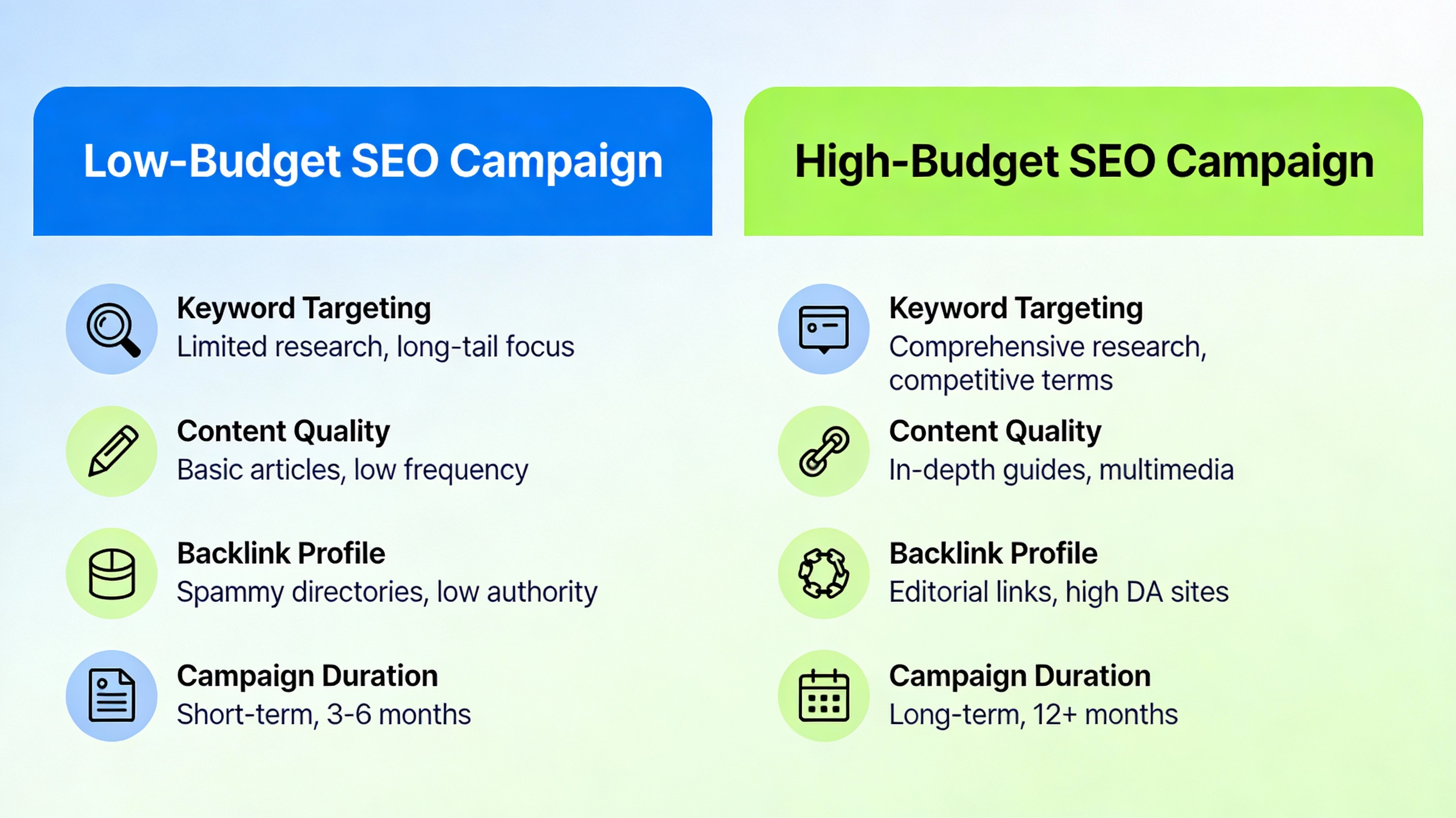
    Debunking myths about expensive SEO is crucial for small businesses and startups. Many believe that competing with high-spend campaigns requires an equally large budget, which is often not the case. This section aims to set realistic expectations by comparing typical agency fees with DIY costs and highlighting the long-term value of sustainable tactics.

    Understanding where money is actually spent in SEO can help identify areas for budget-friendly alternatives. Focus on strategy and consistent effort, rather than simply throwing money at the problem. This playbook will show you how smart decisions can lead to market advantage.

    Common Misconceptions About Pricey Campaigns

    A widespread myth suggests that higher spending guarantees top rankings in search engine results. However, this is a misconception; while budget can provide resources, it does not inherently buy success. Strategy, relevance, and consistent execution ultimately matter more than the sheer volume of investment.

    Many expensive campaigns can underperform if they lack a solid foundation or target irrelevant keywords. Conversely, well-executed, low-cost strategies can yield significant returns by focusing on niche relevance and user intent. The key is intelligent allocation of time and resources, not just capital.

    What Businesses Actually Pay For

    Businesses typically pay for a range of specialized services when investing in SEO. These often include technical audits, comprehensive content creation, and extensive link acquisition efforts. Each of these areas can incur significant costs when outsourced to agencies or specialists.

    However, there are effective ways to cut these expenses without sacrificing quality. Performing your own technical audits, creating content with existing resources, and implementing strategic link-building tactics can drastically reduce your overall spend. The goal is to achieve similar outcomes through smart, internal effort.

    SEO Approach Typical Activities Included Estimated Monthly Cost
    Agency Managed Full technical audits, content strategy & creation, link building outreach, reporting, competitor analysis $500 – $5,000+
    DIY (Self-Managed) Free tool usage (Google Search Console), content repurposing, local citations, basic on-page optimization $0 – $50

    Core Low-Cost SEO Tactics That Deliver Results

    Sticky notes with budget-friendly SEO keywords
    Photo Bruno Bueno from Pexels

    Foundational tactics that any budget can execute are the backbone of effective low-cost SEO. These strategies focus on maximizing your current resources and leveraging free tools to gain a competitive edge. You don’t need a huge budget to make a significant impact on your search rankings.

    From identifying the right keywords to optimizing your website’s pages, these methods are designed for immediate implementation. They prioritize efficiency and measurable results, proving that smart planning can outperform extensive spending. Let’s explore the core tactics that truly deliver.

    Keyword Research on a Budget

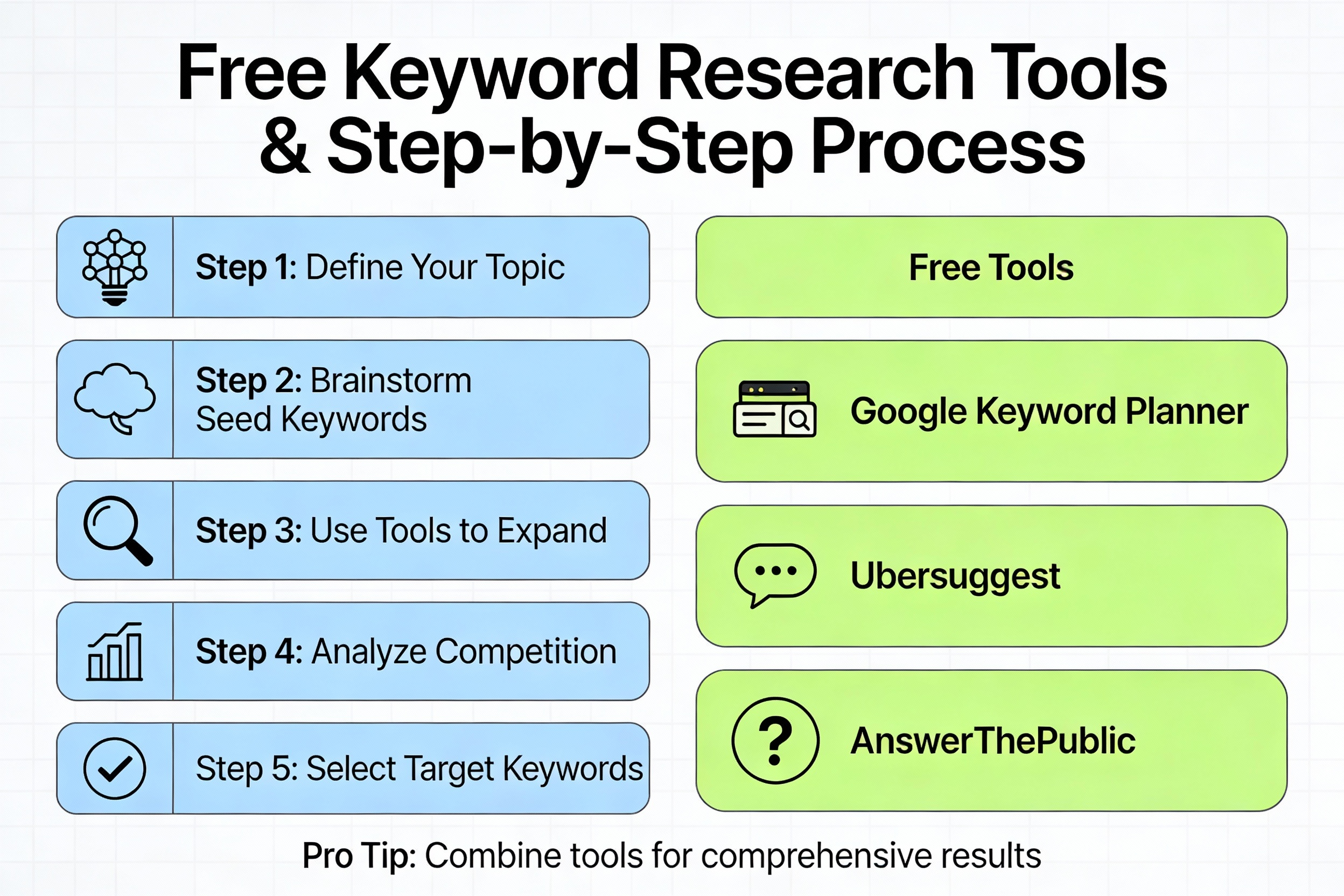
    Effective keyword research doesn’t require expensive software subscriptions. You can leverage free tools like Google Trends, AnswerThePublic, and the free tier of Ubersuggest to uncover valuable insights. These platforms help identify trending topics and user queries relevant to your business.

    The key is to focus on long-tail, low-competition terms that your target audience is actively searching for. These specific phrases often have lower search volume but much higher conversion potential. Targeting them allows you to rank more easily and attract highly qualified traffic.

    On-Page Optimization Hacks

    On-page optimization is one of the most impactful low-cost SEO tactics you can implement. Properly optimizing elements like title tags, meta descriptions, and header hierarchy (

    ,

    , etc.) signals to search engines what your content is about. Ensure your primary keywords are naturally included in these areas.

    Further enhance your visibility by implementing structured data snippets using schema.org markup. This helps search engines understand the context of your content, potentially leading to rich snippets in search results. These simple adjustments can significantly improve your click-through rates.

    Technical SEO Basics You Can DIY

    Addressing basic technical SEO issues is crucial for search engine discoverability and can often be done without professional help. Start by regularly checking Google Search Console for any crawl errors that might prevent search engines from accessing your content. Resolving these ensures your pages are properly indexed.

    Another vital step is to ensure your website is mobile-friendly, which you can easily check using Google PageSpeed Insights. A responsive design and fast loading times are non-negotiable for both user experience and search rankings. These simple DIY checks can make a big difference.

    Must-Do Low-Cost SEO Tactics Checklist

    • Utilize Google Trends for keyword discovery.
    • Optimize title tags and meta descriptions with target keywords.
    • Structure content with clear H2, H3, H4 headings.
    • Implement basic schema markup for rich snippets.
    • Monitor Google Search Console for crawl errors.
    • Ensure your website is mobile-friendly and loads quickly.
    • Create or update your Google My Business profile.

    Leveraging Free and Affordable Tools in 2026

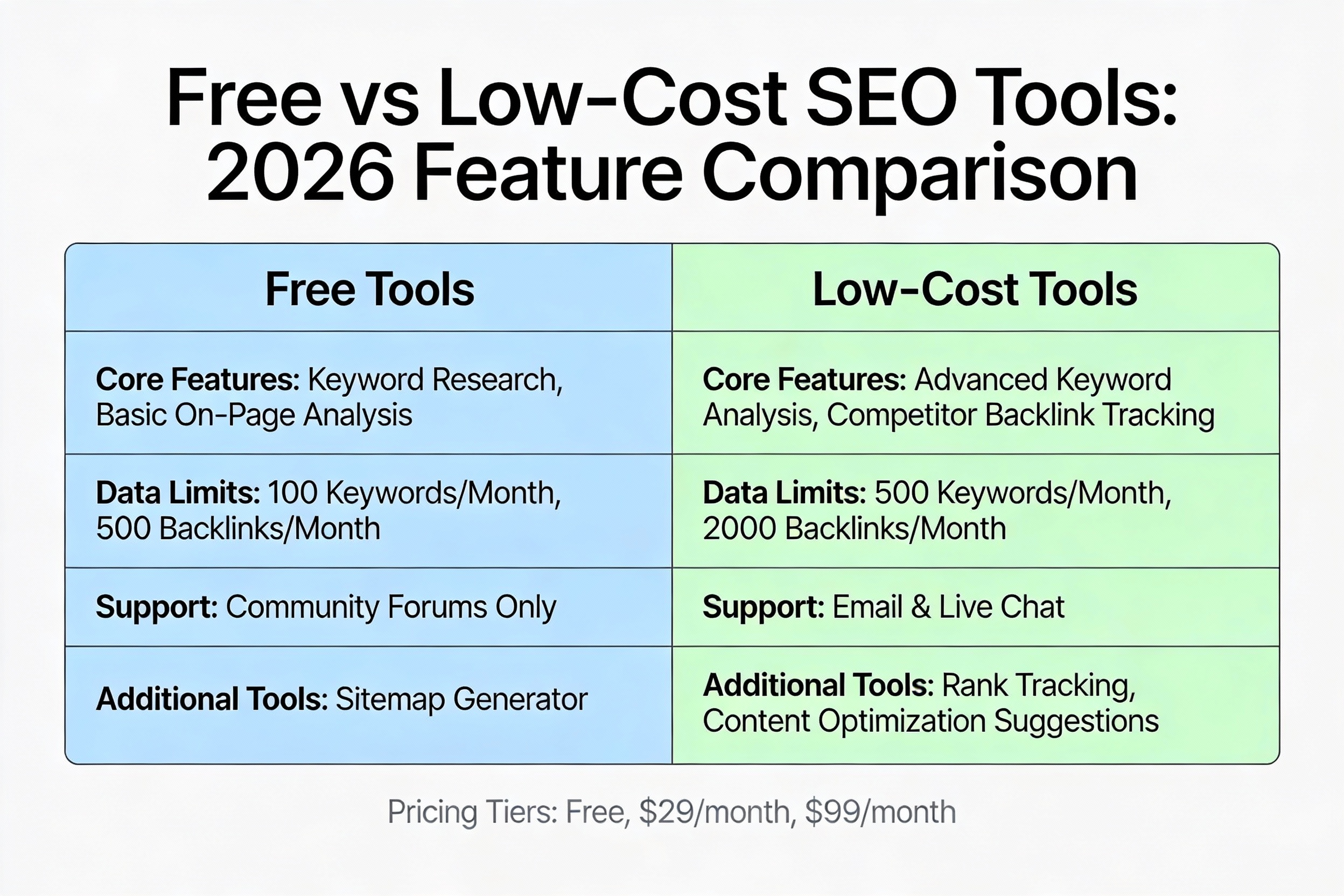
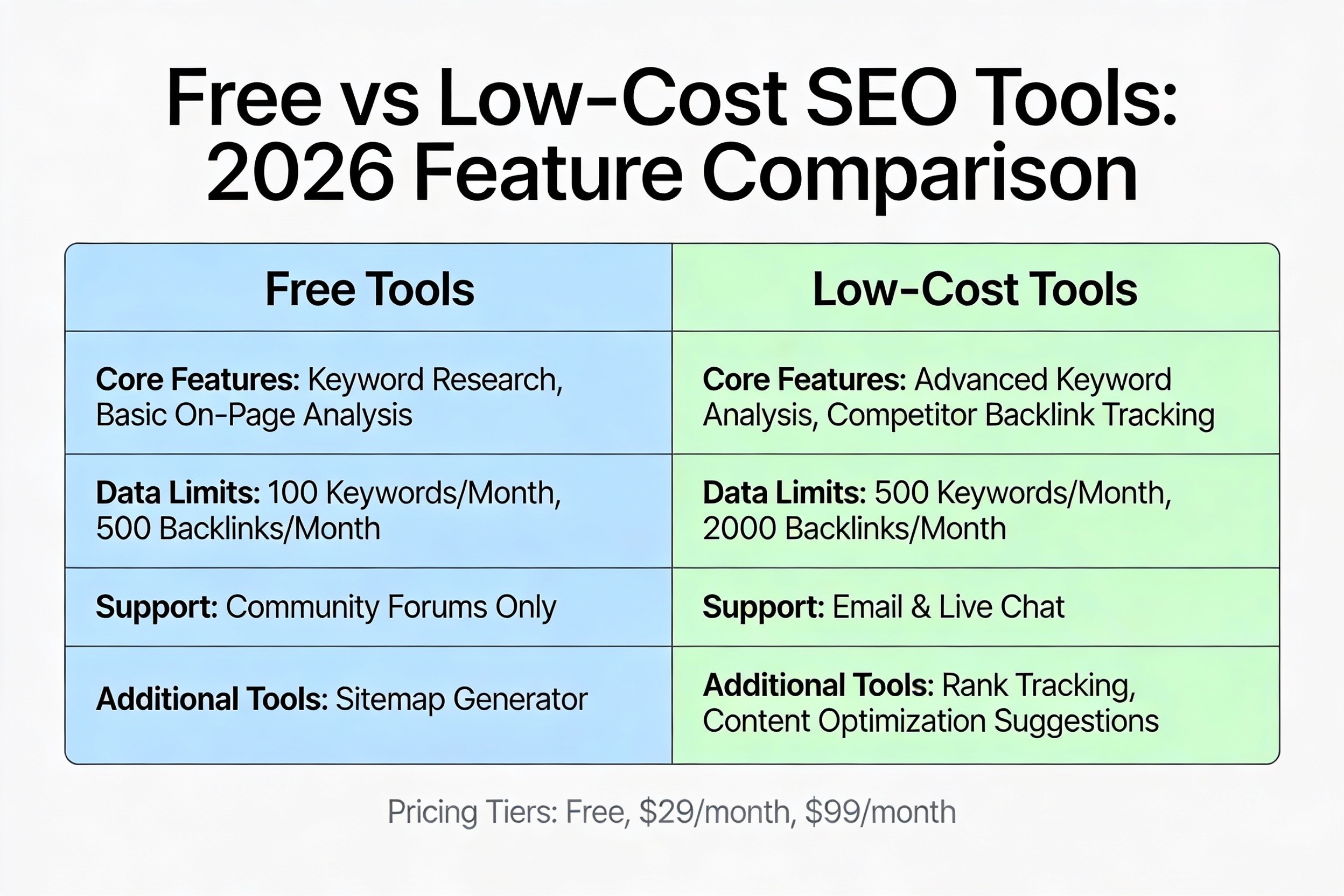
    Infographic comparing free and affordable SEO tools in 2026
    Generated by Articfly AI

    The right tools can significantly amplify your low-cost SEO efforts, even without a hefty budget. In 2026, there are more robust free and affordable options than ever before, enabling small businesses to compete effectively. Choosing the correct tools empowers you to streamline processes and gain valuable insights.

    This section will highlight the best current tools that either cost nothing or less than $20 per month. We’ll examine their core functionalities and criteria for selection, ensuring you can make informed decisions. Leveraging these resources efficiently is key to a successful budget-friendly strategy.

    Free Tools

    Many powerful SEO tasks can be accomplished using completely free tools. Google Search Console is indispensable for monitoring your site’s performance in Google Search, identifying indexing issues, and submitting sitemaps. Similarly, Bing Webmaster Tools offers similar functionality for the Bing search engine, providing valuable insights into your site’s visibility.

    For more technical audits, Screaming Frog SEO Spider Lite allows you to crawl up to 500 URLs for free, helping identify broken links, redirect chains, and missing meta descriptions. Mastering these free platforms provides a strong foundation for your SEO initiatives. Top Free SEO Tools 2026 offers more detailed guidance.

    Affordable Paid Tools

    When your budget allows for a small investment, affordable paid tools can offer enhanced features and deeper analysis. Ubersuggest, for instance, provides keyword research, content ideas, and competitor analysis at a low monthly cost. Surfer SEO Lite helps with on-page optimization by suggesting content adjustments based on top-ranking competitors.

    Ahrefs Webmaster Tools, while part of a larger paid suite, offers free access to a limited version that provides site audits and backlink data. Evaluate the cost-benefit of each tool based on your specific needs and budget constraints. Prioritize tools that address your most pressing SEO challenges and offer the highest potential ROI for your minimal spend.

    Choosing the Right Tool for Your Niche

    Selecting the optimal SEO tool depends heavily on your specific business niche and immediate goals. Consider what aspects of SEO you need to prioritize: keyword research, technical audits, content optimization, or backlink analysis. A tool that excels in your weakest area will provide the most value.

    Think of it as a decision-tree: if you’re struggling with keyword ideas, prioritize tools like Ubersuggest or AnswerThePublic. If technical errors are holding you back, Google Search Console and Screaming Frog are essential. Aligning tool capabilities with your strategic needs ensures maximum impact from minimal investment.

    Content Strategies on a Shoestring Budget

    Team brainstorming low-budget content strategies
    Photo Mikhail Nilov from Pexels

    Producing high-impact content without hiring expensive writers is entirely achievable with strategic planning. The key lies in leveraging your existing assets and community resources, along with smart content creation techniques. You don’t need a massive content budget to rank for valuable keywords and attract your target audience.

    This section will guide you through repurposing content, utilizing user-generated contributions, and applying techniques like the skyscraper method. These approaches ensure you maintain a robust content presence while keeping costs minimal. Remember, quality and relevance often trump sheer volume in content marketing.

    Repurposing Existing Assets

    Repurposing existing assets is an incredibly efficient way to generate new content without starting from scratch. Begin by identifying your evergreen content – blog posts, webinars, or PDFs that remain relevant over time. Update these pieces with current data, fresh examples, and enhanced SEO optimization.

    A webinar transcript can become several blog posts, social media snippets, or an infographic. A detailed PDF guide can be broken down into a series of email newsletters. This strategy maximizes the value of content you’ve already invested in, extending its reach and improving its search performance. Repurposing Content for SEO provides further insights.

    User-Generated Content & Community Building

    Harnessing user-generated content (UGC) is a powerful, low-cost strategy for enriching your site and building community. Encourage customers to leave reviews, submit Q&A, or participate in forums related to your products or services. This content is authentic, relevant, and directly addresses customer concerns, which search engines value.

    Additionally, leverage platforms like Reddit and Quora not only to engage with potential customers but also to gather topic ideas. Pay attention to common questions and discussions within your niche, using these insights to inform your content creation. This approach provides valuable, organic content that costs nothing to produce.

    Skyscraper Technique with Limited Resources

    The skyscraper technique can be adapted for limited resources to create high-ranking content. Instead of trying to create the “best” piece of content on a topic from scratch, identify an existing piece of content that performs well but lacks certain elements. Look for low-competition targets with solid but improvable content.

    Your goal is to make it significantly better by adding unique data, fresh perspectives, or compelling visuals that the original piece is missing. You don’t need to reinvent the wheel; just find a way to add substantial, unique value. Search Engine Journal article on the skyscraper technique offers more inspiration.

    Content Type Repurposed Example Brand-New Article Example
    Long-form Guide An old whitepaper on ‘Email Marketing Basics’ updated with 2026 stats and visuals. ‘The Ultimate Guide to AI-Powered Personalization in Email Marketing 2026’.
    Video Content A webinar recording transcribed into a blog post, then split into social media graphics. A professionally filmed interview series with industry leaders on new trends.
    Product Showcase Customer reviews & photos compiled into a ‘User Favorites’ blog post. A dedicated landing page with custom photography and expert-written descriptions for a new product launch.

    Building Authority Without Breaking the Bank

    Networking and guest posting on a shoestring budget
    Photo fauxels from Pexels

    Achieving strong domain authority and building valuable backlinks doesn’t require an enormous budget. Smart link-building and PR tactics can significantly boost your site’s credibility and search rankings for minimal cost. The focus here is on strategic outreach, leveraging existing platforms, and earning media through clever pitching.

    These methods allow small businesses to gain authoritative links and mentions that rival those secured by high-spend campaigns. It’s about being resourceful, providing value, and knowing where to find opportunities. Let’s explore how to build authority effectively and affordably.

    Strategic Outreach and Guest Posting

    Strategic outreach is vital for securing valuable guest posting opportunities and backlinks. Focus your efforts on researching low-authority sites that have high relevance to your niche. These sites are often more receptive to high-quality guest content than larger, more established publications.

    When you reach out, offer value-added content that addresses a specific need or fills a content gap for their audience. Personalized email templates can significantly increase your success rate. Effective Outreach Templates can help you craft compelling messages. Guest posting remains a strong tactic for increasing your domain authority and referral traffic.

    Local Citations and Business Listings

    For local businesses, maintaining consistent NAP (Name, Address, Phone number) information across online directories is paramount. This consistency is a critical signal for local SEO and helps search engines verify your business’s legitimacy. Start by ensuring your Google My Business profile is fully optimized and up-to-date with accurate information and compelling images.

    Beyond Google, leverage niche-specific industry directories and prominent local listing sites. Many of these platforms offer free basic listings that can significantly boost your local search presence. A comprehensive approach to local citations builds trust with both search engines and potential customers.

    Earned Media Through PR Hacks

    Earning media coverage without a PR agency is achievable through creative “PR hacks.” Identify newsworthy angles within your business or industry that could be of interest to journalists and bloggers. This might involve sharing unique data, commenting on a trend, or announcing a local community initiative.

    Platforms like HARO (Help A Reporter Out) connect journalists with expert sources, offering a fantastic opportunity to get featured in major publications for free. Additionally, engaging with micro-influencers in your niche can lead to valuable mentions and backlinks without significant financial outlay. HARO official site provides a direct avenue for these opportunities.

    “We started with a simple email outreach campaign, offering unique insights to local blogs. Within three months, we secured five high-quality backlinks and saw a 15% jump in organic traffic. It proves that personalized value trumps mass emails every time.”

    — A Small Business Owner on Low-Budget Outreach

    Measuring Success and Scaling Up

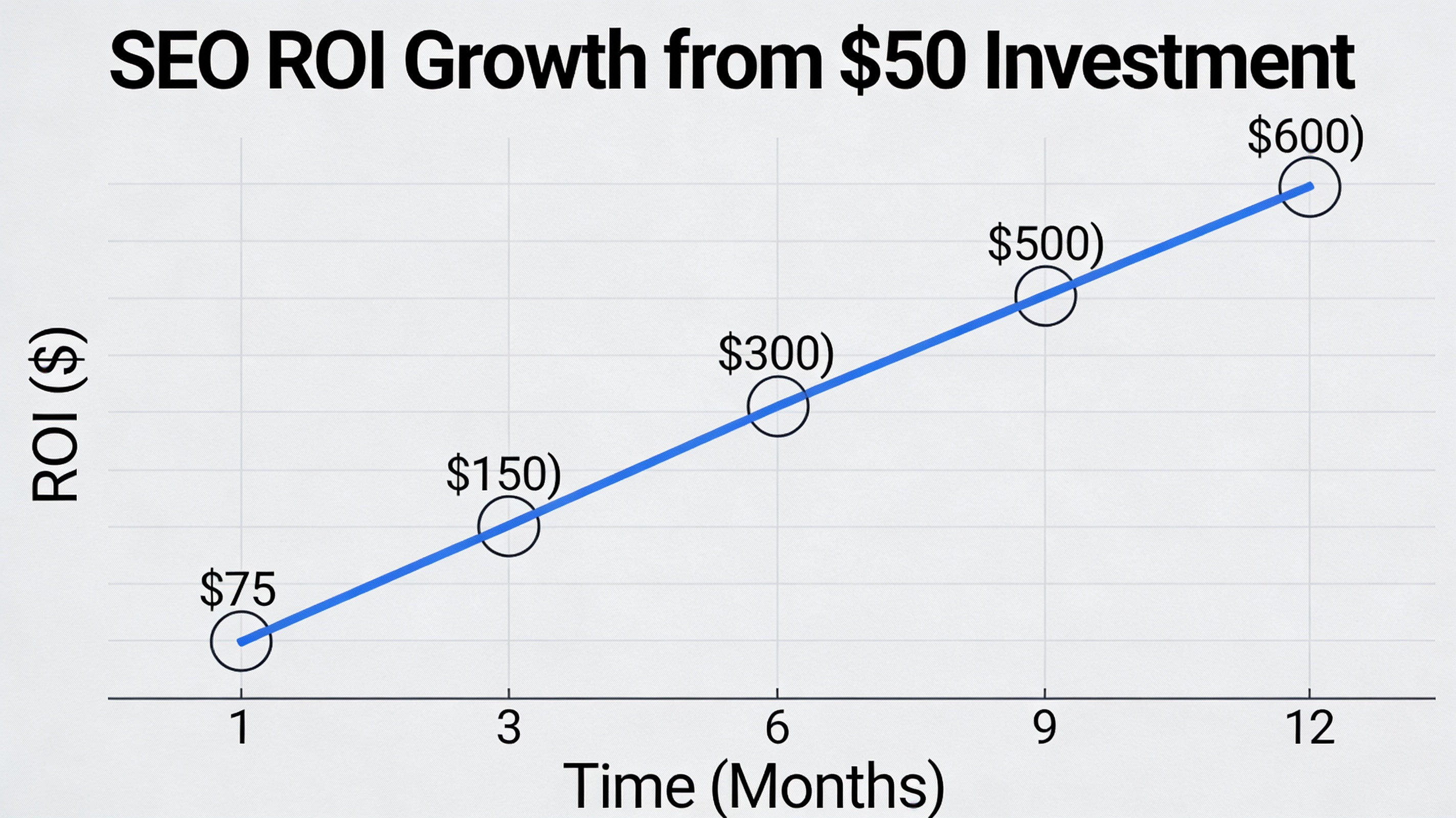
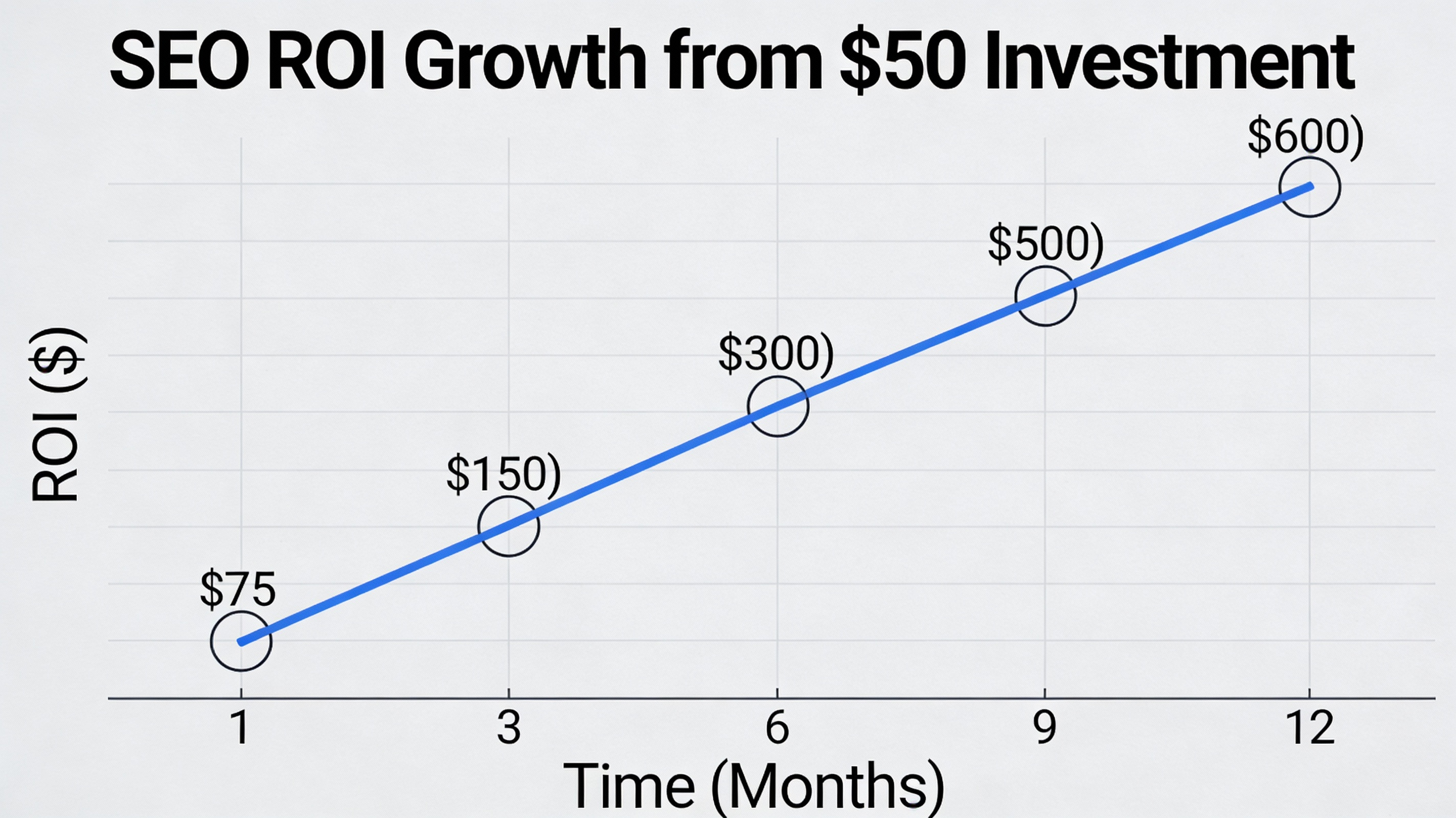
    Chart illustrating SEO ROI growth from a $50 start
    Generated by Articfly AI

    Equipping yourself with free metrics and a clear growth plan is essential for any low-cost SEO strategy. Understanding how to track your progress allows you to identify what’s working and what isn’t, enabling informed adjustments. You don’t need expensive software to monitor key performance indicators (KPIs).

    This section will guide you through the core metrics to focus on and how to use free tools to visualize your data. We’ll also cover when and how to reinvest any gains to scale your efforts effectively. Measuring success is the first step towards sustainable growth.

    Key Metrics to Track Without Expensive Software

    Tracking core KPIs is straightforward with readily available free tools. Organic traffic, keyword rankings, and click-through rate (CTR) are fundamental indicators of your SEO performance. Google Search Console provides invaluable data on keyword performance, impressions, clicks, and average position for your site.

    Google Analytics, another free tool, allows you to monitor organic traffic volume, user behavior on your site, and conversion rates stemming from organic search. By regularly reviewing these metrics, you can identify trends and pinpoint areas for improvement without any financial investment. SEO KPI Dashboard Template can offer more structure for this.

    When to Reinvest and How to Allocate Budget

    Knowing when to reinvest your profits back into SEO is crucial for sustainable growth. Establish clear thresholds for scaling your spend based on achieved organic traffic, lead generation, or sales increases. Once these milestones are met, consider dedicating a portion of your new revenue to expand your SEO efforts.

    Allocate this newfound budget strategically, focusing on high-ROI tactics that have already proven effective. This might include investing in a premium keyword research tool, subscribing to a content optimization platform, or hiring a freelance content writer for specific high-value pieces. Always prioritize actions that offer the greatest potential for further returns.

    Key Takeaways

    Achieving market advantage with ultra-low-cost SEO is not just possible, it’s a definitive playbook for 2026. Smart strategy consistently trumps big spend when executed effectively.

    Here are seven impactful low-cost actions you can start today to transform your SEO strategy:

    • **Master free keyword tools:** Use Google Trends, AnswerThePublic, and Ubersuggest to find long-tail, low-competition terms.
    • **Optimize on-page elements rigorously:** Perfect your title tags, meta descriptions, and header hierarchy, and add schema markup.
    • **Perform DIY technical audits:** Regularly check Google Search Console for errors and ensure mobile-friendliness with PageSpeed Insights.
    • **Leverage free tools daily:** Integrate Google Search Console and Bing Webmaster Tools into your routine for monitoring and improvements.
    • **Repurpose existing content creatively:** Transform old webinars, PDFs, and blog posts into fresh, SEO-optimized material.
    • **Build authority through strategic outreach:** Focus on guest posting on relevant, accessible sites and using HARO for earned media.
    • **Monitor KPIs with free dashboards:** Track organic traffic, keyword rankings, and CTR using Google Analytics and Search Console to guide your next moves.

    FAQ

    Can $50 really make a difference in SEO?

    Yes, absolutely. While $50 might not cover extensive campaigns, it can fund crucial tools like a month of Ubersuggest’s basic plan or a small advertising boost. More importantly, $50 can be used for training resources or to outsource a very specific, high-impact micro-task, significantly augmenting what you can do with free tools and your own time.

    How long before I see results from low-cost tactics?

    SEO is a long-term strategy, regardless of budget. You can expect to see initial improvements in areas like crawlability and indexing within weeks for technical fixes. For keyword rankings and significant organic traffic growth, it typically takes 3-6 months of consistent effort. Patience and persistence are key.

    Which free tool gives the best backlink data?

    For truly free backlink data, Google Search Console is invaluable for showing links *to your own site*. While it doesn’t show competitor backlinks, it’s essential for understanding your own link profile. Ahrefs Webmaster Tools also offers a powerful free tier for backlink analysis of your verified sites, which is highly recommended for deeper insights.

    Is guest posting still effective in 2026?

    Yes, guest posting remains highly effective in 2026 when done strategically. The focus has shifted from quantity to quality and relevance. Guest posts should offer genuine value to the host site’s audience and come from reputable, relevant sources. It’s about building genuine relationships and authority, not just acquiring links.

    How do I know when to upgrade to paid tools?

    You’ll know it’s time to consider paid tools when your free tools can no longer provide the depth of data or automation you need to scale. This might be when you hit URL limits, require more advanced competitor analysis, or need integrated reporting. Start with a small, specific paid tool that addresses your biggest bottleneck and demonstrates clear ROI before expanding further.

    Next steps for low-cost SEO

    Ready to unlock market advantage with smart, budget-friendly SEO strategies? Your journey to competing with high-spend campaigns starts now.

    Take action today by exploring these essential resources:

    • Download our free “Low-Cost SEO Starter Kit” checklist to begin implementing these tactics immediately.
    • Subscribe for weekly budget SEO tips delivered straight to your inbox, keeping you ahead of the curve.
    • Join our community forum for peer support, shared insights, and answers to your pressing SEO questions.
  • 2026 Exec Playbook: Justify SEO Investment in AI Market

    2026 Exec Playbook: Justify SEO Investment in AI Market

    Understanding the New AI-Dominated Search Landscape

    Illustration of AI influencing search results
    Photo Google DeepMind from Pexels

    The **search landscape is undergoing a profound transformation**, driven by the rapid evolution of artificial intelligence. AI models, including generative search experiences and large language models, are now fundamentally influencing how search engine results pages (SERPs) are ranked and presented. This shift necessitates a fresh perspective on SEO strategy for executives and marketing leaders.

    This evolving environment moves beyond traditional keyword density, emphasizing a deeper understanding of user intent and semantic relevance. Emerging AI-driven SERP features, such as AI snippets and highly visual answers, are reshaping how users interact with search results. To remain competitive, businesses must adapt their SEO efforts to this AI-centric reality.

    Top 3 AI changes to SEO:

    • AI models directly influence SERP rankings and content synthesis.
    • Emphasis on intent and semantic relevance over exact keyword matches.
    • New SERP features like AI snippets and visual results emerge.

    For more detailed insights, explore our AI and SEO hub article. You can also review an external reputable AI-search overview from searchenginejournal.com AI impact.

    The Business Case for SEO in 2026

    Executive presentation on SEO ROI
    Photo Karola G from Pexels

    Building a **robust business case for SEO investment in 2026** requires aligning SEO goals directly with key organizational objectives. This includes quantifiable targets related to revenue generation, enhancing brand authority, and optimizing customer acquisition costs. SEO’s strategic value must be articulated in terms of its tangible contribution to these corporate priorities.

    In an AI-augmented ecosystem, SEO offers long-term cost efficiency that often surpasses paid media strategies. While paid campaigns provide immediate visibility, SEO builds sustainable organic presence and authority. Underfunding SEO in this new era poses a significant risk of competitive disadvantage, leaving market share vulnerable to more forward-thinking competitors.

    Comparison: SEO vs Paid Media ROI in AI Era

    Feature SEO in AI Era Paid Media in AI Era
    Cost Efficiency Long-term, compounding returns Immediate, continuous spend
    Brand Authority Builds trust and organic reputation Limited direct impact
    Sustainability Durable, resilient to ad fatigue Requires constant optimization
    Adaptation to AI Leverages semantic search, intent AI optimizes targeting, bidding

    To further quantify your investment, utilize our SEO ROI calculator. Industry reports on AI and digital spend, such as those from Gartner, provide additional context on market trends.

    Crafting a Persuasive SEO Investment Proposal

    A **persuasive SEO investment proposal** must start with a compelling executive summary that includes a bold impact statement. This section should immediately grab leadership’s attention by outlining the core benefits and strategic imperatives of the proposed investment. It sets the tone for the entire document and underscores the urgency of action.

    The proposal should feature data-driven forecasts, using safe language like “industry trends suggest” rather than inventing specific numbers. Addressing risk mitigation is also crucial, demonstrating foresight in areas such as AI tool integration and talent upskilling. A clear budget breakdown and timeline will provide the necessary financial and operational transparency for decision-makers.

    Proposal Components Checklist:

    • Executive Summary with Bold Impact Statement
    • Current SEO Landscape Analysis
    • Strategic Objectives and Alignment
    • Data-Driven Forecasts and Expected ROI
    • Risk Mitigation Strategies (AI tool integration, talent upskilling)
    • Detailed Budget Breakdown
    • Implementation Timeline and Milestones
    • Key Performance Indicators (KPIs)
    • Call to Action/Next Steps

    For a foundational guide, consider our proposal template page. Additionally, reputable resources like Harvard Business Review offer insights on building strong business cases.

    Communicating ROI to Leadership

    CEO reviewing SEO KPI dashboard
    Photo Lukas from Pexels

    Effectively **communicating SEO ROI to leadership** demands more than just presenting raw numbers; it requires compelling storytelling. Concepts like visual KPI dashboards can effectively illustrate progress in traffic, conversions, and AI-adjusted rankings. These visual aids transform complex data into easily digestible insights for busy executives.

    Narrative framing is essential, tying SEO outcomes directly to overarching strategic objectives of the business. Using relatable analogies and short, impactful anecdotes can make the data resonate more deeply. This approach helps leadership visualize the real-world impact of SEO investments beyond technical metrics.

    Consider an infographic illustrating KPI flow from initial investment to strategic outcomes, clearly linking SEO activities to business results such as increased market share and customer engagement.

    Explore our KPI dashboard examples for inspiration. A Moz case study on SEO ROI can also provide valuable insights into successful communication strategies.

    Overcoming Common Objections

    Visual metaphor for overcoming SEO objections
    Photo Karola G from Pexels

    When presenting an SEO investment proposal, **anticipating and overcoming common objections** is critical for securing budget approval. A frequent concern is the notion that “AI will replace SEO.” It’s important to clarify that AI acts as an enhancer, providing powerful tools for analysis and content creation, rather than a substitute for strategic SEO expertise.

    Another objection, “SEO is too slow,” can be addressed by highlighting how AI-assisted insights can significantly accelerate strategic adjustments and content optimization. For “budget constraints,” propose a phased investment approach, focusing on quick-win tactics that demonstrate early ROI to build confidence for larger allocations. These preemptive rebuttals build trust and demonstrate a comprehensive understanding of the challenges.

    “Investing in SEO today, especially with AI integration, is not just about visibility; it’s about building a digital asset that compounds value. It’s an essential pillar for sustainable growth.”

    Refer to our objection handling guide for more strategies. An article on SEO longevity from Search Engine Land provides further context on the enduring value of SEO.

    Implementation Roadmap and Next Steps

    An **effective implementation roadmap provides a clear 12-month action plan** for your SEO strategy. Outline quarterly milestones, beginning with a comprehensive audit and subsequent AI tool integration. This ensures that the foundational elements are in place before moving to more advanced content revamp and performance tracking initiatives.

    Clearly assign responsibilities to key team members, such as an SEO lead, data analyst, and AI specialist, to ensure accountability. Establish a regular review cadence with leadership to report progress, discuss challenges, and adapt the strategy as needed. This systematic approach ensures sustained momentum and transparent communication.

    12-Month SEO Implementation Timeline:

    • Quarter 1: Foundation & AI Integration
      • Comprehensive SEO Audit
      • AI Tool Selection and Integration
      • Initial Content Strategy Review
    • Quarter 2: Content Optimization & Technical Enhancements
      • AI-Assisted Content Revamp (key pages)
      • Technical SEO Fixes (crawlability, site speed)
      • SERP Feature Optimization
    • Quarter 3: Authority Building & Performance Tracking
      • Link Building Strategy Implementation
      • Advanced Analytics & AI-Driven Reporting
      • User Experience (UX) Enhancements
    • Quarter 4: Scaling & Future Planning
      • Expand AI-Powered Content Creation
      • Explore New AI-Driven Search Opportunities
      • Annual Performance Review & 2027 Planning

    Our roadmap template can help structure your plan. For broader project management insights, consult reputable frameworks such as PMBOK.

    Key Takeaways

    To effectively secure your SEO budget in an AI-dominated market, focus on these core actions:

    • Understand the AI-driven search shift: Adapt to generative search and semantic relevance.
    • Quantify SEO’s business value: Align goals with revenue, brand, and customer acquisition.
    • Craft data-driven proposals: Use forecasts and address risk with AI integration.
    • Communicate ROI effectively: Employ visual KPIs and compelling narratives for leadership.
    • Prepare for objections: Frame AI as an enhancer and present phased investment plans.

    FAQ

    Here are answers to common questions about justifying SEO spend in today’s evolving market:

    How quickly can AI tools show SEO impact?

    AI tools can accelerate certain aspects of SEO, offering quicker insights for content optimization, keyword research, and technical analysis. While immediate ranking changes are rare, AI-driven strategies can lead to noticeable improvements in efficiency and early indicators of performance within weeks to a few months, particularly in content quality and relevance.

    What metrics matter most to the C-suite?

    The C-suite primarily focuses on metrics that directly impact business growth and profitability. Key metrics include return on investment (ROI), customer acquisition cost (CAC) reduction, revenue generated from organic search, brand visibility and authority, and market share growth. Connecting SEO efforts to these high-level business outcomes is crucial.

    Can SEO budget be justified without historic data?

    Yes, it’s possible. Focus on industry benchmarks, competitive analysis, and forward-looking market trends. Highlight the potential opportunity cost of inaction and leverage projected growth based on similar businesses or market size. Emphasize quick-win strategies that can demonstrate early value and build a foundation for future data collection.

    How does AI affect keyword research?

    AI enhances keyword research by moving beyond simple volume to understand user intent, semantic relationships, and conversational queries. AI tools can identify long-tail opportunities, cluster related topics, and predict emerging trends more effectively. This allows for a more nuanced and strategically aligned keyword strategy.

    What’s the safest way to allocate SEO spend in 2026?

    The safest approach involves a phased investment. Start with foundational elements like a technical audit and AI tool integration, followed by strategic content optimization. Prioritize initiatives that offer the highest potential ROI and measurable impact, allowing for adjustments as performance data becomes available. Continuous monitoring and adaptation are key.

    For a detailed breakdown of metrics, consult our detailed metric guide.

    Ready to take action?

    Transform your approach to SEO budgeting and secure the investment your business needs to thrive in an AI-dominated search world. Our comprehensive resources are designed to equip you with everything necessary to make a compelling case.

    Download our free SEO Investment Proposal Template to streamline your planning and presentation. For a personalized strategy discussion, schedule a consultation with our experts. We’re here to help you turn insights into approved budgets and tangible results.

    Download Your Free Proposal Template Schedule a Consultation

  • Convince Leadership: Scale SEO with AI Tools like Articfly

    Convince Leadership: Scale SEO with AI Tools like Articfly

    Understanding the Leadership Perspective on SEO Investment

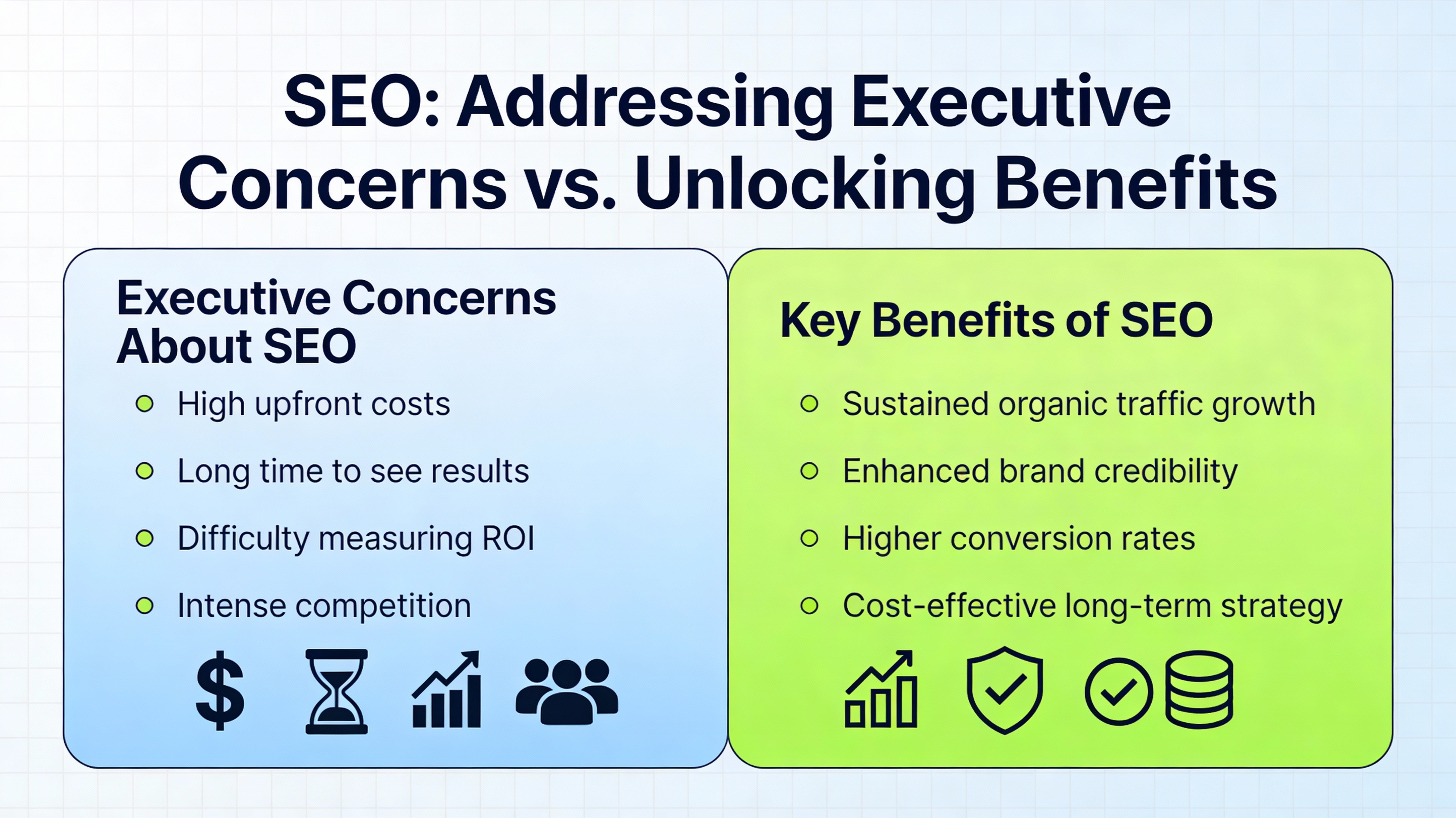
    Securing buy-in from leadership for SEO investments often hinges on clear, quantifiable results and a predictable return on investment. Executives are primarily concerned with budget constraints, tangible ROI, and minimizing the risks associated with unproven or complex tactics. They seek efficient, scalable solutions that contribute directly to competitive advantage and business growth.

    To effectively communicate the value of SEO, it’s crucial to align your strategy with what senior management values most. This means presenting SEO not just as a technical necessity, but as a strategic asset that delivers measurable outcomes and operational efficiency.

    Infographic of executive SEO concerns and benefits
    Generated by Articfly AI

    Traditional SEO (Manual) vs. AI-Augmented SEO

    Aspect Traditional SEO (Manual) AI-Augmented SEO (Articfly)
    Keyword Research Time-consuming, manual data analysis, prone to human bias Automated insights, trend prediction, extensive semantic analysis
    Content Creation Manual brief generation, writing, editing, slow scaling Automated brief creation, AI-drafted content, rapid scalability
    Performance Monitoring Manual tracking across multiple tools, delayed insights Real-time dashboards, predictive analytics, automated reporting
    Scalability Limited by team capacity and manual effort High scalability, content volume without proportional staff increase
    Cost Structure Primarily staff salaries, significant overhead Subscription model, lower operational costs per unit of content
    ROI Justification Can be complex to tie efforts directly to revenue Data-driven projections, clear cost-benefit analysis

    For a deeper dive into financial justifications, explore our resources on SEO ROI fundamentals or consult external expert advice, such as a Harvard Business Review article on data-driven decisions.

    The Role of AI in Modern SEO

    Artificial intelligence is rapidly transforming the landscape of modern SEO, offering capabilities that far surpass traditional manual methods. AI tools excel at automating complex, data-intensive tasks such as in-depth keyword research, generating vast volumes of content, and continuously monitoring performance metrics. This automation frees up human SEO specialists to focus on higher-level strategy and creative oversight.

    Articfly stands out in this evolving ecosystem with several features designed to empower SEO teams. It automates the creation of comprehensive content briefs, drafts high-quality copy using AI, and provides instant SEO score analytics to ensure content is optimized from the outset. These capabilities enable businesses to scale their content efforts significantly without the need for proportional increases in staffing.

    Articfly dashboard displaying AI-generated SEO insights
    Photo Atlantic Ambience from Pexels

    For more information on Articfly’s full capabilities, you can visit the Articfly official site. To understand how Articfly fits into the broader picture of available tools, review our AI tools overview page.

    Building a Data-Driven Business Case with AI Tools

    Constructing a compelling business case for SEO investment requires robust data and clear financial projections. Begin by collecting comprehensive baseline SEO metrics, including current organic traffic levels, keyword rankings, and conversion rates. This data will serve as a critical benchmark to demonstrate future improvements and ROI.

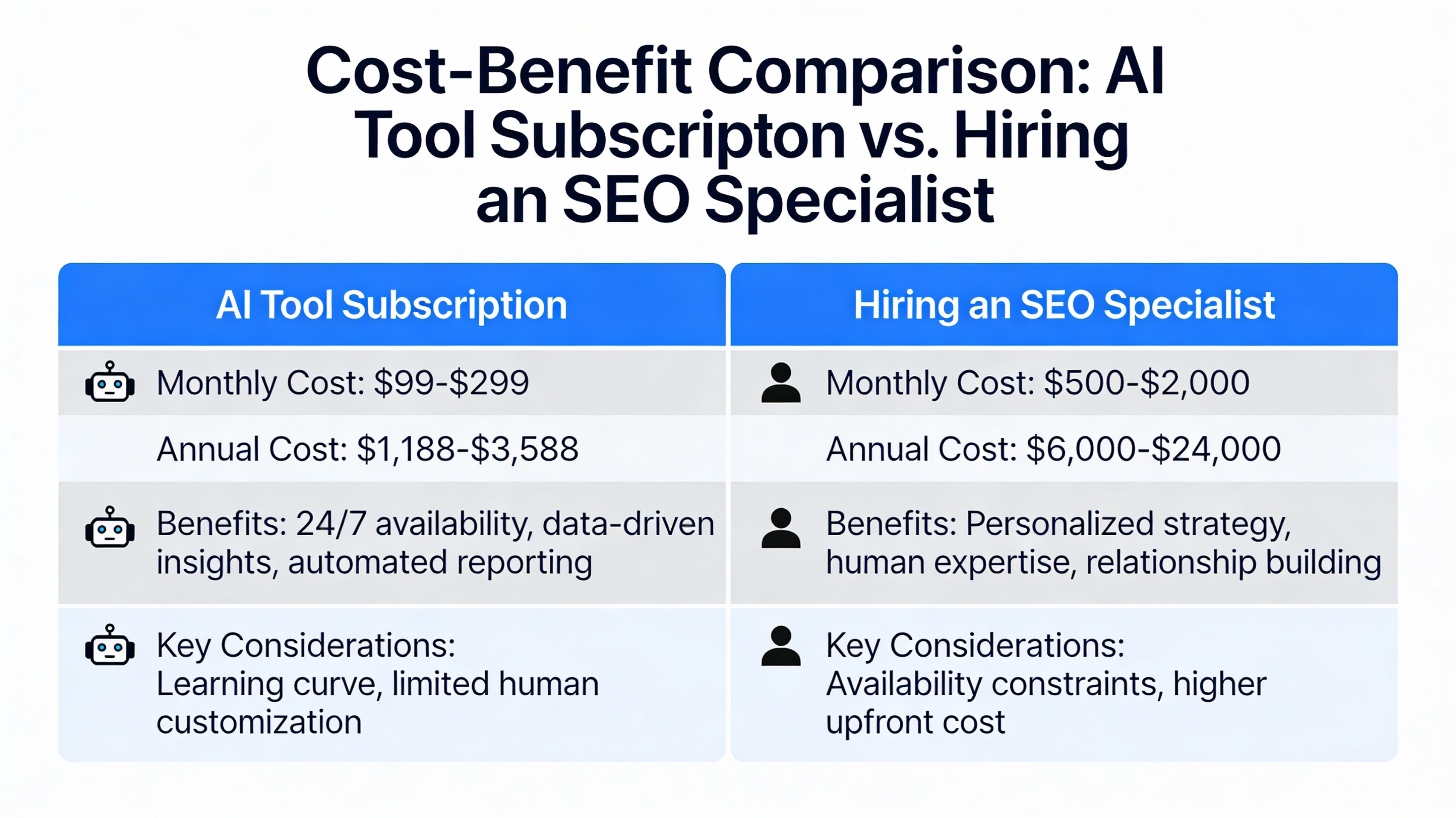
    Next, leverage an AI tool like Articfly to generate sample content volumes and accurately estimate the time savings achieved through automation. This will provide tangible proof of efficiency. A crucial step involves conducting a detailed cost comparison between the subscription fees for AI tools and the salary and overhead associated with hiring an additional SEO specialist or content writer.

    Table comparing AI tool costs to staff hiring expenses
    Generated by Articfly AI

    Cost-Benefit Analysis: AI Tool vs. Additional Staff

    Category AI Tool (e.g., Articfly) Additional SEO Specialist
    Initial Investment Monthly/Annual subscription fee Recruitment costs, onboarding expenses
    Ongoing Costs Fixed subscription, minimal variable costs Salary, benefits, payroll taxes, office space, equipment
    Scalability High, increased output with consistent cost Limited by individual capacity, proportional cost increase
    Content Volume Significant increase in content generation capacity Limited by human output and time constraints
    Efficiency Automates repetitive tasks, accelerates workflow Requires manual effort for all tasks
    Time-to-Impact Rapid deployment and content generation Hiring process, training period before full productivity
    Risk Predictable software costs, consistent output Turnover risk, variable human performance

    For further insights into financial modeling, refer to reputable sources on SEO cost analysis, such as articles from Search Engine Journal. You can also consult our comprehensive guide on calculating SEO ROI to refine your projections.

    Crafting a Persuasive Presentation for Executives

    A persuasive presentation is essential for conveying your AI-powered SEO strategy to the C-suite. Structure your slide deck logically, starting with a clear articulation of the problem you aim to solve. Follow this by introducing the AI-driven solution, such as implementing Articfly, and provide concrete evidence gathered through your data-driven business case.

    Crucially, project the anticipated ROI and outline a clear call to action. Incorporate compelling visual aids like charts illustrating projected traffic growth, the volume of AI-generated content, and significant cost savings. Be prepared to anticipate and address common executive objections regarding quality concerns, implementation timelines, and data security by offering thoughtful, evidence-based responses.

    Sample executive presentation slide showing AI SEO ROI
    Photo Monstera Production from Pexels

    “Data-driven decisions are not just about numbers; they’re about confidence in future outcomes. Show me the data, and show me the plan.”

    — Senior Executive (Placeholder)

    To assist with your presentation, you can access our executive presentation templates. If available, consider including a relevant case study showcasing AI-enabled SEO scaling to further reinforce your points.

    Implementing the AI-Powered SEO Workflow

    Successfully integrating AI into your SEO operations requires a structured, step-by-step workflow. This ensures that the advanced capabilities of tools like Articfly are fully leveraged, leading to consistent and measurable results. The process begins with strategic planning and moves through content creation, optimization, and final review.

    Each phase is designed to streamline content production, improve SEO performance, and maintain a high standard of quality. By following these defined steps, teams can maximize the efficiency and impact of their AI-powered SEO initiatives.

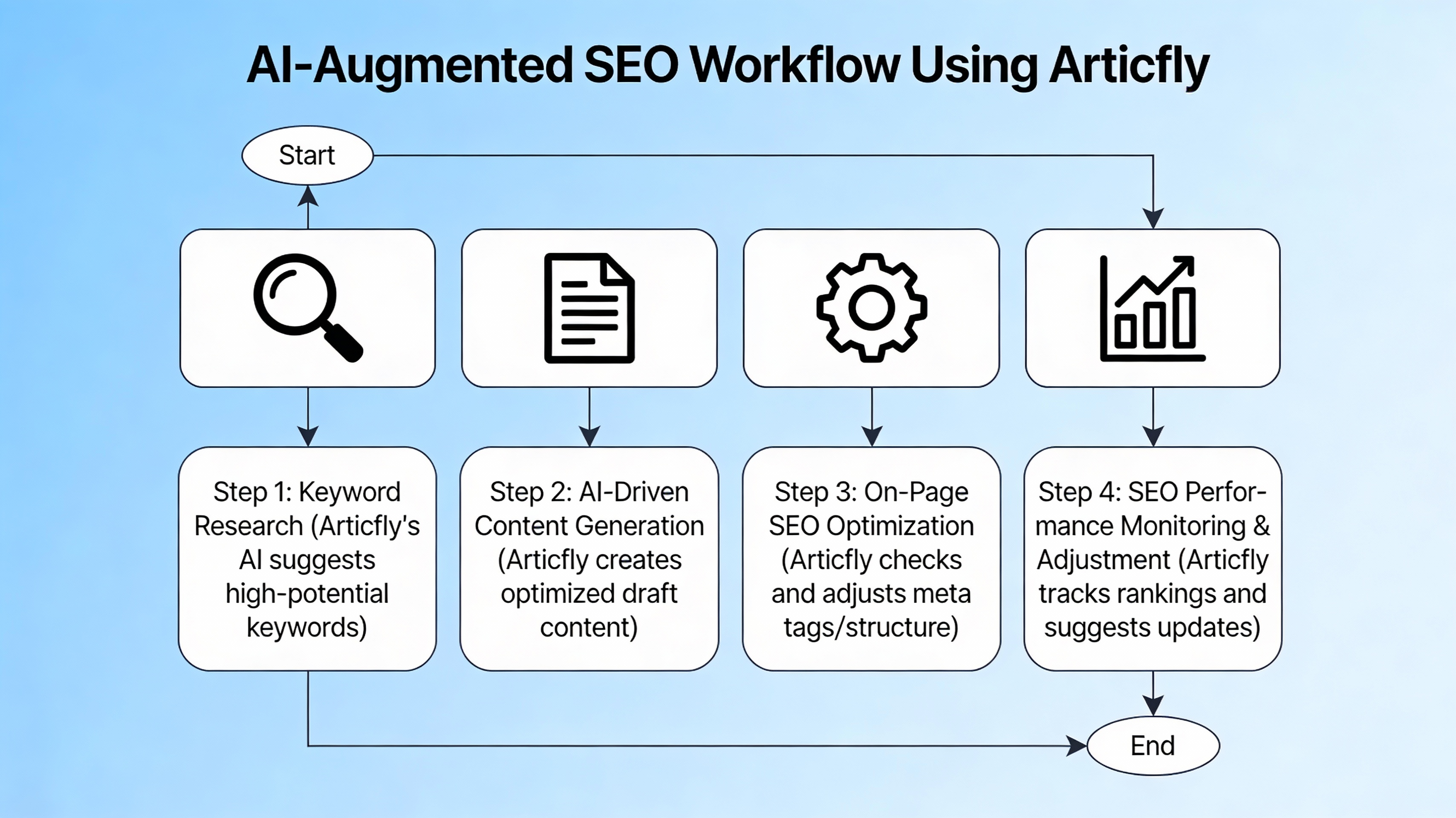
    Workflow diagram of AI-powered SEO process
    Generated by Articfly AI

    AI-Powered SEO Workflow Flowchart

    • Define Content Goals & Keywords
    • Use Articfly to Create Detailed Briefs
    • Generate AI Drafts & Run SEO Score Checks
    • Human Edit, Optimize, & Schedule Publishing
    • Monitor Performance & Iterate

    Content Brief Creation

    This initial phase involves precisely defining your content objectives. You will input target keywords, specify the intended audience, and set the desired tone for the content. Articfly then uses these parameters to generate a highly detailed and optimized content brief, guiding the subsequent AI drafting process to ensure alignment with your SEO strategy.

    Automated Drafting & Optimization

    Once the brief is complete, Articfly generates an initial draft of the content. The platform then runs an immediate SEO score check, highlighting areas for improvement. This allows for iterative refinement, where you can make adjustments and regenerate content segments to achieve optimal SEO performance before human review.

    Review & Publishing

    The final stage involves a crucial human quality assurance (QA) process. A human editor reviews the AI-generated and optimized content for accuracy, brand voice, and overall coherence. After this final check, the content is ready for integration into your Content Management System (CMS) and scheduled for publishing.

    For best practices in content creation, refer to our content workflow best practices guide. You can also find detailed instructions on using Articfly through the Articfly tutorial page.

    Measuring Success and Iterating

    Consistent measurement and reporting are vital to demonstrate the ongoing value of your AI-powered SEO efforts to leadership. Establish clear Key Performance Indicators (KPIs) such as organic traffic growth, keyword ranking improvements, and conversion lift. Regularly track these metrics to evaluate the impact of your strategy and content.

    Implement a structured reporting cadence, providing a concise monthly executive summary and a more in-depth quarterly review. Utilize AI analytics dashboards for real-time insights, allowing for quick adjustments and informed decision-making. This data-driven approach ensures continuous improvement and transparent communication of ROI.

    SEO KPI dashboard with traffic and ranking graphs
    Photo Lukas from Pexels

    To streamline your reporting, explore our SEO reporting templates. For a comprehensive understanding of key SEO metrics, consult reputable guides such as the Moz guide on SEO metrics.

    Key Takeaways

    • Align your SEO strategy with leadership goals to secure budget and buy-in.
    • Leverage AI tools like Articfly to automate tasks and scale content efficiently.
    • Build a compelling, data-driven business case comparing AI costs to traditional staffing.
    • Craft a persuasive executive presentation with clear problem statements, solutions, and projected ROI.
    • Implement a structured AI-powered SEO workflow from brief creation to publishing.
    • Continuously measure success with KPIs and iterate based on real-time analytics.

    FAQ

    Can AI replace an SEO specialist?

    AI tools like Articfly are designed to augment, not replace, SEO specialists. They automate repetitive and data-intensive tasks, freeing up human experts to focus on strategic planning, creative oversight, and nuanced decision-making that AI cannot replicate.

    Is Articfly suitable for all industries?

    Articfly is highly adaptable across various industries. While its core functionalities benefit any business requiring content generation and SEO optimization, its effectiveness can be enhanced by specific training data and human oversight tailored to niche industry terminology and nuances.

    How accurate is AI-generated content?

    AI-generated content from platforms like Articfly is generally high quality and well-optimized for SEO. However, human review is crucial to ensure factual accuracy, maintain brand voice, and add the unique perspective and creativity that only human writers can provide. It serves as an excellent first draft.

    What is the typical ROI timeline?

    While results can vary, businesses often begin to see significant ROI from AI-powered SEO efforts within 3-6 months. This timeline is influenced by factors such as industry competitiveness, content volume, and the efficiency of implementation. Always verify projections with real-world data and ongoing measurement.

    Do I need technical expertise to use Articfly?

    Articfly is designed with user-friendliness in mind, requiring minimal technical expertise. A basic understanding of SEO principles and content strategy is beneficial to effectively input parameters and review AI-generated content, but no coding or advanced technical skills are needed.

    Next steps for AI-Powered SEO Workflow

    Ready to revolutionize your SEO strategy and demonstrate undeniable ROI to your leadership? Take the next step by exploring Articfly’s capabilities. We encourage you to schedule a demo to see our platform in action, download our free “Executive SEO Pitch Deck” template to kickstart your presentation, and consider launching a pilot project to experience the benefits firsthand.

    Schedule a Demo Now

  • Low-Cost SEO Strategies That Beat Expensive Campaigns in 2026

    Low-Cost SEO Strategies That Beat Expensive Campaigns in 2026

    Understanding the Real Cost of SEO

    Magnifying glass highlighting SEO costs vs price tags
    Photo Hanna Pad from Pexels

    Debunking myths about expensive SEO is crucial for small businesses and startups. Many believe that competing with high-spend campaigns requires an equally large budget, which is often not the case. This section aims to set realistic expectations by comparing typical agency fees with DIY costs and highlighting the long-term value of sustainable tactics.

    Understanding where money is actually spent in SEO can help identify areas for budget-friendly alternatives. Focus on strategy and consistent effort, rather than simply throwing money at the problem. This playbook will show you how smart decisions can lead to market advantage.

    Common Misconceptions About Pricey Campaigns

    A widespread myth suggests that higher spending guarantees top rankings in search engine results. However, this is a misconception; while budget can provide resources, it does not inherently buy success. Strategy, relevance, and consistent execution ultimately matter more than the sheer volume of investment.

    Many expensive campaigns can underperform if they lack a solid foundation or target irrelevant keywords. Conversely, well-executed, low-cost strategies can yield significant returns by focusing on niche relevance and user intent. The key is intelligent allocation of time and resources, not just capital.

    What Businesses Actually Pay For

    Businesses typically pay for a range of specialized services when investing in SEO. These often include technical audits, comprehensive content creation, and extensive link acquisition efforts. Each of these areas can incur significant costs when outsourced to agencies or specialists.

    However, there are effective ways to cut these expenses without sacrificing quality. Performing your own technical audits, creating content with existing resources, and implementing strategic link-building tactics can drastically reduce your overall spend. The goal is to achieve similar outcomes through smart, internal effort.

    SEO Approach Typical Activities Included Estimated Monthly Cost
    Agency Managed Full technical audits, content strategy & creation, link building outreach, reporting, competitor analysis $500 – $5,000+
    DIY (Self-Managed) Free tool usage (Google Search Console), content repurposing, local citations, basic on-page optimization $0 – $50

    Core Low-Cost SEO Tactics That Deliver Results

    Sticky notes with budget-friendly SEO keywords
    Photo Bruno Bueno from Pexels

    Foundational tactics that any budget can execute are the backbone of effective low-cost SEO. These strategies focus on maximizing your current resources and leveraging free tools to gain a competitive edge. You don’t need a huge budget to make a significant impact on your search rankings.

    From identifying the right keywords to optimizing your website’s pages, these methods are designed for immediate implementation. They prioritize efficiency and measurable results, proving that smart planning can outperform extensive spending. Let’s explore the core tactics that truly deliver.

    Keyword Research on a Budget

    Effective keyword research doesn’t require expensive software subscriptions. You can leverage free tools like Google Trends, AnswerThePublic, and the free tier of Ubersuggest to uncover valuable insights. These platforms help identify trending topics and user queries relevant to your business.

    The key is to focus on long-tail, low-competition terms that your target audience is actively searching for. These specific phrases often have lower search volume but much higher conversion potential. Targeting them allows you to rank more easily and attract highly qualified traffic.

    On-Page Optimization Hacks

    On-page optimization is one of the most impactful low-cost SEO tactics you can implement. Properly optimizing elements like title tags, meta descriptions, and header hierarchy (

    ,

    , etc.) signals to search engines what your content is about. Ensure your primary keywords are naturally included in these areas.

    Further enhance your visibility by implementing structured data snippets using schema.org markup. This helps search engines understand the context of your content, potentially leading to rich snippets in search results. These simple adjustments can significantly improve your click-through rates.

    Technical SEO Basics You Can DIY

    Addressing basic technical SEO issues is crucial for search engine discoverability and can often be done without professional help. Start by regularly checking Google Search Console for any crawl errors that might prevent search engines from accessing your content. Resolving these ensures your pages are properly indexed.

    Another vital step is to ensure your website is mobile-friendly, which you can easily check using Google PageSpeed Insights. A responsive design and fast loading times are non-negotiable for both user experience and search rankings. These simple DIY checks can make a big difference.

    Must-Do Low-Cost SEO Tactics Checklist

    • Utilize Google Trends for keyword discovery.
    • Optimize title tags and meta descriptions with target keywords.
    • Structure content with clear H2, H3, H4 headings.
    • Implement basic schema markup for rich snippets.
    • Monitor Google Search Console for crawl errors.
    • Ensure your website is mobile-friendly and loads quickly.
    • Create or update your Google My Business profile.

    Leveraging Free and Affordable Tools in 2026

    Infographic comparing free and affordable SEO tools in 2026
    Generated by Articfly AI

    The right tools can significantly amplify your low-cost SEO efforts, even without a hefty budget. In 2026, there are more robust free and affordable options than ever before, enabling small businesses to compete effectively. Choosing the correct tools empowers you to streamline processes and gain valuable insights.

    This section will highlight the best current tools that either cost nothing or less than $20 per month. We’ll examine their core functionalities and criteria for selection, ensuring you can make informed decisions. Leveraging these resources efficiently is key to a successful budget-friendly strategy.

    Free Tools

    Many powerful SEO tasks can be accomplished using completely free tools. Google Search Console is indispensable for monitoring your site’s performance in Google Search, identifying indexing issues, and submitting sitemaps. Similarly, Bing Webmaster Tools offers similar functionality for the Bing search engine, providing valuable insights into your site’s visibility.

    For more technical audits, Screaming Frog SEO Spider Lite allows you to crawl up to 500 URLs for free, helping identify broken links, redirect chains, and missing meta descriptions. Mastering these free platforms provides a strong foundation for your SEO initiatives. Top Free SEO Tools 2026 offers more detailed guidance.

    Affordable Paid Tools

    When your budget allows for a small investment, affordable paid tools can offer enhanced features and deeper analysis. Ubersuggest, for instance, provides keyword research, content ideas, and competitor analysis at a low monthly cost. Surfer SEO Lite helps with on-page optimization by suggesting content adjustments based on top-ranking competitors.

    Ahrefs Webmaster Tools, while part of a larger paid suite, offers free access to a limited version that provides site audits and backlink data. Evaluate the cost-benefit of each tool based on your specific needs and budget constraints. Prioritize tools that address your most pressing SEO challenges and offer the highest potential ROI for your minimal spend.

    Choosing the Right Tool for Your Niche

    Selecting the optimal SEO tool depends heavily on your specific business niche and immediate goals. Consider what aspects of SEO you need to prioritize: keyword research, technical audits, content optimization, or backlink analysis. A tool that excels in your weakest area will provide the most value.

    Think of it as a decision-tree: if you’re struggling with keyword ideas, prioritize tools like Ubersuggest or AnswerThePublic. If technical errors are holding you back, Google Search Console and Screaming Frog are essential. Aligning tool capabilities with your strategic needs ensures maximum impact from minimal investment.

    Content Strategies on a Shoestring Budget

    Team brainstorming low-budget content strategies
    Photo Mikhail Nilov from Pexels

    Producing high-impact content without hiring expensive writers is entirely achievable with strategic planning. The key lies in leveraging your existing assets and community resources, along with smart content creation techniques. You don’t need a massive content budget to rank for valuable keywords and attract your target audience.

    This section will guide you through repurposing content, utilizing user-generated contributions, and applying techniques like the skyscraper method. These approaches ensure you maintain a robust content presence while keeping costs minimal. Remember, quality and relevance often trump sheer volume in content marketing.

    Repurposing Existing Assets

    Repurposing existing assets is an incredibly efficient way to generate new content without starting from scratch. Begin by identifying your evergreen content – blog posts, webinars, or PDFs that remain relevant over time. Update these pieces with current data, fresh examples, and enhanced SEO optimization.

    A webinar transcript can become several blog posts, social media snippets, or an infographic. A detailed PDF guide can be broken down into a series of email newsletters. This strategy maximizes the value of content you’ve already invested in, extending its reach and improving its search performance. Repurposing Content for SEO provides further insights.

    User-Generated Content & Community Building

    Harnessing user-generated content (UGC) is a powerful, low-cost strategy for enriching your site and building community. Encourage customers to leave reviews, submit Q&A, or participate in forums related to your products or services. This content is authentic, relevant, and directly addresses customer concerns, which search engines value.

    Additionally, leverage platforms like Reddit and Quora not only to engage with potential customers but also to gather topic ideas. Pay attention to common questions and discussions within your niche, using these insights to inform your content creation. This approach provides valuable, organic content that costs nothing to produce.

    Skyscraper Technique with Limited Resources

    The skyscraper technique can be adapted for limited resources to create high-ranking content. Instead of trying to create the “best” piece of content on a topic from scratch, identify an existing piece of content that performs well but lacks certain elements. Look for low-competition targets with solid but improvable content.

    Your goal is to make it significantly better by adding unique data, fresh perspectives, or compelling visuals that the original piece is missing. You don’t need to reinvent the wheel; just find a way to add substantial, unique value. Search Engine Journal article on the skyscraper technique offers more inspiration.

    Content Type Repurposed Example Brand-New Article Example
    Long-form Guide An old whitepaper on ‘Email Marketing Basics’ updated with 2026 stats and visuals. ‘The Ultimate Guide to AI-Powered Personalization in Email Marketing 2026’.
    Video Content A webinar recording transcribed into a blog post, then split into social media graphics. A professionally filmed interview series with industry leaders on new trends.
    Product Showcase Customer reviews & photos compiled into a ‘User Favorites’ blog post. A dedicated landing page with custom photography and expert-written descriptions for a new product launch.

    Building Authority Without Breaking the Bank

    Networking and guest posting on a shoestring budget
    Photo fauxels from Pexels

    Achieving strong domain authority and building valuable backlinks doesn’t require an enormous budget. Smart link-building and PR tactics can significantly boost your site’s credibility and search rankings for minimal cost. The focus here is on strategic outreach, leveraging existing platforms, and earning media through clever pitching.

    These methods allow small businesses to gain authoritative links and mentions that rival those secured by high-spend campaigns. It’s about being resourceful, providing value, and knowing where to find opportunities. Let’s explore how to build authority effectively and affordably.

    Strategic Outreach and Guest Posting

    Strategic outreach is vital for securing valuable guest posting opportunities and backlinks. Focus your efforts on researching low-authority sites that have high relevance to your niche. These sites are often more receptive to high-quality guest content than larger, more established publications.

    When you reach out, offer value-added content that addresses a specific need or fills a content gap for their audience. Personalized email templates can significantly increase your success rate. Effective Outreach Templates can help you craft compelling messages. Guest posting remains a strong tactic for increasing your domain authority and referral traffic.

    Local Citations and Business Listings

    For local businesses, maintaining consistent NAP (Name, Address, Phone number) information across online directories is paramount. This consistency is a critical signal for local SEO and helps search engines verify your business’s legitimacy. Start by ensuring your Google My Business profile is fully optimized and up-to-date with accurate information and compelling images.

    Beyond Google, leverage niche-specific industry directories and prominent local listing sites. Many of these platforms offer free basic listings that can significantly boost your local search presence. A comprehensive approach to local citations builds trust with both search engines and potential customers.

    Earned Media Through PR Hacks

    Earning media coverage without a PR agency is achievable through creative “PR hacks.” Identify newsworthy angles within your business or industry that could be of interest to journalists and bloggers. This might involve sharing unique data, commenting on a trend, or announcing a local community initiative.

    Platforms like HARO (Help A Reporter Out) connect journalists with expert sources, offering a fantastic opportunity to get featured in major publications for free. Additionally, engaging with micro-influencers in your niche can lead to valuable mentions and backlinks without significant financial outlay. HARO official site provides a direct avenue for these opportunities.

    “We started with a simple email outreach campaign, offering unique insights to local blogs. Within three months, we secured five high-quality backlinks and saw a 15% jump in organic traffic. It proves that personalized value trumps mass emails every time.”

    — A Small Business Owner on Low-Budget Outreach

    Measuring Success and Scaling Up

    Chart illustrating SEO ROI growth from a $50 start
    Generated by Articfly AI

    Equipping yourself with free metrics and a clear growth plan is essential for any low-cost SEO strategy. Understanding how to track your progress allows you to identify what’s working and what isn’t, enabling informed adjustments. You don’t need expensive software to monitor key performance indicators (KPIs).

    This section will guide you through the core metrics to focus on and how to use free tools to visualize your data. We’ll also cover when and how to reinvest any gains to scale your efforts effectively. Measuring success is the first step towards sustainable growth.

    Key Metrics to Track Without Expensive Software

    Tracking core KPIs is straightforward with readily available free tools. Organic traffic, keyword rankings, and click-through rate (CTR) are fundamental indicators of your SEO performance. Google Search Console provides invaluable data on keyword performance, impressions, clicks, and average position for your site.

    Google Analytics, another free tool, allows you to monitor organic traffic volume, user behavior on your site, and conversion rates stemming from organic search. By regularly reviewing these metrics, you can identify trends and pinpoint areas for improvement without any financial investment. SEO KPI Dashboard Template can offer more structure for this.

    When to Reinvest and How to Allocate Budget

    Knowing when to reinvest your profits back into SEO is crucial for sustainable growth. Establish clear thresholds for scaling your spend based on achieved organic traffic, lead generation, or sales increases. Once these milestones are met, consider dedicating a portion of your new revenue to expand your SEO efforts.

    Allocate this newfound budget strategically, focusing on high-ROI tactics that have already proven effective. This might include investing in a premium keyword research tool, subscribing to a content optimization platform, or hiring a freelance content writer for specific high-value pieces. Always prioritize actions that offer the greatest potential for further returns.

    Key Takeaways

    Achieving market advantage with ultra-low-cost SEO is not just possible, it’s a definitive playbook for 2026. Smart strategy consistently trumps big spend when executed effectively.

    Here are seven impactful low-cost actions you can start today to transform your SEO strategy:

    • **Master free keyword tools:** Use Google Trends, AnswerThePublic, and Ubersuggest to find long-tail, low-competition terms.
    • **Optimize on-page elements rigorously:** Perfect your title tags, meta descriptions, and header hierarchy, and add schema markup.
    • **Perform DIY technical audits:** Regularly check Google Search Console for errors and ensure mobile-friendliness with PageSpeed Insights.
    • **Leverage free tools daily:** Integrate Google Search Console and Bing Webmaster Tools into your routine for monitoring and improvements.
    • **Repurpose existing content creatively:** Transform old webinars, PDFs, and blog posts into fresh, SEO-optimized material.
    • **Build authority through strategic outreach:** Focus on guest posting on relevant, accessible sites and using HARO for earned media.
    • **Monitor KPIs with free dashboards:** Track organic traffic, keyword rankings, and CTR using Google Analytics and Search Console to guide your next moves.

    FAQ

    Can $50 really make a difference in SEO?

    Yes, absolutely. While $50 might not cover extensive campaigns, it can fund crucial tools like a month of Ubersuggest’s basic plan or a small advertising boost. More importantly, $50 can be used for training resources or to outsource a very specific, high-impact micro-task, significantly augmenting what you can do with free tools and your own time.

    How long before I see results from low-cost tactics?

    SEO is a long-term strategy, regardless of budget. You can expect to see initial improvements in areas like crawlability and indexing within weeks for technical fixes. For keyword rankings and significant organic traffic growth, it typically takes 3-6 months of consistent effort. Patience and persistence are key.

    Which free tool gives the best backlink data?

    For truly free backlink data, Google Search Console is invaluable for showing links *to your own site*. While it doesn’t show competitor backlinks, it’s essential for understanding your own link profile. Ahrefs Webmaster Tools also offers a powerful free tier for backlink analysis of your verified sites, which is highly recommended for deeper insights.

    Is guest posting still effective in 2026?

    Yes, guest posting remains highly effective in 2026 when done strategically. The focus has shifted from quantity to quality and relevance. Guest posts should offer genuine value to the host site’s audience and come from reputable, relevant sources. It’s about building genuine relationships and authority, not just acquiring links.

    How do I know when to upgrade to paid tools?

    You’ll know it’s time to consider paid tools when your free tools can no longer provide the depth of data or automation you need to scale. This might be when you hit URL limits, require more advanced competitor analysis, or need integrated reporting. Start with a small, specific paid tool that addresses your biggest bottleneck and demonstrates clear ROI before expanding further.

    Next steps for low-cost SEO

    Ready to unlock market advantage with smart, budget-friendly SEO strategies? Your journey to competing with high-spend campaigns starts now.

    Take action today by exploring these essential resources:

    • Download our free “Low-Cost SEO Starter Kit” checklist to begin implementing these tactics immediately.
    • Subscribe for weekly budget SEO tips delivered straight to your inbox, keeping you ahead of the curve.
    • Join our community forum for peer support, shared insights, and answers to your pressing SEO questions.
  • Why SEO Is the Most CFO‑Friendly Marketing Channel in 2026

    Why SEO Is the Most CFO‑Friendly Marketing Channel in 2026

    Introduction: The CFO’s Lens on Marketing ROI

    CFO examining financial charts with SEO data
    Photo Kindel Media from Pexels

    CFOs prioritize cost control, predictability, and risk mitigation in all investment decisions, and marketing spend is no exception. For senior financial decision-makers, evaluating marketing ROI is akin to any other capital allocation, demanding clear, measurable, and justifiable returns.

    This article frames SEO as a strategic financial investment that aligns perfectly with core CFO priorities. Understanding its unique advantages over other channels is crucial for informed budget planning.

    “In today’s dynamic market, every dollar spent on marketing must demonstrate a clear path to profitability and sustainable growth. The days of discretionary marketing budgets are long over; now, it’s about strategic capital deployment.”

    CFO.com article on marketing ROI

    To learn more about our data-driven approach, consider exploring our page on Our Approach to Data-Driven Marketing. For a deeper dive into ROI measurement, external resources like the CFO.com ROI guide can be valuable.

    Why SEO Beats Paid Channels for Financial Leaders

    Comparison infographic of SEO vs paid advertising costs over time
    Generated by Articfly AI

    A direct comparison of cost structures and long-term value reveals why SEO often surpasses paid media for finance leaders. While paid channels offer immediate visibility through upfront per-click fees, their impact ceases the moment the budget runs out.

    SEO, conversely, builds equity over time, generating an evergreen flow of organic traffic with a compounding effect. This creates a lasting asset, unlike the diminishing returns often associated with continuous paid media spend.

    Metric Paid Media (PPC) Search Engine Optimization (SEO)
    Cost Per Acquisition (CPA) High initial, decreases with optimization, then rises with competition Higher initial investment, significantly decreases over time
    Break-Even Timeline Typically 3-6 months, dependent on budget Often 6-12 months, but with sustained returns
    Scalability Directly tied to budget; linear growth, often with diminishing returns Compounding growth; incremental spend yields exponential returns over time

    Discover real-world financial gains in our case study on SEO cost savings. For further insights into the long-term ROI, explore the Search Engine Land article on SEO vs PPC ROI.

    Core SEO Benefits Aligned with CFO Priorities

    CFO and marketing team discussing SEO strategy in meeting
    Photo Kindel Media from Pexels

    SEO’s inherent advantages directly address typical CFO concerns, making it a compelling investment. It fosters predictable revenue streams through evergreen content that continuously attracts qualified leads without constant ad spend.

    The investment in SEO is highly scalable, meaning incremental spend yields compounding returns over time rather than just linear growth. Furthermore, SEO presents lower risk, as there are no per-click fees, leading to less volatility in marketing expenses compared to auction-based systems.

    • Predictable Revenue: Evergreen content assets generate consistent organic traffic and conversions, offering more stable forecasts.
    • Scalable Investment: Each improvement builds upon previous efforts, leading to compounding returns without a linear increase in costs.
    • Lower Risk Profile: Reduces reliance on fluctuating ad markets and avoids immediate budget depletion, offering greater financial stability.
    • Brand Equity Building: Strong organic visibility enhances brand authority and trust, which are invaluable long-term assets.
    • High Conversion Potential: Users actively searching for solutions often have higher intent, leading to better conversion rates.

    Monitor your SEO performance with our specialized SEO Performance Dashboard tool. For an in-depth understanding of SEO ROI, refer to the Moz guide on SEO ROI.

    Measuring SEO Success in Financial Terms

    Dashboard visual of SEO performance metrics for CFOs
    Generated by Articfly AI

    To gain CFO approval, it is essential to translate SEO metrics into tangible financial KPIs. Key performance indicators like organic traffic volume, conversion rate from organic channels, and revenue per organic visitor provide a clear picture of financial impact.

    Implementing attribution models suitable for finance, such as first-touch or data-driven models, helps assign proper credit to SEO efforts. The simple ROI formula — (Revenue from organic – SEO costs) / SEO costs — offers a straightforward way to quantify returns.

    Financial KPI Description Sample Formula / Calculation
    Organic Revenue Growth Increase in revenue generated directly from organic search channels. (Current Organic Revenue – Previous Organic Revenue) / Previous Organic Revenue
    Return on SEO Investment (ROAS) Revenue generated for every dollar spent on SEO. (Revenue from Organic Search / Total SEO Investment) x 100%
    Customer Acquisition Cost (CAC) Cost to acquire a new customer through organic search. Total SEO Cost / Number of New Organic Customers
    Lifetime Value (LTV) from Organic Predicted revenue a customer will generate over their relationship with a company, specifically from organic acquisition. Average Organic Customer Value x Average Organic Customer Lifespan

    Download our customizable KPI template for your internal tracking needs. For a deeper understanding of attribution, consult the HubSpot article on SEO attribution.

    Implementing a CFO‑Friendly SEO Strategy

    Flowchart of SEO budget allocation steps for financial leaders
    Generated by Articfly AI

    A practical, finance-oriented rollout plan is essential for securing and maintaining CFO buy-in for SEO initiatives. Begin with a robust budget allocation framework, perhaps allocating a fixed percentage of the overall marketing budget to SEO, with clear quarterly milestones.

    Cross-functional collaboration between finance, marketing, and product teams ensures alignment and shared understanding of goals and progress. Finally, establish a solid technology stack for analytics, keyword research, and content management to efficiently track and execute the strategy.

    Explore our recommendations for essential SEO Tools We Recommend. Industry reports, such as the Gartner report on SEO technology, can provide insights into current trends and best practices.

    Real‑World Examples of CFO‑Approved SEO Wins

    Illustration of revenue growth attributed to SEO initiatives
    Photo Monstera Production from Pexels

    To illustrate SEO’s tangible financial impact, consider these anonymized case studies of companies that secured CFO approval. These examples demonstrate how strategic SEO investment can deliver significant, measurable returns aligned with financial objectives.

    From reducing acquisition costs to doubling revenue and stabilizing cash flow, these scenarios highlight the diverse financial benefits of a well-executed SEO program. They provide concrete evidence of SEO’s power as a long-term growth engine.

    Example 1: SaaS Company Reduces CAC by 30%

    A B2B SaaS company invested in a comprehensive SEO strategy focusing on long-tail keywords and technical optimization. Within 12 months, their customer acquisition cost (CAC) for organic leads decreased by 30%, significantly improving their overall profitability and scaling efficiency.

    Example 2: E-commerce Brand Achieves 2x Organic Revenue Growth

    An e-commerce brand specializing in sustainable products launched an extensive content marketing and SEO campaign. Over 18 months, they saw a doubling of their organic revenue, reducing their reliance on paid ads and building a resilient sales channel.

    Example 3: B2B Services Firm Stabilizes Cash Flow with Evergreen Content

    A B2B services firm implemented an evergreen content strategy, targeting key industry pain points. This effort led to a consistent stream of inbound leads, stabilizing their cash flow and reducing sales cycle volatility, proving the long-term value of content-driven SEO.

    For more detailed success stories, visit our full case study library. Further data on industry-wide SEO impact can be found in various industry reports, such as the BrightEdge 2025 Trends report.

    Key Takeaways

    • SEO aligns with CFO priorities by offering predictable revenue, scalable investment, and lower financial risk compared to paid media.
    • Unlike ephemeral paid campaigns, SEO builds long-term digital assets that generate compounding returns over time.
    • Measuring SEO in financial terms requires tracking KPIs like organic revenue, ROI, and CAC, using appropriate attribution models.
    • A CFO-friendly SEO strategy includes clear budget allocation, cross-functional team collaboration, and a robust technology stack.
    • Real-world examples demonstrate significant financial wins, such as reduced CAC and substantial organic revenue growth.

    FAQ

    1. How does SEO ROI compare to paid search ROI for large enterprises?

    For large enterprises, SEO typically yields a higher long-term ROI due to its compounding nature and lower per-acquisition costs over time. While paid search offers immediate, predictable results, SEO builds sustainable brand authority and organic traffic that isn’t dependent on continuous ad spend.

    2. What is the typical time frame for SEO to show measurable financial results?

    Measurable financial results from SEO usually begin to appear within 6-12 months of consistent effort. Significant, transformative results, especially for large enterprises in competitive niches, often require 18-24 months to fully mature and demonstrate their full potential.

    3. Which SEO KPIs matter most to a CFO?

    CFOs are most interested in KPIs that directly relate to revenue and cost efficiency. These include Organic Revenue Growth, Return on SEO Investment (ROAS), Customer Acquisition Cost (CAC) from organic channels, and the Lifetime Value (LTV) of customers acquired via organic search.

    4. Can SEO be integrated into a strict annual budgeting process?

    Yes, SEO can be effectively integrated into a strict annual budgeting process. This involves defining clear objectives, estimating costs for a 12-month roadmap, projecting ROI, and establishing quarterly review milestones to track progress and adjust allocations as needed, ensuring transparency with the finance team.

    5. What risks should a CFO watch for when scaling SEO?

    When scaling SEO, a CFO should be aware of potential risks such as over-reliance on a single SEO tactic, algorithm updates that could impact visibility, and the need for continuous investment to maintain competitive advantage. It’s crucial to diversify strategies and monitor market changes closely.

    Next steps for a CFO-Approved SEO Program

    Ready to leverage SEO as a strategic financial asset for your organization? Understanding the numbers and building a strong business case is the first step.

    We invite you to schedule a free SEO ROI assessment with our finance-focused marketing team. We’ll help you identify key opportunities and outline a strategy tailored to your financial objectives. Contact us today to begin a data-driven conversation about your growth.

  • Low‑Cost SEO: Turn $50 into Market Advantage in 2026

    Low‑Cost SEO: Turn $50 into Market Advantage in 2026

    Understanding the Real Cost of SEO in 2026

    Person reviewing SEO cost analysis chart
    Photo Artem Podrez from Pexels

    Many small business owners often underestimate the true financial commitment required for effective SEO in the current digital landscape. While large enterprises might allocate thousands monthly, understanding typical budget ranges for small and medium-sized businesses is crucial for setting realistic expectations. Beyond direct service fees, hidden costs like specialized tools, continuous learning, and significant time investment can quickly inflate an SEO budget.

    However, an expensive campaign does not always guarantee superior results. By strategically focusing on low-cost tactics, businesses can often achieve a higher return on investment, making every dollar count more efficiently. This approach empowers budget-conscious entrepreneurs to compete effectively without breaking the bank.

    Aspect Low-Cost Approach ($50/month) High-Cost Approach ($5,000+/month)
    Tools Free tiers, browser extensions Enterprise-level software suites
    Expertise Self-education, targeted outsourcing Dedicated SEO team, agency fees
    Time Investment High initial learning, consistent effort Delegated, oversight required
    Focus High-intent long-tail keywords, technical basics Broad keyword strategy, extensive content marketing, PR
    Scalability Gradual, process-driven Rapid expansion possible with resources

    For further insights into managing your SEO budget effectively, consider exploring our SEO Budget Planning guide. Additionally, a recent Moz article on SEO spend provides valuable industry benchmarks and trends.

    Core Low-Cost SEO Tactics That Deliver Big Wins

    Magnifying glass over dollar sign symbolizing low-cost SEO tactics
    Photo Noelle Otto from Pexels

    Achieving significant SEO results doesn’t always require a hefty investment; smart, low-cost strategies can be incredibly effective. The key lies in prioritizing tactics that offer the highest impact for minimal spend. This involves focusing on specific areas where small efforts can yield substantial organic growth.

    From identifying profitable keywords to optimizing your site’s technical foundation, these core strategies are designed for entrepreneurs and small businesses. They enable you to compete with larger players by making intelligent, data-driven decisions that drive traffic and conversions.

    • ✓ Prioritize high-intent, low-competition keywords to capture ready-to-convert traffic.
    • ✓ Optimize site speed using readily available free tools and browser extensions to improve user experience.
    • ✓ Repurpose existing content into new formats or update old posts for fresh ranking opportunities.
    • ✓ Implement basic on-page SEO best practices for all new and updated content.

    To ensure you’re covering all your bases, download our Keyword Research Checklist. For more detailed technical SEO advice, refer to the Search Engine Journal piece on technical SEO hacks.

    Keyword Research on a Budget

    Infographic of free keyword research workflow
    Generated by Articfly AI

    Uncovering valuable keywords without investing in expensive tools is entirely achievable with strategic use of free resources. These methods allow you to pinpoint what your target audience is searching for, even on a limited budget. The goal is to identify terms with sufficient search volume and manageable competition.

    By leveraging publicly available data and free-tier tools, you can build a robust keyword strategy. This ensures your content is optimized for queries that genuinely matter to potential customers, driving relevant organic traffic to your site.

    1. Start with Google Autocomplete and “People Also Ask” sections for initial topic ideas and long-tail variations.
    2. Utilize Answer The Public’s free tier to discover question-based keywords and related phrases.
    3. Leverage the free keyword volume data available through tools like Ubersuggest or Google Keyword Planner (with a live campaign) to gauge search demand.
    4. Validate keyword intent by performing a quick Google search for your chosen terms and analyzing the top-ranking results (SERP analysis).
    5. Compile your findings into a simple spreadsheet, noting estimated search volume, competition level, and user intent.

    Explore more free resources on our Free Keyword Tools page for additional support in your research.

    Technical SEO Hacks Without a Developer

    Many critical technical SEO issues can be addressed by non-technical business owners, often without needing a costly developer. These simple adjustments can significantly improve your site’s performance and crawlability, making it more appealing to search engines.

    Implementing these hacks not only saves money but also gives you greater control over your site’s SEO foundation. Even small improvements in areas like site speed and structured data can lead to noticeable gains in organic visibility and user experience.

    Technical SEO Task Plugin Method (No Code) Manual Method (Basic Code/Tools)
    Implement Schema Markup Use SEO plugins like Yoast SEO or Rank Math to add structured data for rich snippets. Generate schema with Schema.org generators and paste into HTML (advanced users).
    Optimize Images Install image compression plugins (e.g., Smush, Imagify) to automatically reduce file sizes. Use online image compressors (TinyPNG, Compressor.io) before uploading images.
    Monitor Crawl Errors Not typically plugin-based; directly use Google Search Console. Regularly check Google Search Console’s “Crawl Errors” report to identify and fix issues.
    Create XML Sitemaps Most SEO plugins (Yoast, Rank Math) generate and update sitemaps automatically. Manually create and update XML sitemap file, then submit to Google Search Console.

    For comprehensive guidance on using Google Search Console, refer to the official Google Search Console help page.

    Content Creation Strategies for $50

    Producing high-quality content on a tight budget is entirely feasible with smart planning and resourcefulness. These strategies focus on maximizing your content output and reach without incurring significant expenses. The goal is to generate engaging, SEO-friendly material that resonates with your audience.

    From strategic outsourcing to leveraging existing assets, these methods ensure your content pipeline remains active and effective. This approach allows you to continuously provide value, attract organic traffic, and establish your authority in your niche.

    • Outsource short, specific posts or article outlines on platforms like Fiverr or Upwork for $5-$10 each.
    • Repurpose webinars, podcasts, or video transcripts into detailed blog posts or series.
    • Use AI writing assistants to generate first drafts, then edit and fact-check manually for accuracy and brand voice.
    • Create evergreen content that remains relevant over time, reducing the need for constant updates.
    • Develop simple infographics or data visualizations using free online tools to enhance existing articles.

    Discover more efficient ways to manage your content production with our Content Outsourcing Tips guide.

    Leveraging Free and Low-Cost Tools for Competitive Edge

    The digital marketing landscape is rich with free and low-cost tools that can provide a significant competitive advantage to small businesses. These resources democratize SEO, allowing budget-constrained entrepreneurs to perform tasks traditionally reserved for expensive agencies. By harnessing these tools, you can gain insights, optimize your site, and expand your online presence.

    From analytics to content optimization and link building, a strategic combination of these tools can create a powerful SEO toolkit. They empower you to make informed decisions and execute effective strategies, proving that sophisticated SEO doesn’t always demand a premium price tag.

    Tool Category Example Tool Price Point Key Use Case
    Analytics & Webmaster Google Analytics Free Track website traffic, user behavior, conversions
    Analytics & Webmaster Google Search Console Free Monitor search performance, crawl errors, index status
    Analytics & Webmaster Bing Webmaster Tools Free Optimize for Bing search, similar to GSC
    Keyword Research Ubersuggest (free tier) Free/Low-Cost Basic keyword ideas, search volume estimates
    Technical SEO PageSpeed Insights Free Analyze and improve website loading speed
    AI Writing Claude/ChatGPT (free tiers) Free/Low-Cost Generate content drafts, rewrite text, brainstorm ideas
    Link Building Help a Reporter Out (HARO) Free Connect with journalists for media mentions and backlinks

    Stay updated on the best resources available by checking out a recent article on free SEO tools 2026.

    AI Writing Assistants and Prompt Engineering

    AI assistant generating SEO‑optimized content
    Generated by Articfly AI

    Harnessing AI writing assistants is a powerful way to accelerate content creation and optimize it for SEO, even with minimal expenditure. These tools can generate high-quality drafts, rewrite existing content, and assist with keyword integration. Mastering prompt engineering is key to unlocking their full potential.

    By providing clear and specific instructions, you can guide AI models to produce highly relevant and engaging copy. This not only saves time but also helps maintain a consistent content flow, a vital aspect of long-term SEO success.

    Example Prompt: “Write a 300-word blog post introduction about the benefits of ‘eco-friendly cleaning products’ for small businesses. Include keywords like ‘sustainable business practices’, ‘cost-effective cleaning’, and ‘customer loyalty’. Maintain an informative yet encouraging tone.”

    AI Output Example: “In today’s competitive landscape, small businesses are increasingly seeking ways to stand out, and adopting eco-friendly cleaning products offers a compelling advantage. Embracing sustainable business practices not only aligns with evolving consumer values but also presents tangible benefits for your bottom line. Beyond the positive environmental impact, many businesses find cost-effective cleaning solutions within the green market, often reducing the need for multiple specialized products. This commitment to sustainability can significantly boost customer loyalty, as conscious consumers are more likely to support brands that mirror their values. Discover how making this simple switch can transform your business’s appeal and operational efficiency.”

    For more advanced techniques and examples, refer to our comprehensive AI Prompt Guide.

    Free Link Building Opportunities

    Earning valuable backlinks without paying is crucial for establishing domain authority and improving search rankings on a budget. These methods leverage existing online communities and resources to secure high-quality links naturally. The focus is on providing value and engaging authentically within your industry.

    Building a strong backlink profile takes time and consistent effort, but the returns are substantial. By actively pursuing these free opportunities, you can enhance your site’s credibility and visibility without financial outlay.

    • ✅ Leverage local citations and business directories (e.g., Google My Business, Yelp, industry-specific directories) to build foundational links.
    • ✅ Contribute valuable insights and expertise to industry forums, Reddit communities, and Q&A sites, naturally linking back to relevant resources on your site where appropriate.
    • ✅ Offer data-driven insights or unique perspectives to journalists and content creators through services like Help a Reporter Out (HARO).
    • ✅ Identify unlinked brand mentions using simple Google searches and reach out to request a link.
    • ✅ Create link-worthy content, such as original research, comprehensive guides, or useful tools, that others will naturally want to reference.

    To learn more about effectively using HARO for link building, consult a reputable HARO guide available online.

    Case Study: $50 vs $5,000 Monthly SEO Campaigns

    Comparison chart of low‑cost vs high‑budget SEO results
    Generated by Articfly AI

    To illustrate the potential of a lean SEO approach, we conducted a qualitative comparison between a $50 monthly campaign and a $5,000 monthly campaign. This case study aims to highlight that strategic execution can often outweigh sheer financial investment in achieving meaningful SEO results. Both campaigns targeted the same niche and operated within a similar timeframe.

    The objective was not to declare one superior in every aspect, but rather to examine the types of outcomes each budget tier could achieve. We focused on qualitative metrics like ranking improvements for specific keyword types, traffic quality, and early conversion signals, acknowledging the different resource allocations involved.

    Campaign Aspect $50 Monthly Campaign $5,000 Monthly Campaign
    Keyword Focus Hyper-niche, long-tail terms Broad, competitive head terms & long-tail
    Content Strategy Updated existing content, AI-assisted short posts New pillar content, extensive blog posts, video, infographics
    Link Building HARO, local citations, forum engagement Paid outreach, digital PR, guest posting at scale
    Tools Used Free Google tools, Ubersuggest free, free AI tiers Ahrefs, Semrush, Surfer SEO, agency software
    Time Investment Significant owner time (10-15 hrs/week) Managed by agency, minimal owner oversight
    Key Takeaway Achieved targeted niche visibility, high-intent traffic Dominated broader terms, strong brand presence

    For more detailed analyses of different SEO strategies, please visit our SEO Case Studies archive.

    Methodology Overview

    Our comparative case study involved a structured approach to ensure a fair qualitative assessment of both campaigns. This methodology focused on controlling variables where possible and clearly defining the scope of each effort. The goal was to provide transparent insights into how different budget levels translate into practical SEO activities.

    By outlining the specific steps taken, we aim to offer clarity on the foundation of our observations. This overview helps in understanding the context behind the results and how each campaign was managed to achieve its respective outcomes.

    1. Selected a comparable niche with a clear target audience for both campaigns.
    2. Identified a set of both broad and long-tail keywords relevant to the niche.
    3. Defined specific tasks and allocated budget for each campaign ($50 vs $5,000).
    4. Utilized Google Search Console and Google Analytics for tracking basic performance metrics.
    5. Monitored keyword rankings qualitatively through manual checks for the 3-month duration of the test.

    Results Comparison (Qualitative)

    The findings from our qualitative comparison offered compelling insights into the effectiveness of both budget tiers. While the high-budget campaign achieved broad visibility, the low-cost approach demonstrated remarkable efficiency in its targeted efforts. Each strategy proved successful in its own right, albeit with different strengths.

    This comparison underscores that success in SEO is not solely dictated by monetary spend but also by strategic focus and consistent execution. Understanding these nuanced outcomes is vital for businesses deciding on their SEO investment level.

    • The $50 approach achieved top-3 rankings for several highly specific, long-tail terms, generating targeted niche traffic.
    • The high-budget campaign successfully dominated for broader, more competitive terms, requiring extensive content and backlink investment.
    • Engagement metrics, such as time on page and bounce rate, were qualitatively observed to be higher for the niche content produced by the $50 campaign.
    • The $5,000 campaign secured a wider range of rankings across various keyword difficulty levels.
    • The low-cost campaign demonstrated impressive agility in adapting to search trends within its narrow focus.

    How to Scale Low-Cost SEO for Long-Term Growth

    Leaf growth chart symbolizing scalable SEO
    Photo Felix Mittermeier from Pexels

    Turning initial low-cost SEO wins into sustainable, long-term traffic requires a strategic approach to scaling and optimization. It’s not just about replicating what worked, but evolving your processes and continually building on your successes. The goal is to establish a growth framework that continues to deliver value over time.

    This involves automating routine tasks, developing a structured content strategy, and thoughtfully reinvesting your hard-earned savings. By focusing on efficiency and consistent authority building, you can transform short-term gains into a robust, enduring online presence.

    • Automate routine SEO reporting with free dashboards like Google Data Studio to save time and track progress effectively.
    • Build a comprehensive content calendar focused on a pillar-cluster model to establish topic authority and internal linking.
    • Gradually reinvest savings from successful low-cost tactics into strategic paid boosts, such as targeted ad campaigns or premium tool subscriptions.
    • Continuously monitor algorithm updates and adapt your strategies to maintain relevance and performance.
    • Expand into new content formats (e.g., video, infographics) that cater to diverse audience preferences without significant upfront costs.

    For a detailed blueprint to expand your SEO efforts, download our SEO Scaling Blueprint.

    Automation and Process Optimization

    Reducing manual effort through automation and process optimization is paramount for scaling low-cost SEO effectively. By streamlining repetitive tasks, you free up valuable time to focus on strategic initiatives. This approach ensures your SEO efforts remain efficient and sustainable as your business grows.

    Implementing simple automation tools and refining your workflows can significantly enhance productivity. This allows you to manage more extensive campaigns and maintain consistent progress without expanding your team or budget dramatically.

    • ☑ Use platforms like Zapier or Make.com to automate routine tasks such as social media sharing of new blog posts or data collection.
    • ☑ Schedule content publishing and updates via your CMS (e.g., WordPress cron jobs) to ensure a consistent posting schedule.
    • ☑ Monitor keyword rankings and competitor alerts with free services that send notifications directly to your inbox.
    • ☑ Create standardized templates for content briefs, meta descriptions, and image alt text to ensure consistency.
    • ☑ Implement simple spreadsheet-based systems for tracking content ideas, keyword performance, and link building outreach.

    Explore more automation possibilities by reading the Zapier automation blog for small businesses.

    Building Authority Over Time

    Establishing strong domain authority is a gradual process that compounds the impact of your SEO efforts over the long term. It involves consistently demonstrating expertise, trustworthiness, and relevance to both users and search engines. A strong authority signal tells search engines that your site is a reliable source of information.

    By focusing on strategic content creation, community engagement, and genuine value provision, you can organically build your site’s reputation. This sustained effort leads to higher rankings, increased organic traffic, and greater trust from your audience.

    • Month 1-3: Foundational Content & Basic Outreach
      Establish a consistent publishing schedule for high-quality, niche-specific content. Focus on basic local citations and engage in relevant online forums to build initial mentions.
    • Month 4-6: Expand Content & Expert Engagement
      Develop comprehensive guides and participate in expert round-ups or podcasts to earn mentions and build connections. Actively encourage genuine user-generated content, such as comments or reviews.
    • Month 7-12: Authority & Community Growth
      Continue consistent, high-value content. Leverage HARO more strategically. Foster an active online community around your brand to generate natural discussions and shares.
    • Beyond 12 Months: Sustained Leadership
      Become a recognized thought leader by publishing original research or in-depth studies. Regularly update and expand your evergreen content. Continue to monitor and adapt to industry changes and user needs.

    For comprehensive strategies, consult our Authority Building Strategies guide.

    Key Takeaways

    Navigating the world of SEO on a limited budget can seem daunting, but it’s entirely possible to achieve significant results with strategic planning and consistent effort. The journey involves smart choices and leveraging readily available resources.

    Remember that sustained growth comes from iterative improvements and a deep understanding of your audience’s needs. By applying these principles, you can build a formidable online presence without heavy financial investment.

    1. A $50 monthly budget, when focused on high-intent keywords and specific tactics, can outperform multi-thousand-dollar campaigns in targeted niches.
    2. Free tools like Google Search Console, Ubersuggest’s free tier, and AI writing assistants are powerful alternatives to expensive software suites.
    3. Scaling low-cost SEO for long-term growth requires smart automation, a structured content calendar (e.g., pillar-cluster model), and strategic reinvestment of savings.
    4. Building authority is a gradual process that relies on consistent, high-quality content and active engagement within your industry.
    5. Technical SEO hacks and content repurposing offer significant gains without requiring a developer or large content creation budget.

    FAQ

    Below are some frequently asked questions regarding low-cost SEO strategies and their effectiveness.

    Can I really see results with only $50?

    Yes, absolutely. While $50 won’t buy you broad domination for highly competitive keywords, it is more than enough to achieve significant results for highly specific, long-tail keywords in a niche. The key is strategic focus, consistent effort, and leveraging free tools efficiently.

    What free tools are essential for 2026?

    For 2026, essential free tools include Google Search Console (for technical health and performance), Google Analytics (for traffic and user behavior), Ubersuggest’s free tier (for keyword ideas), Answer The Public (for content ideas), and free versions of AI writing assistants like Claude or ChatGPT (for content drafting).

    How long before I see ranking improvements?

    SEO results are rarely immediate. For low-cost, targeted strategies, you might start seeing initial ranking improvements for specific long-tail keywords within 2-4 months. Significant organic traffic growth typically takes 6-12 months of consistent effort, varying by niche and competition.

    Is AI content safe for SEO?

    Yes, when used correctly, AI content is safe for SEO. Google’s guidelines emphasize helpful, reliable, people-first content, regardless of how it’s generated. AI should be used as an assistant for drafting, brainstorming, or outlining. Always human-edit, fact-check, and add your unique brand voice to ensure quality and originality.

    For more common questions and detailed answers, you can explore our comprehensive SEO FAQ page.

    Next steps for low-cost SEO

    Ready to transform your SEO strategy without breaking the bank? These actions will help you immediately apply the insights from this article and start seeing results.

    First, download our free, printable Low-Cost SEO Checklist. This comprehensive guide provides step-by-step instructions to implement the tactics discussed, ensuring you don’t miss any critical opportunities.

    Next, consider scheduling a free 15-minute audit with our SEO experts. We’ll provide personalized feedback on your current online presence and identify the most impactful low-cost strategies for your specific business goals.

    Finally, stay ahead of the curve by subscribing to our newsletter. You’ll receive ongoing tips, exclusive insights, and updates on the latest budget-friendly SEO techniques delivered directly to your inbox.

  • 2026 Exec Playbook: Justify SEO Investment in AI Market

    2026 Exec Playbook: Justify SEO Investment in AI Market

    Understanding the New AI-Dominated Search Landscape

    Illustration of AI influencing search results
    Photo Google DeepMind from Pexels

    The **search landscape is undergoing a profound transformation**, driven by the rapid evolution of artificial intelligence. AI models, including generative search experiences and large language models, are now fundamentally influencing how search engine results pages (SERPs) are ranked and presented. This shift necessitates a fresh perspective on SEO strategy for executives and marketing leaders.

    This evolving environment moves beyond traditional keyword density, emphasizing a deeper understanding of user intent and semantic relevance. Emerging AI-driven SERP features, such as AI snippets and highly visual answers, are reshaping how users interact with search results. To remain competitive, businesses must adapt their SEO efforts to this AI-centric reality.

    Top 3 AI changes to SEO:

    • AI models directly influence SERP rankings and content synthesis.
    • Emphasis on intent and semantic relevance over exact keyword matches.
    • New SERP features like AI snippets and visual results emerge.

    For more detailed insights, explore our AI and SEO hub article. You can also review an external reputable AI-search overview from searchenginejournal.com AI impact.

    The Business Case for SEO in 2026

    Executive presentation on SEO ROI
    Photo Karola G from Pexels

    Building a **robust business case for SEO investment in 2026** requires aligning SEO goals directly with key organizational objectives. This includes quantifiable targets related to revenue generation, enhancing brand authority, and optimizing customer acquisition costs. SEO’s strategic value must be articulated in terms of its tangible contribution to these corporate priorities.

    In an AI-augmented ecosystem, SEO offers long-term cost efficiency that often surpasses paid media strategies. While paid campaigns provide immediate visibility, SEO builds sustainable organic presence and authority. Underfunding SEO in this new era poses a significant risk of competitive disadvantage, leaving market share vulnerable to more forward-thinking competitors.

    Comparison: SEO vs Paid Media ROI in AI Era

    Feature SEO in AI Era Paid Media in AI Era
    Cost Efficiency Long-term, compounding returns Immediate, continuous spend
    Brand Authority Builds trust and organic reputation Limited direct impact
    Sustainability Durable, resilient to ad fatigue Requires constant optimization
    Adaptation to AI Leverages semantic search, intent AI optimizes targeting, bidding

    To further quantify your investment, utilize our SEO ROI calculator. Industry reports on AI and digital spend, such as those from Gartner, provide additional context on market trends.

    Crafting a Persuasive SEO Investment Proposal

    A **persuasive SEO investment proposal** must start with a compelling executive summary that includes a bold impact statement. This section should immediately grab leadership’s attention by outlining the core benefits and strategic imperatives of the proposed investment. It sets the tone for the entire document and underscores the urgency of action.

    The proposal should feature data-driven forecasts, using safe language like “industry trends suggest” rather than inventing specific numbers. Addressing risk mitigation is also crucial, demonstrating foresight in areas such as AI tool integration and talent upskilling. A clear budget breakdown and timeline will provide the necessary financial and operational transparency for decision-makers.

    Proposal Components Checklist:

    • Executive Summary with Bold Impact Statement
    • Current SEO Landscape Analysis
    • Strategic Objectives and Alignment
    • Data-Driven Forecasts and Expected ROI
    • Risk Mitigation Strategies (AI tool integration, talent upskilling)
    • Detailed Budget Breakdown
    • Implementation Timeline and Milestones
    • Key Performance Indicators (KPIs)
    • Call to Action/Next Steps

    For a foundational guide, consider our proposal template page. Additionally, reputable resources like Harvard Business Review offer insights on building strong business cases.

    Communicating ROI to Leadership

    CEO reviewing SEO KPI dashboard
    Photo Lukas from Pexels

    Effectively **communicating SEO ROI to leadership** demands more than just presenting raw numbers; it requires compelling storytelling. Concepts like visual KPI dashboards can effectively illustrate progress in traffic, conversions, and AI-adjusted rankings. These visual aids transform complex data into easily digestible insights for busy executives.

    Narrative framing is essential, tying SEO outcomes directly to overarching strategic objectives of the business. Using relatable analogies and short, impactful anecdotes can make the data resonate more deeply. This approach helps leadership visualize the real-world impact of SEO investments beyond technical metrics.

    Consider an infographic illustrating KPI flow from initial investment to strategic outcomes, clearly linking SEO activities to business results such as increased market share and customer engagement.

    Explore our KPI dashboard examples for inspiration. A Moz case study on SEO ROI can also provide valuable insights into successful communication strategies.

    Overcoming Common Objections

    Visual metaphor for overcoming SEO objections
    Photo Karola G from Pexels

    When presenting an SEO investment proposal, **anticipating and overcoming common objections** is critical for securing budget approval. A frequent concern is the notion that “AI will replace SEO.” It’s important to clarify that AI acts as an enhancer, providing powerful tools for analysis and content creation, rather than a substitute for strategic SEO expertise.

    Another objection, “SEO is too slow,” can be addressed by highlighting how AI-assisted insights can significantly accelerate strategic adjustments and content optimization. For “budget constraints,” propose a phased investment approach, focusing on quick-win tactics that demonstrate early ROI to build confidence for larger allocations. These preemptive rebuttals build trust and demonstrate a comprehensive understanding of the challenges.

    “Investing in SEO today, especially with AI integration, is not just about visibility; it’s about building a digital asset that compounds value. It’s an essential pillar for sustainable growth.”

    Refer to our objection handling guide for more strategies. An article on SEO longevity from Search Engine Land provides further context on the enduring value of SEO.

    Implementation Roadmap and Next Steps

    An **effective implementation roadmap provides a clear 12-month action plan** for your SEO strategy. Outline quarterly milestones, beginning with a comprehensive audit and subsequent AI tool integration. This ensures that the foundational elements are in place before moving to more advanced content revamp and performance tracking initiatives.

    Clearly assign responsibilities to key team members, such as an SEO lead, data analyst, and AI specialist, to ensure accountability. Establish a regular review cadence with leadership to report progress, discuss challenges, and adapt the strategy as needed. This systematic approach ensures sustained momentum and transparent communication.

    12-Month SEO Implementation Timeline:

    • Quarter 1: Foundation & AI Integration
      • Comprehensive SEO Audit
      • AI Tool Selection and Integration
      • Initial Content Strategy Review
    • Quarter 2: Content Optimization & Technical Enhancements
      • AI-Assisted Content Revamp (key pages)
      • Technical SEO Fixes (crawlability, site speed)
      • SERP Feature Optimization
    • Quarter 3: Authority Building & Performance Tracking
      • Link Building Strategy Implementation
      • Advanced Analytics & AI-Driven Reporting
      • User Experience (UX) Enhancements
    • Quarter 4: Scaling & Future Planning
      • Expand AI-Powered Content Creation
      • Explore New AI-Driven Search Opportunities
      • Annual Performance Review & 2027 Planning

    Our roadmap template can help structure your plan. For broader project management insights, consult reputable frameworks such as PMBOK.

    Key Takeaways

    To effectively secure your SEO budget in an AI-dominated market, focus on these core actions:

    • Understand the AI-driven search shift: Adapt to generative search and semantic relevance.
    • Quantify SEO’s business value: Align goals with revenue, brand, and customer acquisition.
    • Craft data-driven proposals: Use forecasts and address risk with AI integration.
    • Communicate ROI effectively: Employ visual KPIs and compelling narratives for leadership.
    • Prepare for objections: Frame AI as an enhancer and present phased investment plans.

    FAQ

    Here are answers to common questions about justifying SEO spend in today’s evolving market:

    How quickly can AI tools show SEO impact?

    AI tools can accelerate certain aspects of SEO, offering quicker insights for content optimization, keyword research, and technical analysis. While immediate ranking changes are rare, AI-driven strategies can lead to noticeable improvements in efficiency and early indicators of performance within weeks to a few months, particularly in content quality and relevance.

    What metrics matter most to the C-suite?

    The C-suite primarily focuses on metrics that directly impact business growth and profitability. Key metrics include return on investment (ROI), customer acquisition cost (CAC) reduction, revenue generated from organic search, brand visibility and authority, and market share growth. Connecting SEO efforts to these high-level business outcomes is crucial.

    Can SEO budget be justified without historic data?

    Yes, it’s possible. Focus on industry benchmarks, competitive analysis, and forward-looking market trends. Highlight the potential opportunity cost of inaction and leverage projected growth based on similar businesses or market size. Emphasize quick-win strategies that can demonstrate early value and build a foundation for future data collection.

    How does AI affect keyword research?

    AI enhances keyword research by moving beyond simple volume to understand user intent, semantic relationships, and conversational queries. AI tools can identify long-tail opportunities, cluster related topics, and predict emerging trends more effectively. This allows for a more nuanced and strategically aligned keyword strategy.

    What’s the safest way to allocate SEO spend in 2026?

    The safest approach involves a phased investment. Start with foundational elements like a technical audit and AI tool integration, followed by strategic content optimization. Prioritize initiatives that offer the highest potential ROI and measurable impact, allowing for adjustments as performance data becomes available. Continuous monitoring and adaptation are key.

    For a detailed breakdown of metrics, consult our detailed metric guide.

    Ready to take action?

    Transform your approach to SEO budgeting and secure the investment your business needs to thrive in an AI-dominated search world. Our comprehensive resources are designed to equip you with everything necessary to make a compelling case.

    Download our free SEO Investment Proposal Template to streamline your planning and presentation. For a personalized strategy discussion, schedule a consultation with our experts. We’re here to help you turn insights into approved budgets and tangible results.

    Download Your Free Proposal Template Schedule a Consultation

  • Low-Cost SEO Strategies That Beat Expensive Campaigns in 2026

    Low-Cost SEO Strategies That Beat Expensive Campaigns in 2026

    Understanding the Real Cost of SEO

    Magnifying glass highlighting SEO costs vs price tags
    Photo Hanna Pad from Pexels

    Debunking myths about expensive SEO is crucial for small businesses and startups. Many believe that competing with high-spend campaigns requires an equally large budget, which is often not the case. This section aims to set realistic expectations by comparing typical agency fees with DIY costs and highlighting the long-term value of sustainable tactics.

    Understanding where money is actually spent in SEO can help identify areas for budget-friendly alternatives. Focus on strategy and consistent effort, rather than simply throwing money at the problem. This playbook will show you how smart decisions can lead to market advantage.

    Common Misconceptions About Pricey Campaigns

    A widespread myth suggests that higher spending guarantees top rankings in search engine results. However, this is a misconception; while budget can provide resources, it does not inherently buy success. Strategy, relevance, and consistent execution ultimately matter more than the sheer volume of investment.

    Many expensive campaigns can underperform if they lack a solid foundation or target irrelevant keywords. Conversely, well-executed, low-cost strategies can yield significant returns by focusing on niche relevance and user intent. The key is intelligent allocation of time and resources, not just capital.

    What Businesses Actually Pay For

    Businesses typically pay for a range of specialized services when investing in SEO. These often include technical audits, comprehensive content creation, and extensive link acquisition efforts. Each of these areas can incur significant costs when outsourced to agencies or specialists.

    However, there are effective ways to cut these expenses without sacrificing quality. Performing your own technical audits, creating content with existing resources, and implementing strategic link-building tactics can drastically reduce your overall spend. The goal is to achieve similar outcomes through smart, internal effort.

    SEO Approach Typical Activities Included Estimated Monthly Cost
    Agency Managed Full technical audits, content strategy & creation, link building outreach, reporting, competitor analysis $500 – $5,000+
    DIY (Self-Managed) Free tool usage (Google Search Console), content repurposing, local citations, basic on-page optimization $0 – $50

    Core Low-Cost SEO Tactics That Deliver Results

    Sticky notes with budget-friendly SEO keywords
    Photo Bruno Bueno from Pexels

    Foundational tactics that any budget can execute are the backbone of effective low-cost SEO. These strategies focus on maximizing your current resources and leveraging free tools to gain a competitive edge. You don’t need a huge budget to make a significant impact on your search rankings.

    From identifying the right keywords to optimizing your website’s pages, these methods are designed for immediate implementation. They prioritize efficiency and measurable results, proving that smart planning can outperform extensive spending. Let’s explore the core tactics that truly deliver.

    Keyword Research on a Budget

    Effective keyword research doesn’t require expensive software subscriptions. You can leverage free tools like Google Trends, AnswerThePublic, and the free tier of Ubersuggest to uncover valuable insights. These platforms help identify trending topics and user queries relevant to your business.

    The key is to focus on long-tail, low-competition terms that your target audience is actively searching for. These specific phrases often have lower search volume but much higher conversion potential. Targeting them allows you to rank more easily and attract highly qualified traffic.

    On-Page Optimization Hacks

    On-page optimization is one of the most impactful low-cost SEO tactics you can implement. Properly optimizing elements like title tags, meta descriptions, and header hierarchy (

    ,

    , etc.) signals to search engines what your content is about. Ensure your primary keywords are naturally included in these areas.

    Further enhance your visibility by implementing structured data snippets using schema.org markup. This helps search engines understand the context of your content, potentially leading to rich snippets in search results. These simple adjustments can significantly improve your click-through rates.

    Technical SEO Basics You Can DIY

    Addressing basic technical SEO issues is crucial for search engine discoverability and can often be done without professional help. Start by regularly checking Google Search Console for any crawl errors that might prevent search engines from accessing your content. Resolving these ensures your pages are properly indexed.

    Another vital step is to ensure your website is mobile-friendly, which you can easily check using Google PageSpeed Insights. A responsive design and fast loading times are non-negotiable for both user experience and search rankings. These simple DIY checks can make a big difference.

    Must-Do Low-Cost SEO Tactics Checklist

    • Utilize Google Trends for keyword discovery.
    • Optimize title tags and meta descriptions with target keywords.
    • Structure content with clear H2, H3, H4 headings.
    • Implement basic schema markup for rich snippets.
    • Monitor Google Search Console for crawl errors.
    • Ensure your website is mobile-friendly and loads quickly.
    • Create or update your Google My Business profile.

    Leveraging Free and Affordable Tools in 2026

    Infographic comparing free and affordable SEO tools in 2026
    Generated by Articfly AI

    The right tools can significantly amplify your low-cost SEO efforts, even without a hefty budget. In 2026, there are more robust free and affordable options than ever before, enabling small businesses to compete effectively. Choosing the correct tools empowers you to streamline processes and gain valuable insights.

    This section will highlight the best current tools that either cost nothing or less than $20 per month. We’ll examine their core functionalities and criteria for selection, ensuring you can make informed decisions. Leveraging these resources efficiently is key to a successful budget-friendly strategy.

    Free Tools

    Many powerful SEO tasks can be accomplished using completely free tools. Google Search Console is indispensable for monitoring your site’s performance in Google Search, identifying indexing issues, and submitting sitemaps. Similarly, Bing Webmaster Tools offers similar functionality for the Bing search engine, providing valuable insights into your site’s visibility.

    For more technical audits, Screaming Frog SEO Spider Lite allows you to crawl up to 500 URLs for free, helping identify broken links, redirect chains, and missing meta descriptions. Mastering these free platforms provides a strong foundation for your SEO initiatives. Top Free SEO Tools 2026 offers more detailed guidance.

    Affordable Paid Tools

    When your budget allows for a small investment, affordable paid tools can offer enhanced features and deeper analysis. Ubersuggest, for instance, provides keyword research, content ideas, and competitor analysis at a low monthly cost. Surfer SEO Lite helps with on-page optimization by suggesting content adjustments based on top-ranking competitors.

    Ahrefs Webmaster Tools, while part of a larger paid suite, offers free access to a limited version that provides site audits and backlink data. Evaluate the cost-benefit of each tool based on your specific needs and budget constraints. Prioritize tools that address your most pressing SEO challenges and offer the highest potential ROI for your minimal spend.

    Choosing the Right Tool for Your Niche

    Selecting the optimal SEO tool depends heavily on your specific business niche and immediate goals. Consider what aspects of SEO you need to prioritize: keyword research, technical audits, content optimization, or backlink analysis. A tool that excels in your weakest area will provide the most value.

    Think of it as a decision-tree: if you’re struggling with keyword ideas, prioritize tools like Ubersuggest or AnswerThePublic. If technical errors are holding you back, Google Search Console and Screaming Frog are essential. Aligning tool capabilities with your strategic needs ensures maximum impact from minimal investment.

    Content Strategies on a Shoestring Budget

    Team brainstorming low-budget content strategies
    Photo Mikhail Nilov from Pexels

    Producing high-impact content without hiring expensive writers is entirely achievable with strategic planning. The key lies in leveraging your existing assets and community resources, along with smart content creation techniques. You don’t need a massive content budget to rank for valuable keywords and attract your target audience.

    This section will guide you through repurposing content, utilizing user-generated contributions, and applying techniques like the skyscraper method. These approaches ensure you maintain a robust content presence while keeping costs minimal. Remember, quality and relevance often trump sheer volume in content marketing.

    Repurposing Existing Assets

    Repurposing existing assets is an incredibly efficient way to generate new content without starting from scratch. Begin by identifying your evergreen content – blog posts, webinars, or PDFs that remain relevant over time. Update these pieces with current data, fresh examples, and enhanced SEO optimization.

    A webinar transcript can become several blog posts, social media snippets, or an infographic. A detailed PDF guide can be broken down into a series of email newsletters. This strategy maximizes the value of content you’ve already invested in, extending its reach and improving its search performance. Repurposing Content for SEO provides further insights.

    User-Generated Content & Community Building

    Harnessing user-generated content (UGC) is a powerful, low-cost strategy for enriching your site and building community. Encourage customers to leave reviews, submit Q&A, or participate in forums related to your products or services. This content is authentic, relevant, and directly addresses customer concerns, which search engines value.

    Additionally, leverage platforms like Reddit and Quora not only to engage with potential customers but also to gather topic ideas. Pay attention to common questions and discussions within your niche, using these insights to inform your content creation. This approach provides valuable, organic content that costs nothing to produce.

    Skyscraper Technique with Limited Resources

    The skyscraper technique can be adapted for limited resources to create high-ranking content. Instead of trying to create the “best” piece of content on a topic from scratch, identify an existing piece of content that performs well but lacks certain elements. Look for low-competition targets with solid but improvable content.

    Your goal is to make it significantly better by adding unique data, fresh perspectives, or compelling visuals that the original piece is missing. You don’t need to reinvent the wheel; just find a way to add substantial, unique value. Search Engine Journal article on the skyscraper technique offers more inspiration.

    Content Type Repurposed Example Brand-New Article Example
    Long-form Guide An old whitepaper on ‘Email Marketing Basics’ updated with 2026 stats and visuals. ‘The Ultimate Guide to AI-Powered Personalization in Email Marketing 2026’.
    Video Content A webinar recording transcribed into a blog post, then split into social media graphics. A professionally filmed interview series with industry leaders on new trends.
    Product Showcase Customer reviews & photos compiled into a ‘User Favorites’ blog post. A dedicated landing page with custom photography and expert-written descriptions for a new product launch.

    Building Authority Without Breaking the Bank

    Networking and guest posting on a shoestring budget
    Photo fauxels from Pexels

    Achieving strong domain authority and building valuable backlinks doesn’t require an enormous budget. Smart link-building and PR tactics can significantly boost your site’s credibility and search rankings for minimal cost. The focus here is on strategic outreach, leveraging existing platforms, and earning media through clever pitching.

    These methods allow small businesses to gain authoritative links and mentions that rival those secured by high-spend campaigns. It’s about being resourceful, providing value, and knowing where to find opportunities. Let’s explore how to build authority effectively and affordably.

    Strategic Outreach and Guest Posting

    Strategic outreach is vital for securing valuable guest posting opportunities and backlinks. Focus your efforts on researching low-authority sites that have high relevance to your niche. These sites are often more receptive to high-quality guest content than larger, more established publications.

    When you reach out, offer value-added content that addresses a specific need or fills a content gap for their audience. Personalized email templates can significantly increase your success rate. Effective Outreach Templates can help you craft compelling messages. Guest posting remains a strong tactic for increasing your domain authority and referral traffic.

    Local Citations and Business Listings

    For local businesses, maintaining consistent NAP (Name, Address, Phone number) information across online directories is paramount. This consistency is a critical signal for local SEO and helps search engines verify your business’s legitimacy. Start by ensuring your Google My Business profile is fully optimized and up-to-date with accurate information and compelling images.

    Beyond Google, leverage niche-specific industry directories and prominent local listing sites. Many of these platforms offer free basic listings that can significantly boost your local search presence. A comprehensive approach to local citations builds trust with both search engines and potential customers.

    Earned Media Through PR Hacks

    Earning media coverage without a PR agency is achievable through creative “PR hacks.” Identify newsworthy angles within your business or industry that could be of interest to journalists and bloggers. This might involve sharing unique data, commenting on a trend, or announcing a local community initiative.

    Platforms like HARO (Help A Reporter Out) connect journalists with expert sources, offering a fantastic opportunity to get featured in major publications for free. Additionally, engaging with micro-influencers in your niche can lead to valuable mentions and backlinks without significant financial outlay. HARO official site provides a direct avenue for these opportunities.

    “We started with a simple email outreach campaign, offering unique insights to local blogs. Within three months, we secured five high-quality backlinks and saw a 15% jump in organic traffic. It proves that personalized value trumps mass emails every time.”

    — A Small Business Owner on Low-Budget Outreach

    Measuring Success and Scaling Up

    Chart illustrating SEO ROI growth from a $50 start
    Generated by Articfly AI

    Equipping yourself with free metrics and a clear growth plan is essential for any low-cost SEO strategy. Understanding how to track your progress allows you to identify what’s working and what isn’t, enabling informed adjustments. You don’t need expensive software to monitor key performance indicators (KPIs).

    This section will guide you through the core metrics to focus on and how to use free tools to visualize your data. We’ll also cover when and how to reinvest any gains to scale your efforts effectively. Measuring success is the first step towards sustainable growth.

    Key Metrics to Track Without Expensive Software

    Tracking core KPIs is straightforward with readily available free tools. Organic traffic, keyword rankings, and click-through rate (CTR) are fundamental indicators of your SEO performance. Google Search Console provides invaluable data on keyword performance, impressions, clicks, and average position for your site.

    Google Analytics, another free tool, allows you to monitor organic traffic volume, user behavior on your site, and conversion rates stemming from organic search. By regularly reviewing these metrics, you can identify trends and pinpoint areas for improvement without any financial investment. SEO KPI Dashboard Template can offer more structure for this.

    When to Reinvest and How to Allocate Budget

    Knowing when to reinvest your profits back into SEO is crucial for sustainable growth. Establish clear thresholds for scaling your spend based on achieved organic traffic, lead generation, or sales increases. Once these milestones are met, consider dedicating a portion of your new revenue to expand your SEO efforts.

    Allocate this newfound budget strategically, focusing on high-ROI tactics that have already proven effective. This might include investing in a premium keyword research tool, subscribing to a content optimization platform, or hiring a freelance content writer for specific high-value pieces. Always prioritize actions that offer the greatest potential for further returns.

    Key Takeaways

    Achieving market advantage with ultra-low-cost SEO is not just possible, it’s a definitive playbook for 2026. Smart strategy consistently trumps big spend when executed effectively.

    Here are seven impactful low-cost actions you can start today to transform your SEO strategy:

    • **Master free keyword tools:** Use Google Trends, AnswerThePublic, and Ubersuggest to find long-tail, low-competition terms.
    • **Optimize on-page elements rigorously:** Perfect your title tags, meta descriptions, and header hierarchy, and add schema markup.
    • **Perform DIY technical audits:** Regularly check Google Search Console for errors and ensure mobile-friendliness with PageSpeed Insights.
    • **Leverage free tools daily:** Integrate Google Search Console and Bing Webmaster Tools into your routine for monitoring and improvements.
    • **Repurpose existing content creatively:** Transform old webinars, PDFs, and blog posts into fresh, SEO-optimized material.
    • **Build authority through strategic outreach:** Focus on guest posting on relevant, accessible sites and using HARO for earned media.
    • **Monitor KPIs with free dashboards:** Track organic traffic, keyword rankings, and CTR using Google Analytics and Search Console to guide your next moves.

    FAQ

    Can $50 really make a difference in SEO?

    Yes, absolutely. While $50 might not cover extensive campaigns, it can fund crucial tools like a month of Ubersuggest’s basic plan or a small advertising boost. More importantly, $50 can be used for training resources or to outsource a very specific, high-impact micro-task, significantly augmenting what you can do with free tools and your own time.

    How long before I see results from low-cost tactics?

    SEO is a long-term strategy, regardless of budget. You can expect to see initial improvements in areas like crawlability and indexing within weeks for technical fixes. For keyword rankings and significant organic traffic growth, it typically takes 3-6 months of consistent effort. Patience and persistence are key.

    Which free tool gives the best backlink data?

    For truly free backlink data, Google Search Console is invaluable for showing links *to your own site*. While it doesn’t show competitor backlinks, it’s essential for understanding your own link profile. Ahrefs Webmaster Tools also offers a powerful free tier for backlink analysis of your verified sites, which is highly recommended for deeper insights.

    Is guest posting still effective in 2026?

    Yes, guest posting remains highly effective in 2026 when done strategically. The focus has shifted from quantity to quality and relevance. Guest posts should offer genuine value to the host site’s audience and come from reputable, relevant sources. It’s about building genuine relationships and authority, not just acquiring links.

    How do I know when to upgrade to paid tools?

    You’ll know it’s time to consider paid tools when your free tools can no longer provide the depth of data or automation you need to scale. This might be when you hit URL limits, require more advanced competitor analysis, or need integrated reporting. Start with a small, specific paid tool that addresses your biggest bottleneck and demonstrates clear ROI before expanding further.

    Next steps for low-cost SEO

    Ready to unlock market advantage with smart, budget-friendly SEO strategies? Your journey to competing with high-spend campaigns starts now.

    Take action today by exploring these essential resources:

    • Download our free “Low-Cost SEO Starter Kit” checklist to begin implementing these tactics immediately.
    • Subscribe for weekly budget SEO tips delivered straight to your inbox, keeping you ahead of the curve.
    • Join our community forum for peer support, shared insights, and answers to your pressing SEO questions.
  • Cost of Living in South Korea: Detailed Guide & Budget Tips

    Cost of Living in South Korea: Detailed Guide & Budget Tips

    Overall Cost of Living Overview

    Infographic of monthly expense breakdown in South Korea versus global averages
    Generated by Articfly AI

    Living costs in South Korea are shaped by a variety of major expense categories, including housing, food, transport, healthcare, and education. Generally, monthly expenses fall into low, mid, and high ranges that reflect individual lifestyle choices and geographic location. While Seoul is known for being more expensive, South Korea as a whole remains competitive when viewed through global cost indices.

    A high-level picture of monthly spending reveals that most expats can find a balance between modern amenities and affordable local living. According to data from Numbeo, the country offers a standard of living that is often more accessible than major Western metropolitan areas. Understanding these typical ranges is the first step in creating a realistic financial plan for your move.

    Monthly Expense Categories

    Typical Ranges (low‑mid‑high)

    Expense distributions typically vary from affordable local options to premium international standards. Essential costs such as public transportation and local groceries are consistently affordable, while international schooling and luxury housing in central Seoul occupy the premium end of the scale. Most residents find a comfortable middle ground that aligns with an average professional salary.

    Global Ranking

    Comparison Chart

    Country Relative Cost of Living Index Typical Expense Level
    South Korea Moderate Average
    USA High Premium
    UK High Premium
    Japan Moderate-High Average-High

    Housing Expenses

    Seoul apartment building with a rental sign
    Photo Adrian Frentescu from Pexels

    Rent variations by city play a massive role in your total monthly outlay, with Seoul commanding the highest prices for apartments. In contrast, cities like Busan and Daegu offer more space for a lower monthly commitment. Beyond base rent, tenants must also factor in monthly utility costs for electricity, water, gas, and high-speed internet, which can fluctuate with the seasons.

    Pros and cons of buying versus renting should be carefully weighed by expats planning a long-term stay. Renting is the most common path due to the unique “jeonse” (large deposit) or “wolse” (monthly rent) systems used in the country. For more detailed insights, refer to the Guide to Moving to South Korea or the Best Neighborhoods in Seoul.

    Rent by City and Type

    Typical Rent Ranges

    City Apartment Type Price Category
    Seoul Studio / 1-Bed Premium to Average
    Busan 1-Bed / 2-Bed Average
    Daegu 1-Bed / 2-Bed Affordable

    Utilities & Internet

    Monthly utility bills are generally manageable but require attention during peak summer and winter months. Cooling and heating costs often make up the bulk of these expenses, while internet and mobile data packages are widely regarded as some of the most efficient and cost-effective in the world. Reporting from the Korean Statistical Information Service (KOSIS) highlights these housing data trends for residents.
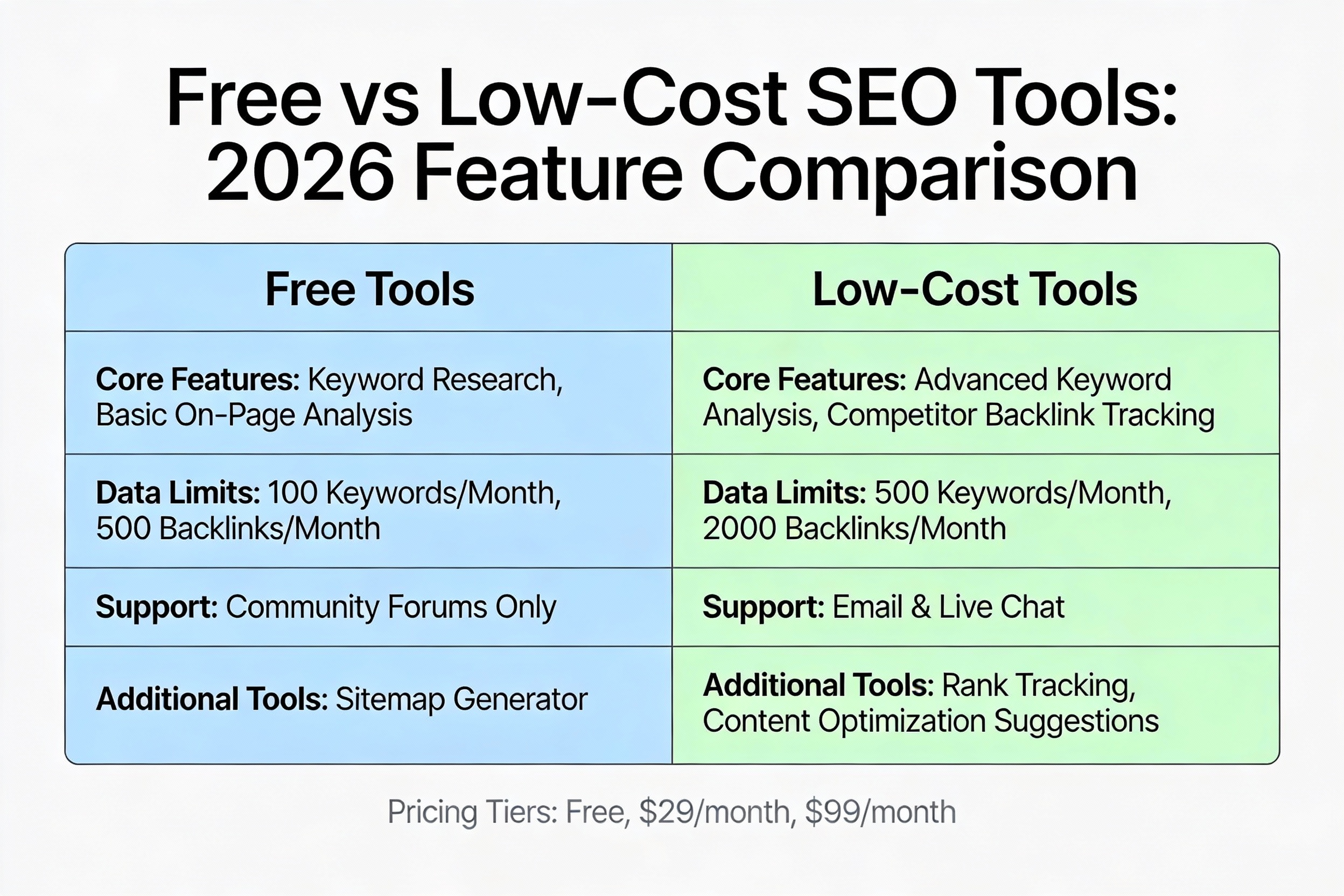
    Buying vs Renting

    The decision to buy property is often complex for foreign nationals due to financing regulations and market conditions. Most expats opt for the wolse system, which requires a smaller deposit and regular monthly payments, providing greater flexibility. This allows newcomers to explore different districts before committing to a long-term living arrangement.

    Food & Grocery Costs

    Korean market stalls with fresh produce and street food
    Photo Markus Winkler from Pexels

    Everyday food spending in South Korea can vary significantly depending on whether you prefer local markets or Western-style supermarkets. Dining at a local restaurant is often very cost-effective, whereas frequenting eateries that serve imported goods will quickly increase your budget. Balancing these two styles is key to maintaining a healthy and affordable diet.

    Grocery staples like rice, kimchi, and seasonal vegetables are best purchased at traditional markets for the best value. Supermarkets offer convenience and a wider range of international products, but often at a higher price point. For more on local culinary habits, see Korean Food 101 or check Expatistan food price data for South Korea.

    Dining Out

    Price Ranges

    • Street Food: Highly affordable, perfect for quick snacks.
    • Casual Restaurants: Average pricing, typically including free side dishes (banchan).
    • Fine Dining: Premium pricing, found mostly in major city centers.

    Grocery Shopping

    Weekly Basket Price Categories

    • Rice and Grains: Affordable
    • Kimchi and Banchan: Affordable
    • Fresh Meat: Average to Premium
    • Imported Fruits: Premium
    • Local Vegetables: Affordable (Seasonal)

    Transportation Costs
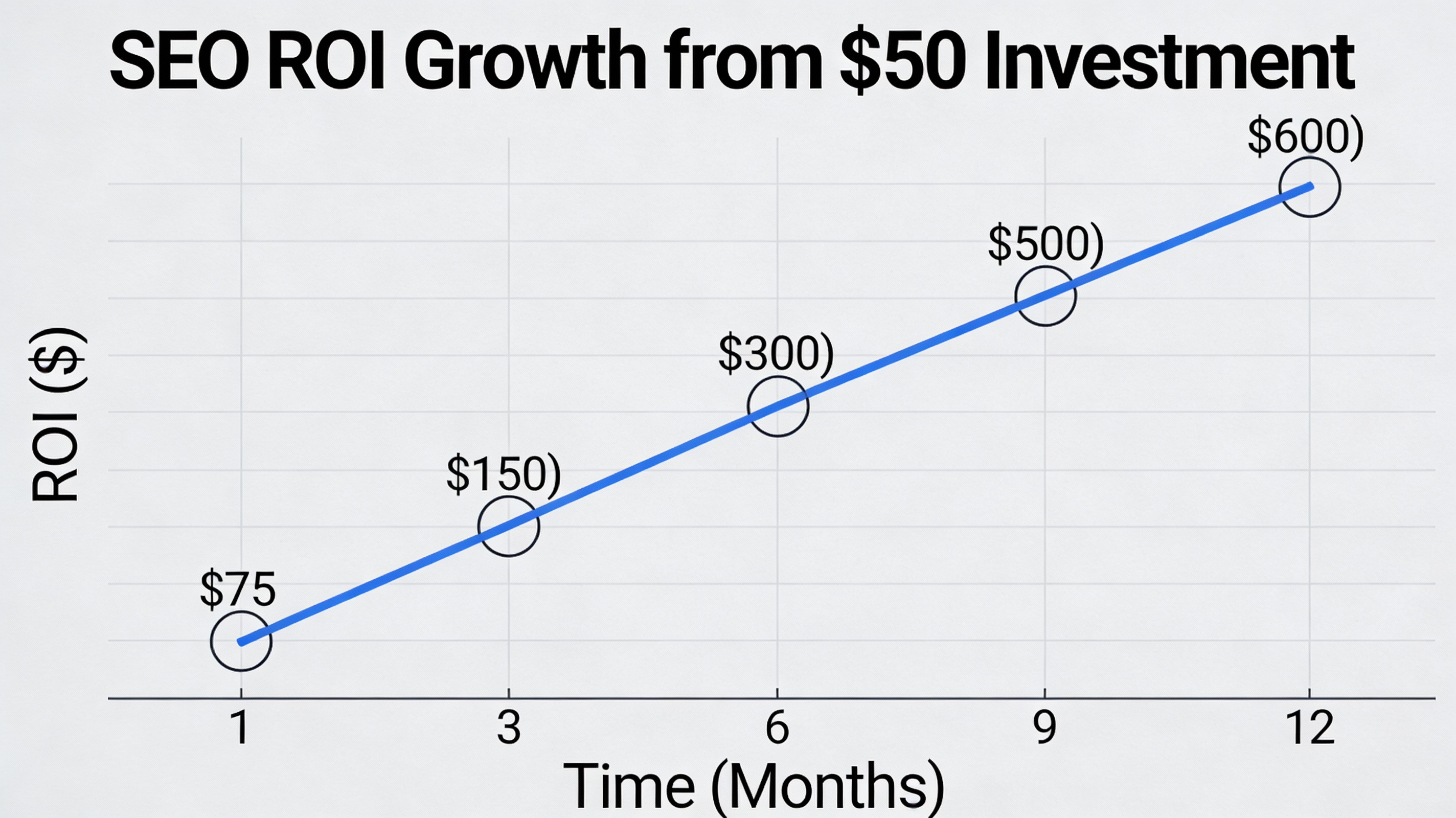
    Inside a Seoul subway train with passengers
    Photo Theodore Nguyen from Pexels

    Public transport fares are remarkably consistent and provide some of the best value for money in the country. Using a T-money card allows for seamless transfers between the subway and city buses, keeping daily commuting costs low. Most residents find that they do not need a private vehicle due to the efficiency of the urban transit networks.

    Taxis and ride-hailing services offer a convenient alternative for late-night travel or trips to areas less served by the subway. While more expensive than a bus or train, taxi rates remain reasonable compared to other major global cities. For those looking to explore the country, the KTX high-speed rail and intercity buses provide fast and reliable connections between provinces.

    Public Transit

    The subway system in major cities like Seoul is extensive and clean, with fares based on the distance traveled. Detailed fare guides are available via the Seoul Metropolitan Subway fare guide. Regular commuters can benefit from integrated transfer discounts when switching between different modes of transport within a specific timeframe.

    Taxis & Ride-hailing

    Ride-hailing apps are widely used and integrated with local payment systems, making it easy to book a car without a language barrier. Taxis are plentiful in urban areas and are strictly regulated, ensuring that fares are transparent and predictable. This is a reliable option for travelers who need direct door-to-door service.
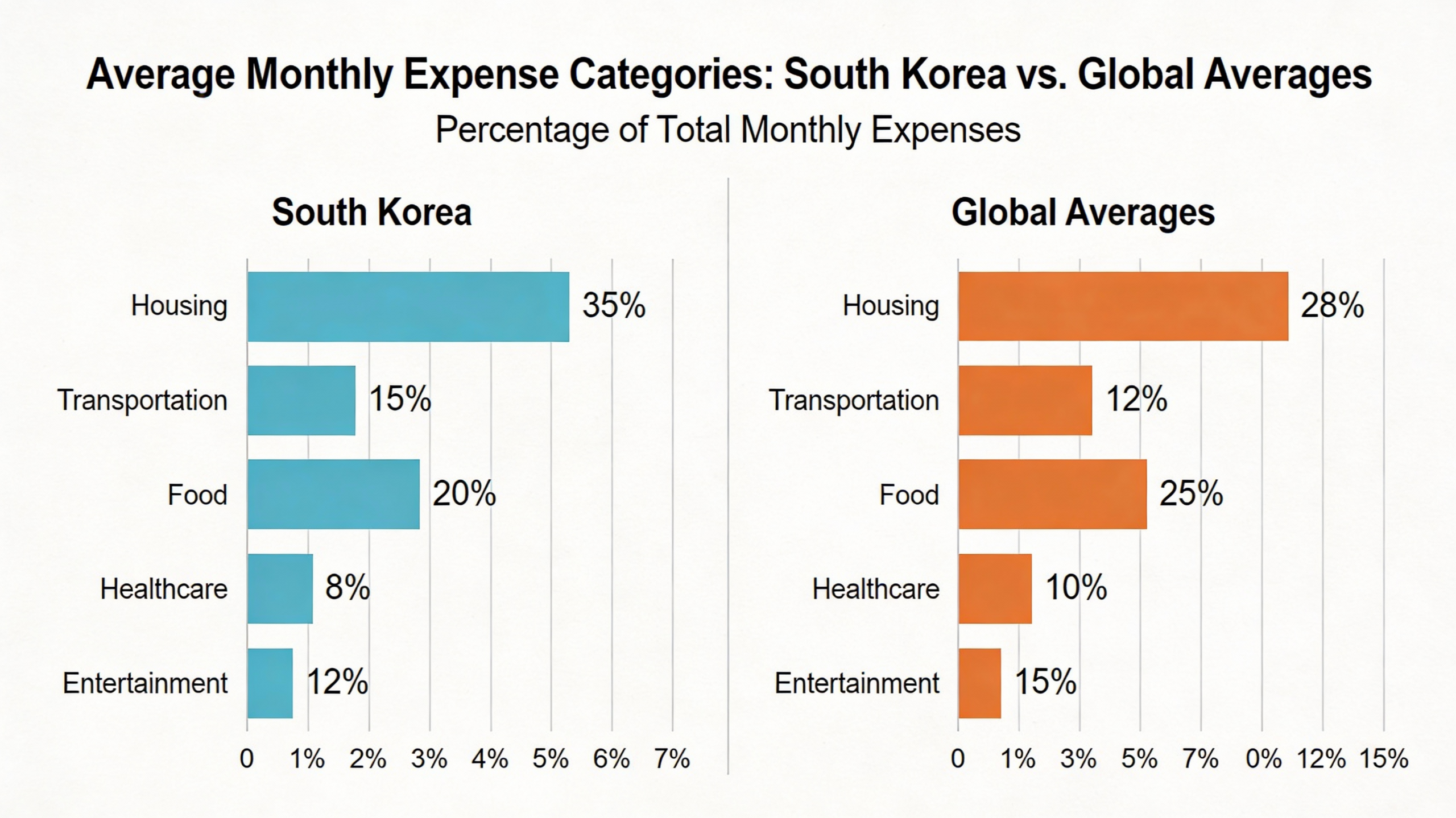
    Intercity Travel

    Traveling between cities is made easy by the KTX high-speed train, which connects Seoul to Busan in just a few hours. For those on a tighter budget, express buses offer a comfortable and even more affordable way to see the country. More tips on navigating these systems can be found in the Getting Around Seoul guide.
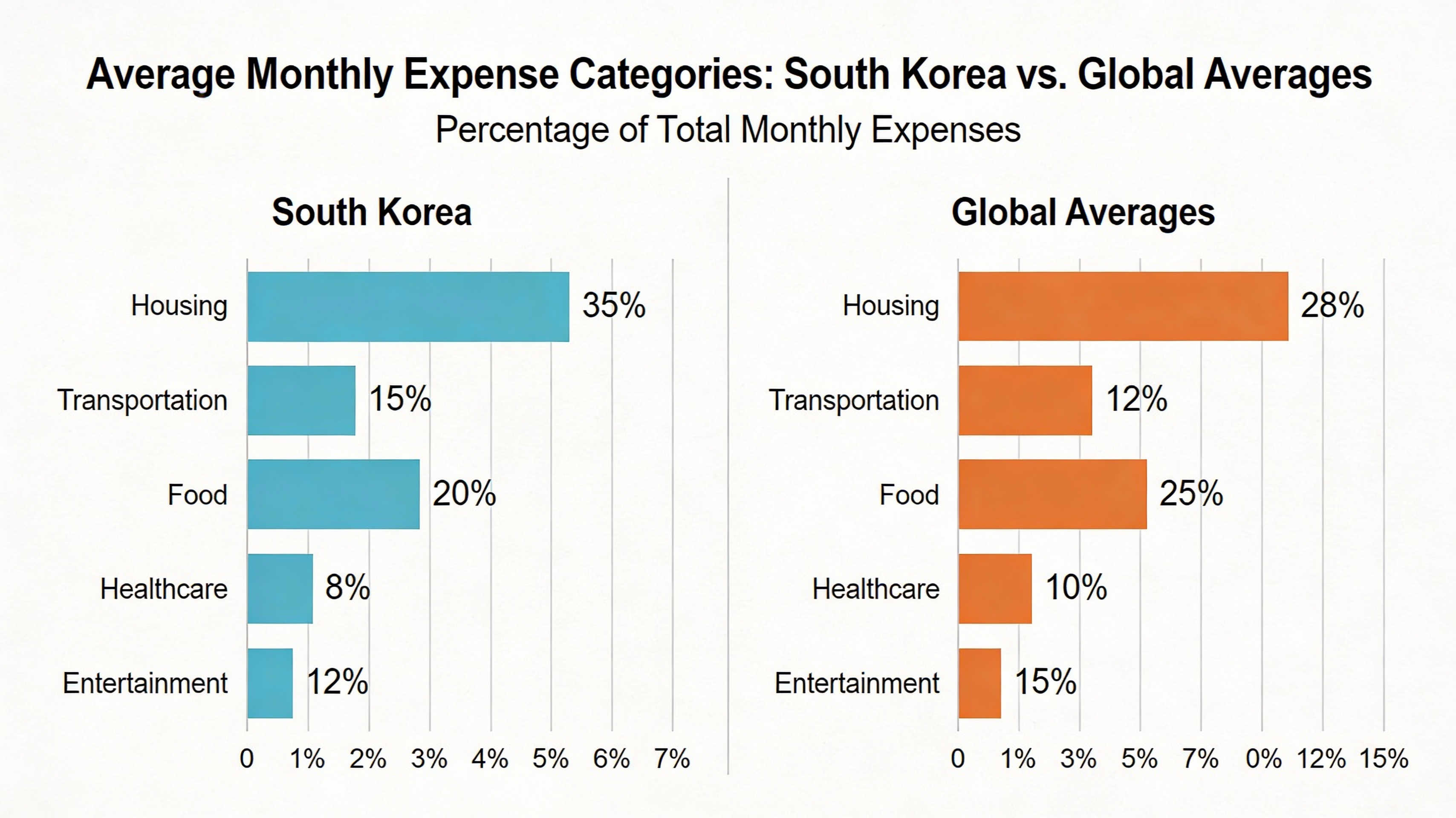

    Healthcare Expenses

    South Korean clinic reception area
    Photo Pavel Danilyuk from Pexels

    Medical costs for residents are largely covered by the National Health Insurance (NHI) system, which is mandatory for most foreigners living in the country. This system provides high-quality care with relatively low co-pay rates for doctor visits and prescriptions. Understanding the basics of this coverage is essential for any expat managing their health and finances.

    Out-of-pocket costs for emergencies or specialized treatments are generally lower than in many Western countries, but still require budgeting. Some expats choose to supplement their NHI coverage with private insurance to ensure access to international clinics and shorter wait times. Detailed information is available through the Korean Ministry of Health & Welfare insurance overview.

    National Health Insurance

    The NHI system is funded through monthly contributions, often split between an employer and the employee. It covers a vast majority of medical procedures and essential medications, making healthcare accessible to the general population. For more details, consult the guide on Health Insurance for Expats in Korea.

    Out‑of‑Pocket Costs

    Routine check-ups and dental cleanings often involve a small co-payment that is easily managed within a monthly budget. Pharmacy costs for standard prescriptions are also subsidized under the national plan, keeping the cost of regular medication very low for residents.

    Private Insurance Options

    Private medical insurance can provide additional peace of mind by covering the “gap” in public insurance or providing higher levels of comfort during hospital stays. Many international schools and multinational corporations include private plans as part of their benefit packages for foreign staff. This is particularly useful for those who prefer English-speaking medical environments.

    Education Costs

    Schooling expenses vary dramatically based on the type of institution your children attend. While public school tuition is essentially free for residents, international schools command significant fees that must be factored into a family’s budget. Higher education also presents a range of tuition costs depending on the university and the student’s residency status.

    Additional costs for books, extracurricular activities, and private tutoring (hagwons) are common in South Korean culture. These supplementary expenses can add up, especially for families seeking a competitive edge in the local or international education system. For statistics on these costs, refer to the Korean Education Ministry tuition statistics.

    K‑12 Education

    Public education offers a high standard of learning at a very low cost, though the language of instruction is Korean. International schools follow various foreign curricula and are popular among the expat community, though they sit at the premium end of the spending scale. Many families consider the proximity of these schools when choosing a neighborhood.

    Higher Education

    University tuition ranges for foreign students are generally competitive compared to institutions in the US or UK. Many universities offer scholarships for international applicants, which can significantly reduce the financial burden of obtaining a degree. Further information can be found in the Studying in South Korea resource.

    Supplementary Costs

    • Private Tutoring (Hagwons): Average to Premium
    • School Uniforms and Supplies: Average
    • Extracurricular Clubs: Affordable to Average

    Entertainment & Leisure

    Discretionary spending options in South Korea are diverse, ranging from free outdoor activities like hiking to premium memberships at high-end gyms. Popular leisure activities such as visiting the cinema, singing at a noraebang (karaoke), or attending cultural festivals are generally affordable and widely accessible. Budgeting for these activities ensures a balanced and enjoyable lifestyle.

    Memberships and subscriptions for language clubs or fitness centers are common ways for expats to socialize and stay active. These costs are usually predictable and can be adjusted based on your financial goals. For more ideas on local entertainment, see the Top Things to Do in Seoul guide.

    Popular Activities

    Activity Typical Frequency Cost Category
    Cinema Per Visit Average
    Noraebang (Karaoke) Per Hour Affordable
    Hiking/Parks Unlimited Free / Minimal
    Cultural Festivals Per Event Affordable to Average

    Memberships & Subscriptions

    Monthly gym memberships vary by facility quality, with luxury fitness centers in business districts charging premium rates. Language exchange clubs and hobby groups often have minimal fees, providing a cost-effective way to integrate into the local community. Many residents also budget for digital subscriptions like streaming services and specialized apps.

    Budgeting Tips for South Korea

    Budgeting checklist infographic for South Korea
    Generated by Articfly AI

    Actionable steps to manage your finances can make the transition to life in South Korea much smoother. Creating a monthly budget that accounts for both fixed and variable costs is the most effective way to avoid overspending. Using local money-management tools and adopting specific cost-saving strategies can further stretch your won.

    Local apps like KakaoPay and Naver Pay are essential for tracking spending and making seamless digital payments. These tools often offer rewards or cash-back features that benefit regular users. For more advice on financial tools, check out the section on Money Management Apps in Korea or visit expat budgeting blogs like Expat Focus.

    Building a Monthly Budget

    Budgeting Checklist

    • Calculate total monthly income.
    • Identify fixed costs (Rent, Utilities, Insurance).
    • Estimate variable costs (Food, Transport, Leisure).
    • Allocate funds for savings and emergencies.

    Money‑Management Tools

    Digital payment platforms are the norm in South Korea, and they often integrate directly with your local bank account. These apps provide real-time updates on your spending habits, helping you stay within your predefined limits. They are particularly useful for managing small daily transactions like coffee or convenience store purchases.

    Cost‑Saving Strategies

    Saving on housing can be achieved by looking for apartments slightly further from subway stations or in up-and-coming neighborhoods. Eating like a local and utilizing the extensive public transport system are other primary ways to keep your expenses low. Bulk buying non-perishables at large discount stores can also provide significant long-term savings.

    Key Takeaways

    Managing your budget effectively requires a clear understanding of both fixed and discretionary expenses. By prioritizing high-value categories like public transit and local dining, you can maintain a high standard of living without excessive spending. Keep these primary considerations in mind as you plan your move.

    • Housing is your biggest variable; research cities like Busan for better value.
    • Public transportation is highly efficient and keeps commuting costs low.
    • National Health Insurance is a mandatory but cost-effective necessity.
    • Local markets offer the best prices for grocery staples and fresh produce.
    • Digital apps like KakaoPay are vital for tracking daily expenditures.

    Quick Budget Formula: Fixed Housing Costs + (Daily Food & Transport x 30) + 15% Buffer = Recommended Monthly Budget.

    FAQ

    What is the average monthly rent for a one-bedroom apartment in Seoul?

    The average rent for a one-bedroom apartment in Seoul typically falls into the average to premium range, depending heavily on the district (gu). Central areas like Gangnam or Yongsan are significantly more expensive than residential neighborhoods on the outskirts.

    How much should I budget for food per month?

    A monthly food budget depends on your ratio of dining out to home cooking. Most residents find an average budget is sufficient if they balance local restaurant visits with grocery shopping at traditional markets.

    Is health insurance mandatory for foreigners?

    Yes, participation in the National Health Insurance (NHI) system is mandatory for most foreigners residing in South Korea for more than six months. This ensures access to the national healthcare network at subsidized rates.

    Can I live comfortably on a $2,000 monthly budget?

    Living comfortably on $2,000 per month is generally possible in many parts of South Korea, including Seoul, provided you manage housing and dining costs carefully. This budget typically covers a standard studio apartment, regular use of public transit, and a mix of local dining and home-cooked meals.

    Next steps for South Korea

    Taking the next step toward your move involves gathering the right tools and professional advice to ensure financial stability. You can start by downloading a free budgeting worksheet tailored for the Korean market or exploring our relocation consulting service for personalized guidance. Subscribe to our newsletter to receive the latest expat guides and up-to-date cost of living information directly in your inbox.