
Introduction: The CFO’s Lens on Marketing ROI

CFOs prioritize cost control, predictability, and risk mitigation in all investment decisions, and marketing spend is no exception. For senior financial decision-makers, evaluating marketing ROI is akin to any other capital allocation, demanding clear, measurable, and justifiable returns.
This article frames SEO as a strategic financial investment that aligns perfectly with core CFO priorities. Understanding its unique advantages over other channels is crucial for informed budget planning.
“In today’s dynamic market, every dollar spent on marketing must demonstrate a clear path to profitability and sustainable growth. The days of discretionary marketing budgets are long over; now, it’s about strategic capital deployment.”
CFO.com article on marketing ROI
To learn more about our data-driven approach, consider exploring our page on Our Approach to Data-Driven Marketing. For a deeper dive into ROI measurement, external resources like the CFO.com ROI guide can be valuable.
Why SEO Beats Paid Channels for Financial Leaders
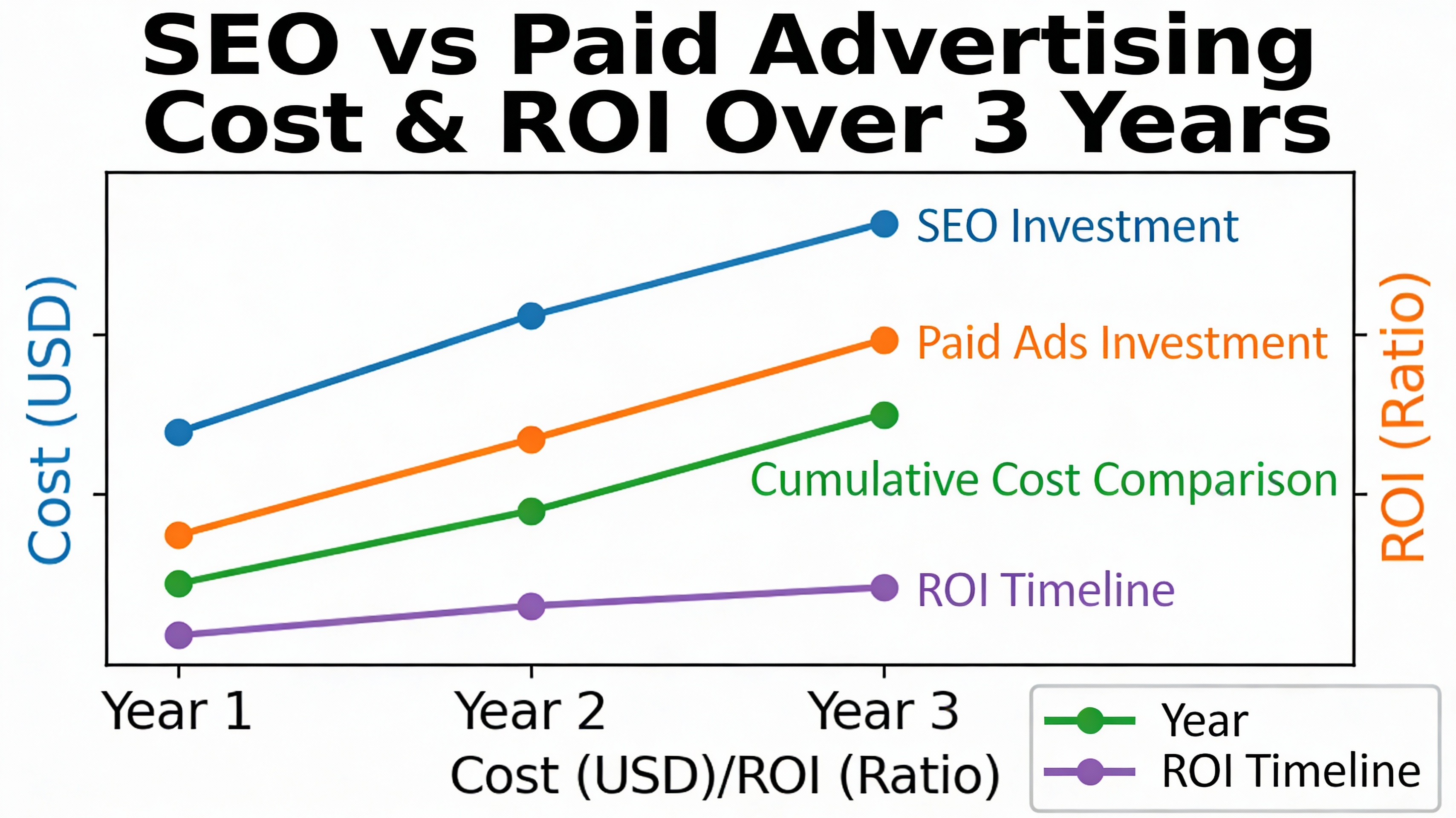
A direct comparison of cost structures and long-term value reveals why SEO often surpasses paid media for finance leaders. While paid channels offer immediate visibility through upfront per-click fees, their impact ceases the moment the budget runs out.
SEO, conversely, builds equity over time, generating an evergreen flow of organic traffic with a compounding effect. This creates a lasting asset, unlike the diminishing returns often associated with continuous paid media spend.
| Metric | Paid Media (PPC) | Search Engine Optimization (SEO) |
|---|---|---|
| Cost Per Acquisition (CPA) | High initial, decreases with optimization, then rises with competition | Higher initial investment, significantly decreases over time |
| Break-Even Timeline | Typically 3-6 months, dependent on budget | Often 6-12 months, but with sustained returns |
| Scalability | Directly tied to budget; linear growth, often with diminishing returns | Compounding growth; incremental spend yields exponential returns over time |
Discover real-world financial gains in our case study on SEO cost savings. For further insights into the long-term ROI, explore the Search Engine Land article on SEO vs PPC ROI.
Core SEO Benefits Aligned with CFO Priorities

SEO’s inherent advantages directly address typical CFO concerns, making it a compelling investment. It fosters predictable revenue streams through evergreen content that continuously attracts qualified leads without constant ad spend.
The investment in SEO is highly scalable, meaning incremental spend yields compounding returns over time rather than just linear growth. Furthermore, SEO presents lower risk, as there are no per-click fees, leading to less volatility in marketing expenses compared to auction-based systems.
- Predictable Revenue: Evergreen content assets generate consistent organic traffic and conversions, offering more stable forecasts.
- Scalable Investment: Each improvement builds upon previous efforts, leading to compounding returns without a linear increase in costs.
- Lower Risk Profile: Reduces reliance on fluctuating ad markets and avoids immediate budget depletion, offering greater financial stability.
- Brand Equity Building: Strong organic visibility enhances brand authority and trust, which are invaluable long-term assets.
- High Conversion Potential: Users actively searching for solutions often have higher intent, leading to better conversion rates.
Monitor your SEO performance with our specialized SEO Performance Dashboard tool. For an in-depth understanding of SEO ROI, refer to the Moz guide on SEO ROI.
Measuring SEO Success in Financial Terms
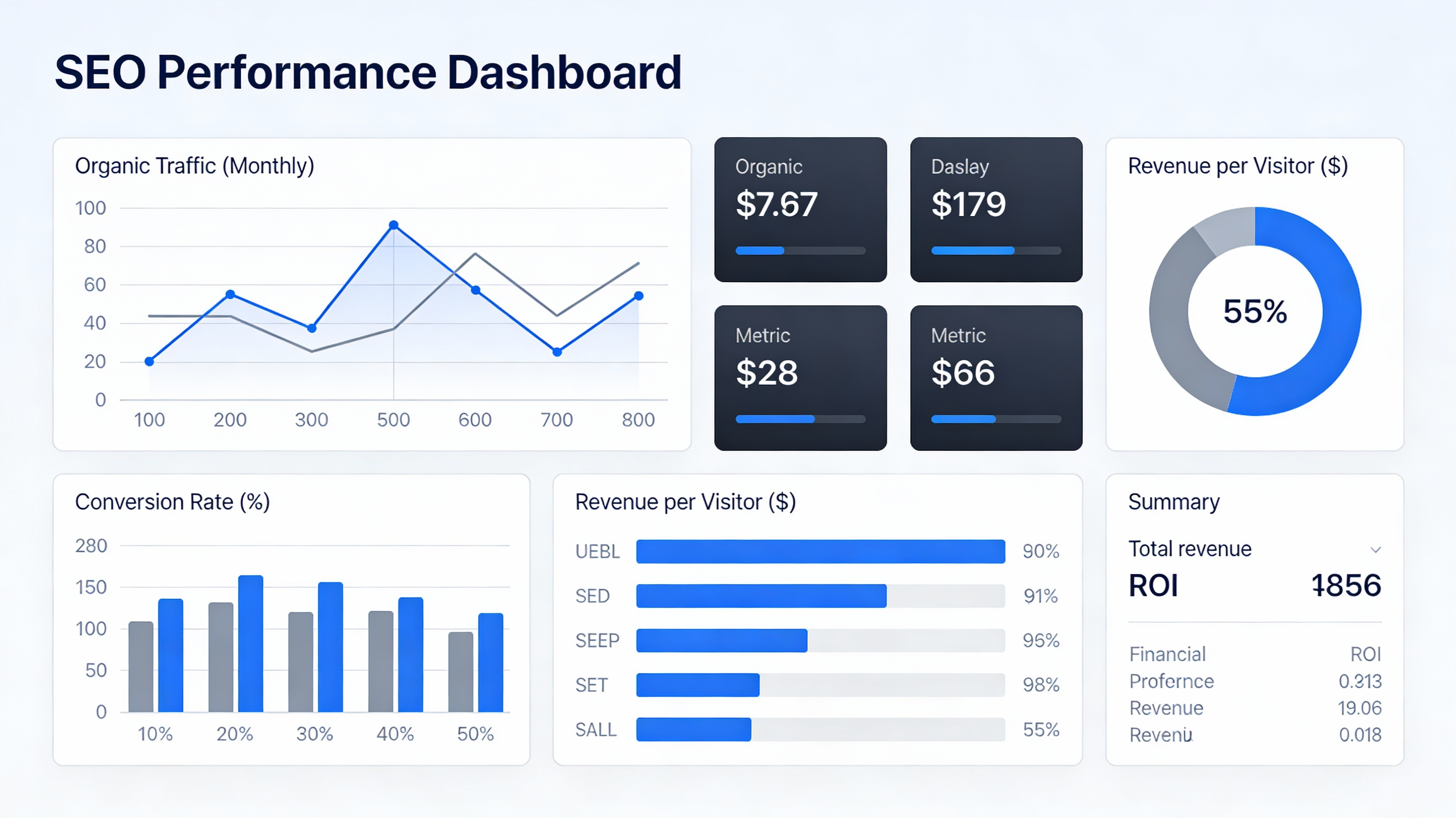
To gain CFO approval, it is essential to translate SEO metrics into tangible financial KPIs. Key performance indicators like organic traffic volume, conversion rate from organic channels, and revenue per organic visitor provide a clear picture of financial impact.
Implementing attribution models suitable for finance, such as first-touch or data-driven models, helps assign proper credit to SEO efforts. The simple ROI formula — (Revenue from organic – SEO costs) / SEO costs — offers a straightforward way to quantify returns.
| Financial KPI | Description | Sample Formula / Calculation |
|---|---|---|
| Organic Revenue Growth | Increase in revenue generated directly from organic search channels. | (Current Organic Revenue – Previous Organic Revenue) / Previous Organic Revenue |
| Return on SEO Investment (ROAS) | Revenue generated for every dollar spent on SEO. | (Revenue from Organic Search / Total SEO Investment) x 100% |
| Customer Acquisition Cost (CAC) | Cost to acquire a new customer through organic search. | Total SEO Cost / Number of New Organic Customers |
| Lifetime Value (LTV) from Organic | Predicted revenue a customer will generate over their relationship with a company, specifically from organic acquisition. | Average Organic Customer Value x Average Organic Customer Lifespan |
Download our customizable KPI template for your internal tracking needs. For a deeper understanding of attribution, consult the HubSpot article on SEO attribution.
Implementing a CFO‑Friendly SEO Strategy
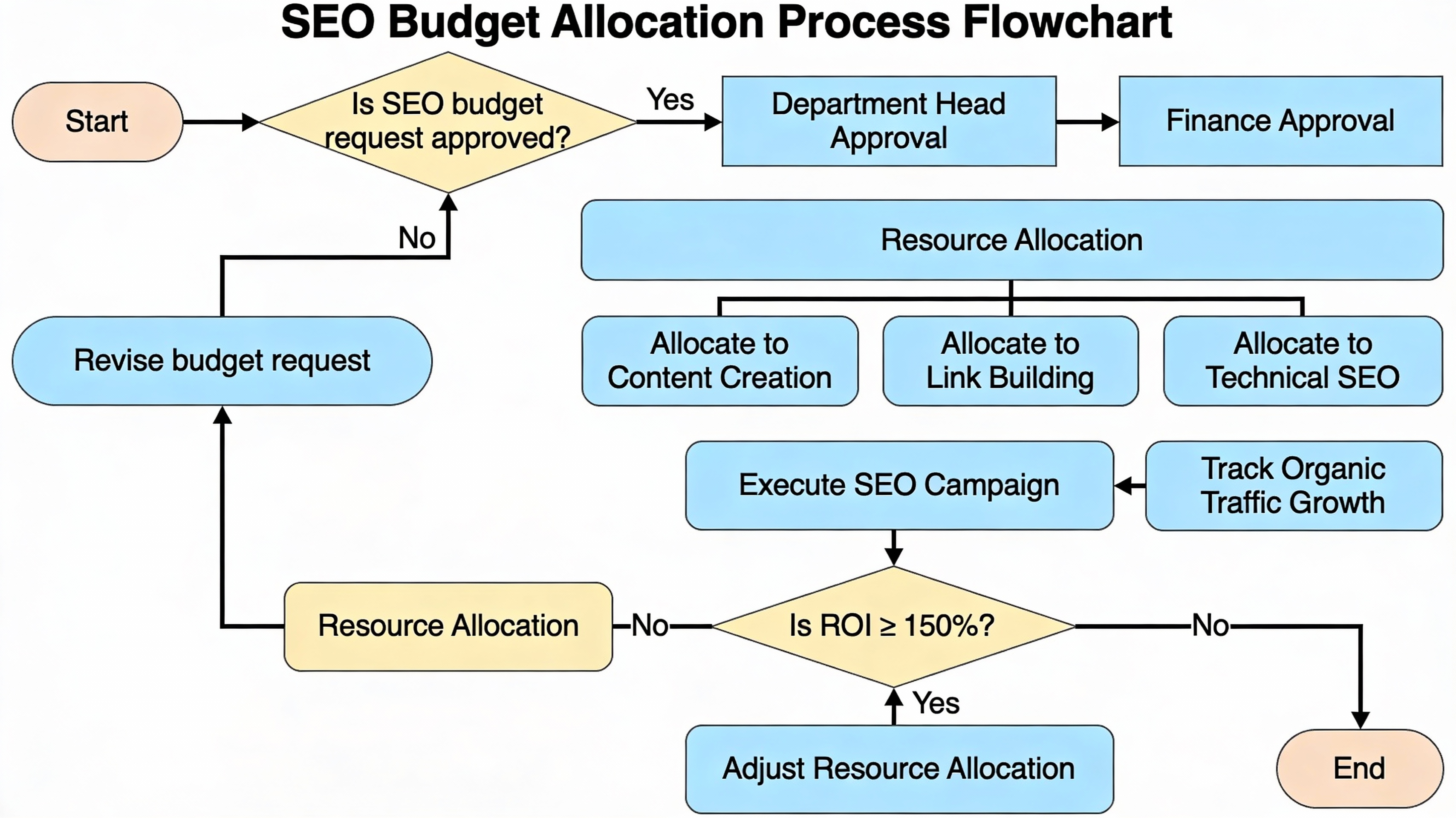
A practical, finance-oriented rollout plan is essential for securing and maintaining CFO buy-in for SEO initiatives. Begin with a robust budget allocation framework, perhaps allocating a fixed percentage of the overall marketing budget to SEO, with clear quarterly milestones.
Cross-functional collaboration between finance, marketing, and product teams ensures alignment and shared understanding of goals and progress. Finally, establish a solid technology stack for analytics, keyword research, and content management to efficiently track and execute the strategy.
Explore our recommendations for essential SEO Tools We Recommend. Industry reports, such as the Gartner report on SEO technology, can provide insights into current trends and best practices.
Real‑World Examples of CFO‑Approved SEO Wins

To illustrate SEO’s tangible financial impact, consider these anonymized case studies of companies that secured CFO approval. These examples demonstrate how strategic SEO investment can deliver significant, measurable returns aligned with financial objectives.
From reducing acquisition costs to doubling revenue and stabilizing cash flow, these scenarios highlight the diverse financial benefits of a well-executed SEO program. They provide concrete evidence of SEO’s power as a long-term growth engine.
Example 1: SaaS Company Reduces CAC by 30%
A B2B SaaS company invested in a comprehensive SEO strategy focusing on long-tail keywords and technical optimization. Within 12 months, their customer acquisition cost (CAC) for organic leads decreased by 30%, significantly improving their overall profitability and scaling efficiency.
Example 2: E-commerce Brand Achieves 2x Organic Revenue Growth
An e-commerce brand specializing in sustainable products launched an extensive content marketing and SEO campaign. Over 18 months, they saw a doubling of their organic revenue, reducing their reliance on paid ads and building a resilient sales channel.
Example 3: B2B Services Firm Stabilizes Cash Flow with Evergreen Content
A B2B services firm implemented an evergreen content strategy, targeting key industry pain points. This effort led to a consistent stream of inbound leads, stabilizing their cash flow and reducing sales cycle volatility, proving the long-term value of content-driven SEO.
For more detailed success stories, visit our full case study library. Further data on industry-wide SEO impact can be found in various industry reports, such as the BrightEdge 2025 Trends report.
Key Takeaways
- SEO aligns with CFO priorities by offering predictable revenue, scalable investment, and lower financial risk compared to paid media.
- Unlike ephemeral paid campaigns, SEO builds long-term digital assets that generate compounding returns over time.
- Measuring SEO in financial terms requires tracking KPIs like organic revenue, ROI, and CAC, using appropriate attribution models.
- A CFO-friendly SEO strategy includes clear budget allocation, cross-functional team collaboration, and a robust technology stack.
- Real-world examples demonstrate significant financial wins, such as reduced CAC and substantial organic revenue growth.
FAQ
1. How does SEO ROI compare to paid search ROI for large enterprises?
For large enterprises, SEO typically yields a higher long-term ROI due to its compounding nature and lower per-acquisition costs over time. While paid search offers immediate, predictable results, SEO builds sustainable brand authority and organic traffic that isn’t dependent on continuous ad spend.
2. What is the typical time frame for SEO to show measurable financial results?
Measurable financial results from SEO usually begin to appear within 6-12 months of consistent effort. Significant, transformative results, especially for large enterprises in competitive niches, often require 18-24 months to fully mature and demonstrate their full potential.
3. Which SEO KPIs matter most to a CFO?
CFOs are most interested in KPIs that directly relate to revenue and cost efficiency. These include Organic Revenue Growth, Return on SEO Investment (ROAS), Customer Acquisition Cost (CAC) from organic channels, and the Lifetime Value (LTV) of customers acquired via organic search.
4. Can SEO be integrated into a strict annual budgeting process?
Yes, SEO can be effectively integrated into a strict annual budgeting process. This involves defining clear objectives, estimating costs for a 12-month roadmap, projecting ROI, and establishing quarterly review milestones to track progress and adjust allocations as needed, ensuring transparency with the finance team.
5. What risks should a CFO watch for when scaling SEO?
When scaling SEO, a CFO should be aware of potential risks such as over-reliance on a single SEO tactic, algorithm updates that could impact visibility, and the need for continuous investment to maintain competitive advantage. It’s crucial to diversify strategies and monitor market changes closely.
Next steps for a CFO-Approved SEO Program
Ready to leverage SEO as a strategic financial asset for your organization? Understanding the numbers and building a strong business case is the first step.
We invite you to schedule a free SEO ROI assessment with our finance-focused marketing team. We’ll help you identify key opportunities and outline a strategy tailored to your financial objectives. Contact us today to begin a data-driven conversation about your growth.